We remain fully operational. Our teams are working around the clock to ensure your deliveries continue safely.

Descargar la aplicación


Servicios al cliente
Sobre nosotros
Copyright © 2025 Desertcart Holdings Limited
Descargar la aplicación

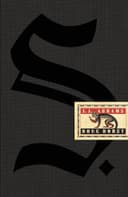
📖 Unlock the book that breaks all boundaries—read, decode, and belong to the ultimate literary cult.
S. by J.J. Abrams and Doug Dorst is a bestselling, multilayered novel blending a fictional book, margin notes in multiple ink colors, and 22 physical inserts to create a unique, interactive reading experience. Packaged in original shrinkwrap mimicking a vintage library book, it invites readers into a complex mystery that extends beyond its pages into the real world, making it a must-have collectible for literary adventurers and puzzle lovers alike.


| Best Sellers Rank | #8,506 in Books ( See Top 100 in Books ) #47 in Romantic Action & Adventure #989 in Literary Fiction (Books) #1,322 in Suspense Thrillers |
| Customer Reviews | 4.7 out of 5 stars 4,536 Reviews |
C**E
What begins at the water shall end there, and what ends there shall once more begin...
There is no easy way to describe S., the multilayered composite novel experience created by J.J. Abrams and Doug Dorst, but it is undeniably brilliant and an absolute joy to explore. Like Mark Z. Danielewski’s brilliant House of Leaves, it is a book that refuses to be contained within the boundaries of its pages, with multiple levels of narrative that bleed into one another. Even more than House of Leaves, however, S. is a love letter to the physicality of real books as tangible objects, to be held and collected and admired and treasured- there is no way this book could work as an e-book, and that is not just snobbery. The reason for this is that S. is not just a book, but a multimedia artistic experience, a puzzle, and a layered narrative that the physical book itself is just one portion of. In fact, the book included in S. is not itself called S.; it is a book called Ship of Theseus by a man (or perhaps not a man) named V.M. Straka (except that may not be his real name). The book itself is weathered, and appears to have come from a public library, complete with a filing sticker on the spine and a stamped check out/return page in the back cover. From the “Translator’s Note and Forward” at beginning of the book we learn that Ship of Theseus was the final novel written by an enigmatic but prolific writer named V.M. Straka, whose true identity remained a mystery to all but a very few people- in this it seems Straka was at least partially based on B. Travens, author of Treasure of the Sierra Madre, whose true identity has never been uncovered. Straka was a literary genius, and his novels are full of symbolism and allusion that imbues his works with layers of meaning and opinion depending on the interpretation of the reader, much like Moby Dick. Luckily for us, the book is footnoted and annotated by the translator, F.X. Caldeira, which adds the second level to this metanarrative, as there is quite a bit of thoughtful interpretation and discourse by Caldeira, who appears to be nearly as enigmatic as Straka. Ship of Theseus, amazing enough, can stand on its own two feet even if it was the true story being told here. Someday I plan to read the novel by itself and ignore all of the other extraneous material and see what sort of literary takeaway I get. I will avoid spoilers, but at its barest essence, Ship of Theseus is about a man who is suffering from amnesia, who goes by the name of “S,” because when he woke up his only possession was a slip of paper with an ornate letter “S” written on it. He ends up shanghaied on the eponymous ship, whose terrifying and almost bestial crew seem to know something about him, and who often disappear below the decks to take part in some sort of secretive ritual. I won’t reveal any more of the plot, but it is very engaging and well written. In any event, this is the book you are reading, not S. This is because the physical book itself is only one part of the narrative. As previously mentioned, the annotations and footnotes by FXC make up another layer of the story, imposing a fictional literary universe that places the book in its conceptual parameters. The third layer is provided by handwritten notes in the margin in (at least) two different hands and five different colors of ink, in which two readers of the book are keeping up an ongoing correspondence. Eric is a disgraced university student who is obsessed with V.M. Straka and believes that clues to the author’s identity is hidden within Ship of Theseus- his original notes are written in pencil in the margins, and he has underlined certain passages. Since he is no longer a student at the college where the book was housed, he could not check it out anymore, but continues to study the book’s mysteries. Jen is a current student at the college who is also studying Ship of Theseus, and discovers Eric’s obsessive but brilliant notes. Realizing that they are ongoing, she “replies” to Eric’s notes, sparking an ongoing conversation between the two. Besides their different handwriting, Jen’s initial notes are in blue ink, Eric’s in black. Together they begin to try to tease out the book’s secrets. They make multiple passes through the book over the course of years, and the changing colors of ink mark the passage of time. In their second pass through the book, Jen writes in orange ink, Eric in green. Their third pass is marked by Jen writing in purple, Eric in red. Their final pass is the books “epilogue,” discussing strange events that have transpired for both of them, and both are written in black ink. And at certain times, notes are left by an unidentified third party who seems to be closely watching the pair and following their research. In addition to their notes, Jen and Eric are continuing their research in the “real world,” as represented by a number of very cool physical artifacts that are included in the book. These include computer printouts, personal letters written on university letterhead, postcards, newspaper clippings, notes written on napkins, handwritten letters, and even decryption wheel, to name but a few. These are part of the third level of the narrative between Jen and Eric, but add a level of physical reality and verisimilitude to the story. What it reminds me most of is the Griffin and Sabine “correspondences,” by Nick Bantock, a love story told entirely through handmade postcards, notes, and other creative physical notes and artifacts. But in S. these are more than just a nifty layer to the metanarrative. In many cases they are clues necessary to unravel the book’s many secrets. Because beyond the mystery of Straka’s identity and the relationship growing between Eric and Jen, there also seems to be a shadowy force that is watching the pair, and actively trying to keep them from unravelling the mystery, somehow tied to Straka, F.X. Caldiera, and the greater mystery of the enigma surrounding the author. The fourth and final layer of the narrative is the actual real world, for which you, the reader, are the cipher. You are not only reading Straka’s novel, FXC’s annotations and clues, and Jen and Eric’s attempts to unlock the puzzle posed by both, but are also being provided with clues that spill out into the real world, in particular the internet. There are names, companies, phone numbers, the names of cafés and other establishments mentioned by Jen and Eric, and so on that if searched for on the internet bring you to websites that provide you with further clues and take you deeper into the conspiracy. I must admit that while I find this both interesting and charming, I have not spent much time on this level of the narrative. While it is neat, and very much indicative of J.J. Abram’s influence on this level of the narrative, I just don’t have this kind of time to spend on a single novel, no matter how interesting it is. The nice thing is that even though this is a metanarrative on a number of levels, the whole thing is strong enough to stand on its own. Ship of Theseus stands on its own, but S. as a multimedia experience is the sum total of every level of the narrative. As of yet, I have only really experienced S. as contained within the physical boundaries of the book (which, by the way, comes within a slipcover that is sealed with a strip of paper, so that none of the materials inside can fall out, which is marked with J.J. Abrams and Doug Dorst’s names, along with the picture of a capuchin monkey. Once you break that seal, the S. experience begins). Even without the viral marketing internet mystery level of the narrative, the first three layers of the metanarrative work perfectly well on their own- the fourth layer just makes the work open ended and tantalizingly ambiguous. I don’t think the ultimate “answer” to the enigma of S. is really out there on the internet, meaning it is a mystery without a solution and without an end. But that is okay, because in this case, the fun of the whole experience is in the journey, not the destination.
S**R
The most interesting book experience I have ever had
This book/experience is one of the neatest experiences i have ever had. The finished product, in it's physical form, is amazing. It looks like a really old library book, down to almost every detail, inside and out. This is so much more well done than I could have imagined. The feel of reading the book is exactly what I wanted it to be. The actual story of the book is a very literature based one. It isn't immediately clear, even after finishing, the clear digression of the tale. The book requires analysis, thought, and consideration. The story itself has light-scifi/fantasy elements to it, though it is not overt through the book, and only when considered literally. Otherwise, it is a drama action tale, or maybe a tale of exploration, or maybe a spy thriller, or maybe something else entirely. The "Margin story" has elements of all of these as well, and would be much more clear and straightforward if it weren't for the method by which it is communicated. I want to be clear to define that the way I read the story was thus: I read the entire printed story straight through, including the footnotes, and I also read the pencil notes. I then went back and read the pen notes one "set" of colors at a time all the way through. I feel, for me, this is the superior method. My reasoning has to do with the Ship of Theseus itself. By reading it in this method, you take the "ship", in this case the book, and experience it 5 separate times. Each time you go through it, you experience different parts of it, even though it is the same book. When you get to the end of it the final time, you really can consider if it is the same book that it was when you started. I enjoyed reading it this way very much, and I think if I had tried any other method I would not have gotten the same experience. I like things linear though. Pros: This was a neat experience. The finished product is beautiful and amazing. The story is captivating and lovely. The inserts are interesting.This was a memorable experience I will remember for a long time. Cons: The inserts get really annoying on subsequent reads, falling out at bad times. There is a lot of this experience that can be found online, and for some this may make the book itself feel incomplete. The pen markings in the book are not chronological, so you might here about something that is happening "In real life" but not find out why for many chapters and then find something that comes before that event later in the book. Production con: Some of the pen mark in my book is faded in places. I honestly don't know if this was on purpose or a defect: perhaps it was indicating that actual pens do run out of ink? Overall, this was a great purchase, an interesting book to read, and something I may come back to in the future to try reading it again.
J**Y
Creepy, geeky, splendid, revolutionary breakthrough...with reservations
I had to give this book FIVE stars. Read the other reviews. Ditto for most praise and criticism. S. should win top honors everywhere because, mainly, it shows a path to save the printed book industry. S. is an ode to the English language. Author Dorst fires up all possible synapses to create linguistic art reflecting a near-bottomless knowledge base. However... My bottom line: A better book would be a fictional update on the Kennedy assassination with annotations by two interns that worked during the Warren Commission days. Why better? The reader will care about the content and care to keep track of all the players. In this book, S., I found it not only difficult to keep track of the players from different decades and multiple stories, I struggled to even care about most of them. For a book to be worth the reader's scrutiny, i.e., reading the entire book as many as two or three times, the reader would be best left with some usable education from real data and real people - at least realistic data and relatable people. But the concept is so good that just imagining the new wealth of take-offs staggers me. For example, at the least commercial level of self-publishing, imagine family authors creating "old books" with wide margins for current and future generations to share notes. Picture the items stuffed inside the books like newspaper clippings, postcards, love letters, and more. I'm dreaming right now of handing out copies to all attendies at my funeral. I have to say something about the handwritten notes. Know that I get off on handwriting like art collectors do on Picasso. The artists who chose the various handwritten forms are geniuses. Being better would be a stretch. However, reading all that handwriting was work, often put me to sleep. Add the craziness of codified footnotes, multidirectional issues and timelines - well you get the picture? The author and production crew over-indulged. Spoiler alert. In the rest of this review, I will tell why I am terribly disappointed in the storytelling. No, I won't give away the story, but I have to talk about the endings in terms of how they felt to me or, better, how they didn't. So if you are eagerly starting the book, don't read the rest of the review until you've finished. The story and the characters are universally creepy and geeky. On the positive side, they search, research, connect, care about details, persist and stay committed. Yet the negative darkens the entire multiple-storied novel. Our geeks (in no particular order) are angry, vindictive, violent, platonic, suspicious, non-touching, conspiratorial, power-hungry, sadistic, masochistic, unrequited, lost, lonely, secretive, icy, blatant, capable of lying, snarky, paranoid, and anal-retentive. The journeys end as loose ends, i.e., nobody wins. Happy endings, for anyone in the entire universe, exist no more. The reader in this god-awful dark world must be content with meager resolutions and even be comfortable without any resolution at all. You have to face that evil is real and cannot be conquered - ever - for long. Sadistic bullies and cults abound on all scales - from global arenas to the few square blocks of a college campus. Do not waste your time trying to keep track of the players and organizations in any of the stories. Focus more on how they feel about each other and what they do to each other. If you don't want to make the planet a better place to live in after reading this, then the author wasted his time. As the reader, you hope to God that intelligent, positive, joyful people end up taking hold of the reins of power here, there, and everywhere.
H**I
If you can believe you're a part of it, you will absolutely love it.
S. is one of the best books I’ve read. Period. But I believe I feel differently than the average reviewer because I made the conscious decision that I was going to “believe” before I started reading. You see, you can only enjoy this book if you go in accepting that you are not its first owner and that what you are reading was not intended for your eyes. The ability to become an active participant instead of a passive reader, I would imagine, is the difference between loving this book and hating it. I fall so far onto the “love” side of the spectrum that I simply cannot wait to read it again. S. is really a story about 6 principal characters: • S. – The main character in the novel "Ship of Theseus" who is suffering from amnesia. The novel follows S. as he desperately tries to figure out who he is and what his significance is to both the Ship of Theseus and the various ports at which it docks. • V.M. Straka – an enigmatic author of the novel Ship of Theseus, the book which serves as stage to this mystery. • The Translator (FXC) – a historian of Straka’s works who not only translates his novels into a variety of different languages but also pens commentary in the form of footnotes throughout Ship of Theseus. • Eric – an exhausted theorist who believes the mystery of “Who is V.M. Straka” can be solved via subtext clues cleverly embedded throughout Ship of Theseus • Jen – a student who stumbles upon Eric’s copy of Ship of Theseus and who’s penchant for researching the obscure and who's fresh perspective on the tale helps reveal that the initial question of “Who is V.M. Straka” is only the tip of a very, VERY large iceberg. • YOU – You are the 3rd handler of this book. Jen and Eric have taken extensive notes in the margins and left dozens of pieces of ephemera tucked into the pages that serve as clues. You will use these clues to not only help solve the mystery of V.M. Straka, but also explore the mystery of why it is that you now have this book in your possession. By reading S., you essentially become a character. In the same way that Eric and Jen attempt to solve a mystery about FXC and VM Straka, you must solve the mystery of Eric and Jen. Eric and Jen will often express frustrations over how they are not privy to the conversations and events that took place outside the pages of Ship of Theseus. This is not dissimilar to frustrations you, as the reader, will experience when Jen and Eric engage in meetings and ongoings outside of the book’s margins. It’s a brilliantly complex and maddeningly open-ended plot hurdle that you will regularly encounter throughout S. The quantity of information that is thrown at you all at once is alarmingly difficult to comprehend. This is, of course, intentional. You may reach a page that has a postcard tucked into the binding, has 2 footnotes from FXC, has 11 margin notes from Eric and Jen (in 4 different ink colors), and, obviously, the continued Ship of Theseus novel. There is no good way to digest all of this, you simply have to read through it and absorb it as best you can before moving on. As you progress through the book, you pick up tricks for understanding when a note was written, who wrote it, and what the meaning is. Unfortunately, you’ll gain this perspective just in time to realize that – at some point – you’ll have to start the book all over again. However, while this is undeniably frustrating, it lends authenticity to the overarching plot of S., pulls you deeper into the story, and makes you feel like you really are solving a mystery. In this way, Eric and Jen become very real and you’ll feel like you can help them in the same way they are trying to help V.M. Straka. S. is so much more than a book. It’s an experience. I continue to obsess over every detail, every clue, and every word contained in these pages. But, what’s funny about S., is that I wouldn’t recommend this book to most of my friends and family. Simply put, I just don’t think many people will “get it.” I don’t know how many people have the tolerance for ambiguity in the same way I do. I don’t know if other people will appreciate the complexity, the depth, or the details like I do. If The Da Vinci Code was the pizza of the literary world, then S. is the sushi. Most people probably won’t like it, but it will be passionately loved for by a few. I could go on about this book for days. I would write more, but I have to go Google how to read a “rail-fence” cipher so I can continue solving this mystery :)
M**N
A Unique Experience
S. is not just a novel. It's a total immersive experience, a puzzle, a bundle of ciphers, a maze, an entire universe of interconnected events and facts. Actually, it's very much a LOST-type experience in book form. After reading a few similarly immersive books in the recent past, I judged that I was ready to tackle another. I enjoy them. I enjoy the unique experience not available in a conventional novel. Well, nothing could have prepared me for this J.J. Abrams creation (with the help of writer Doug Dorst). Although I've read the novel now from cover to cover, and then some, I'm in no way finished. I'll explain. The concept of S. is largely dependent on the physical book. While the slipcase reveals the title "S." with author and publisher information, once the book is removed from the case, it appears to be an old library book, complete with library sticker on spline, stamp of Laguna Verde H.S. Library on the title sheet, and a number of "RETURN ON OR BEFORE" stamps on the inside back cover, the way library books were traditionally checked out. Physically, the book is of a high quality library binding, the cover embossed with the title "SHIP OF THESEUS by V.M. STRAKA." The pages of the book are yellowed with age, some with stains indicating use. Copyright is listed as 1949, with a translator's forward by F.X. Caldeira. THE STORY of S. Straka's story is ostensibly about a man who has lost his identity, known now only as S.__. He has no idea who he is, nothing about his past, or how he came to be where he is. He is abruptly shanghaied aboard a strange ship where most of the crew have their mouths sewn shut. Emotionless, they go about their tasks on the ship. It seems that he has been sent on a mission, though he doesn't know what it is. He is eventually put ashore and caught up in a city with a group of revolutionaries attempting to stop an evil industrialist who is manufacturing massive weapons which he sells on the open market to thugs and dictators, enslaving entire countries, decimating the earth. Due to his association with these rebels, S. becomes a hunted man, though he remains unaware of his identity. This is only the most rudimentary description of the plot. The story is like a season of LOST, full of inexplicable connections, time distortions, mythologies, painted caves, disappearances, secret societies, mysterious symbols, and much more. It's as if all of human history were somehow wrapped up in this metaphysical tale. An afficianado of the novel runs a complex website full of S. intrigue, whoisstraka.wordpress.com, and has this concise description which I love: We witness the birth pangs of World War I in Europe and the chilling screams of the victims in labor riots in America. And yet we hear the whispers of T.S. Eliot’s poetry and the beginnings of love in the margins. We see monkeys and magpies, holystones and haymarket affairs, obsidian and obsession, caves and codes, symbols and substance. The number of subjects and themes before us is staggering. It can seem like gazing into chaos. So how do we fit such seemingly disparate pieces all together into one “thing” that somehow makes sense? And just what is the “thing” anyway? But that's only the beginning. For in the margins throughout the book, Eric and Jen have carried on their own running commentary of how they believe the story of S. is actually a code that Straka was using to tell his own story. Is the character S._ really Straka in disguise? And if some of the things in the story of S. are true, are they putting themselves in danger by poking into them? After all, there is the pull of good vs. evil in S._ and there are casualties. Along the way, as time progresses, Eric and Jen also share personal information in their dialogue-in-the-margins as they get to know each other, and we the readers get a glimpse of a possible romance starting. SHIP OF THESEUS The title gives some clue to the overall theme of the book - that of identity. The Ship of Theseus is a paradox, a thought experiment, first noted by Plutarch, which asks the question, Is an object which has had all or most of its components replaced remain fundamentally the same object. In Plutarch's example it was the ship of the Greek hero Theseus which had its planks replaced over the years as the original ones deteriorated. At some point, no original planks remained, so the question is, is it still the Ship of Theseus? Identity is a theme that runs throughout the novel S. People, places, events, all seem to be subject to constant change, in flux. Is S. the same person by the end of the novel after he's made the choices he has? Are Eric and Jen the same? Another theme is trust, faith. Most of the characters in S, including S. himself, knowing little about their situation, must make leaps of faith in order to continue. There are people and causes they must trust or be forever paralyzed. The reader also encounters a few recurring lines: "What begins at the water shall end there, and what ends there shall once more begin." Endings and beginnings. What does it mean? THE CHALLENGE OF READING S. The forward informs us that the author, Straka, was an enigmatic character whose real identity has never been known. His nineteen novels, of which SHIP OF THESEUS was his last, all seem to have political overtones often advocating revolutionary, anti-capitalist, causes. Myths surround him: was he an assassin, a bomber, a betrayer of military secrets? Was he part of a secret organization with a goal of changing the world? Enter Literature Graduate student Eric who has spent a decade studying Straka's work and trying to ascertain his real identity. Over the years he has made notations in the margins of this copy of SHIP OF THESEUS, a book that is found in the library stacks by undergraduate Jennifer, who, intrigued by the book and Eric's comments, begins to add her own notations, oftentimes answering Eric's. And so the book from the stacks goes back and forth; Eric responds, Jen answers, beginning this dialogue in the margins. All these notations, in various ink colors - Eric always in block print, Jen always in script - appear in the volume "S." Compounding the mystery are dozens of letters, postcards, photographs, excerpts of different kinds, and maps, inserted into the book at various places (the points of insertion being important to the chronology of the story). What we have, then, are several stories moving through the novel, but not in a linear fashion. We have the basic novel written by Straka. We have copious footnotes by translator Caldeira which soon appear to be more than simple footnotes. There are the pencil notations by Eric which were done at the earliest time he began his study of Straka. Then there are at least three more sets of notations by Eric and Jen -- sets which are differentiated by the use of different colored pens, indicating progression in time. So, how is one to read S.? This is a looming question for the first-time reader, and much discussed in the online forums for the novel. Some choose to read Straka's novel first, ignoring everything else, then going back and reading the notations and inserts in chronological order. This means reading all the pencil notes first, front to back. Then, going back to the beginning and reading all the blue and red ink notations next, front to back. And so on, until you've been through the novel a minimum of 4 or 5 times. This, because often notes from various periods appear on the same page. I chose to read everything at once, as if I were the next person to find this book, being completely ignorant of anything about it. This means that I was reading exchanges between Eric and Jen that made little sense at the time because they were made in the future, at a point in their conversation I had yet to reach. If all that makes any sense....? All part of the mystery and enjoyment in reading S. My thoughts on the book? I loved reading it, thoroughly enjoyed the interactive, immersive quality of the experience. And it's not over. I will ponder this book for some time, skim back through it, reread portions, all in an attempt to see the larger picture. Abrams must have had that one great idea which launched this project -- something that will make sense of all the minutiae. The book is also full of puzzles and ciphers -- I'm not one really to waste time on such stuff, so that part is wasted on me. I'd give it 4 out of 5 stars, and it's one of the most beautiful books I own.
C**R
My new favorite book
From the first, you know this will be a different kind of book. You must break the seal that encloses it in its gift box. But wait! There's a library call number sticker. What? You didn't order a used book. 813.54 -- American Literature, 1945-1999. Open and see, "Book for Loan' on the inside cover. What? On the back cover is the stamped record of check outs and check ins, from 1957 to 2000. There are water stains, use stains on the edges. Open the book and it smells old. It reminds you of the Bookmobile that used to stop in front of you house in the summertime...the Bookmobile, stacked with old hardback books that smell like love and knowledge. Then open to the cover page only to see writing! Someone...two...three? has been using the book to keep notes. Copyright 1949 -- Dewey got it right. Winged Shoes Press -- never heard of that company. Property of Laguna Verde High School Library. Have they given you a defaced, stolen book when you paid for a new book? Then, as you riffle through the pages, enjoying that old-book smell, you notice all the little random (?) pages left within the leaves of the book...postcards, photographs. Letters on stationery. Old telegrams. Your fingers itch to put all this together into a story. That was my experience just opening this book. It probably took me ten minutes to just get to the title page. From the beginning it's apparent this book is different. Story layered onto story. The novel, SHIP OF THESEUS, is the work of a cult hero, VM Straka, translated by a groupie, FX Calderia. Is it a straightforward novel (or as straightforward as anything Straka produced) or is it an extended conversation between Straka and Calderia, an apology, explanation, by Calderia after Straka's death? The story is of "S", a man who appears mysteriously in a harbor town, iwht no memory of his name or his past..In the pocket of his sodden overcoat is an object: a ruined page, perhaps from a book with an ornate "S" symbol; in his trousers pocket, a pebble; and a memory of falling...that's all. I felt like I was in a Bergman film...those cultish Swedish movies from the 60's. Everything is 'off' but makes a kind of sense. The rest of the book SHIPS is about S and his struggles within a world that makes no sense. But there are also the strange footnotes by the translator, a woman who may or may not have been in love with Straka, trying to leave messages for the author in complicated codes...explaining something... But there may also be a deep discussion of the strange stories of the identity of the elusive Straka, who may or may not have been an invention of several different authors, who may or may not have been responsible for all kinds of political assassinations. But there's more!! Within the margins is an amazing, recursive, conversation between a disgraced grad student (the Laguna Verde thief) and an undergrad student working as a library clerk. Their conversation challenges their intellectual stances, their understanding of their own pasts and futures. They work together to make sense of the subtext and sub-subtext of the book, and their own lives. Their conversation takes them through the book several times. Eric (the grad student) originally wrote self-consciously 'brilliant' observations in pencilin his distinct manuscript. Then, on a re-read in emotional distress, he changed to black pen. Jen, the library clerk, answers in blue cursive. I love the way she writes her 'fs'! They read the book together, bouncing ideas off each other, and it becomes clear to the reader these two are well-matched intellectually and emotionally. Then, they move to green and orange pens,then red and purple. Then black and black. Every rereading brings more of the story of "S" into focus (or out of focus -- will admit I don't understand huge chunks of the original narrative, but I don't care!). Their dialogue also forces them to look at themselves honestly, perhaps for the first time. They trust each other as they've never trusted anyone before. Eric and Jen's story is as rich and layered as S's story, as Straka's and Calderia's. Then, there's the narrative told with the inserts -- those ephemera we tend to leave in books as bookmarks...letters, telegrams. Postcards. Maps on napkins. One letter is stained with tears, and I cried as I read it. There is even a codex wheel for those who want to solve some of the footnote codes...I never was good at codes, so I'll leave that to others. This book took my breath away. It reminded me why I love stories, and how stories belong to the reader once the book has left the hands of the author. It reminds me of those old, musty books in my parents' bookshelves. "A person is no more and no less than the story of his passions and deeds." And the people who loved her, the people he loved. Another line that perfectly describes my inability to understand everything in this book: "There is only so much mystery a person can handle at once, particularly when he is buried in all of it." I was totally buried in this book for the hours and hours and hours it took to read. Every hour was a joy!
L**Y
Fun, different, and unique
This is probably the most unique reading experience I’ve had in a long time. Rather than a traditional novel, S. is presented as an old copy of the fictional book “Ship of Theseus” by “VM Straka” from 1949. The book has a period appropriate cover design, and is faux-aged to look like an old library book, complete with old stamps, yellowed pages, and even fake stains. The margins of the book are filled with the “handwritten” notes of two previous readers, Jen and Eric; the ink colors change with time, and there are even smudges and cross-outs. Tucked into the pages are various documents including photocopies, photos, letters, postcards, and (my personal favorite) an actual napkin with a “hand-drawn” map. The attention to detail is absolutely amazing, and the story is pretty good too. “Ship of Theseus” itself is the meandering, surreal story of a man, “S”, who find himself washed up in an unnamed city with no memory or knowledge of his identity. He is soon shanghaied aboard a creepy ship with no apparent captain and a strange crew whose members have sewn their mouths shut. When S. tries to escape the ship, he is then caught up in a struggle against the corrupt Vevoda, a business magnate with an unstoppable weapon of mass destruction. The margin notes tell the story of two readers trying to unravel the mystery surrounding the reclusive author VM Straka, and his apparent involvement in major historical events. Jen, a college senior, finds the copy of “Ship of Theseus” left behind in the college library by Eric, a disgraced graduate student. Seeking an escape from her impending graduation and recent breakup, Jen begins delving into the Straka mystery, corresponding with Eric in the margins of the book. As the two uncover more information about the mysterious Straka, they find themselves possibly drawn into a conflict decades and maybe even centuries old. Jen and Eric’s story jumps around a bit, as the notes are not always in chronological order. Some details and events are also only alluded to, leaving the reader to fill in some of the gaps. There are, however, additional codes in the book to solve, and in-universe websites, so the story doesn’t necessarily end with what’s in the book. The reading order is completely open, but I found it easiest to start by reading through “Ship of Theseus” on its own, then going back and reading the margin notes. The ink colors denote different time periods; Jen’s notes start out in blue ink, with Eric’s responses in black. The second set are in orange and green, the third in purple and red, and the most recent all in black. It’s probably best to read all the earlier, blue and black notes first, then going back and approaching each set in turn. The inserts are mentioned in text by Jen and Eric at their appropriate points in the story; it helped me to make a list of the insert locations beforehand, so I could easily find the appropriate document. S. is just a lot of fun, and is a must read for anyone who likes unique, experimental reads.
L**O
Love the story telling & the packaging!!!
Like many reviewers before me, describing this story is a challenge. I'll cut to the chase: I gave it 5 stars because the story telling and packaging is ingenious. For an avid reader, it's especially fun to be presented with such a creative book. The reader is getting 3 stories at once: The Ship of Theseus written by fictional author Straka, the story of a pair of college students as handwritten in multi colored pen in the margins, and last the story of the real parties and their dubious purposes as revealed by Straka, which is the focus of the students' handwritten exchanges. And then of course you have 22 tangible items neatly tucked between the pages to add to those stories (e.g., photos, postcards, hand drawn map on a paper napkin, newspaper clippings, letters, and even a decoder wheel). I suggest printing and using as your bookmark SFiles22's webpage which identifies each of the items and the correct page they are to be read, just in case any slip out while you're immersed in the story: [...] List of Book Inserts I enjoyed the adventurous fictional tale, Ship of Theseus, which from time to time reminded me of The Odyssey and Gulliver's Travels, and I love stories where the characters' friendship/relationship grows via correspondence which in this case it is done in the exchange of handwritten messages in the margins. There is plenty of discussion among readers about how best to approach reading this multi layered and multi colored story and the end result I believe is that there is no correct way. For my reading pleasure I would quickly review each page to determine a stopping point, whether it be at the end of a paragraph or where I would find distinct annotations (e.g. underscoring, arrows, comments in the margins). The different marginalia colors were created by the pair of students at different times, so whenever possible I would first read the gray, black & blue handwriting because those were made earlier than the red and yellow/orange annotations, the latter providing me with a bit of foreshadowing. The decoder "Eotvos" wheel was an interesting trinket. I learned in advance that it was to be used in the final chapter so I dutifully kept it tucked in the back of the book for the two weeks I was reading. However upon reading that final chapter I didn't see any hint on its use so I did a quick Google and not only did I learn how to use the code but the message was prominently displayed on the website. And you can't unsee that and I was disappointed in what I read. I won't reveal the message here in my review but after having read such a huge saga, the message in my opinion was too flowery for this type of story. So the wheel is an interesting souvenir but in my opinion it's not needed and doesn't add to the story. Typically a book of 450 pages with 2" margins would get absorbed within a week by my eyes but this book required blocks of undisturbed time so that I could concentrate. I also needed good lighting because some of the marginalia was in pencil or faded orange/dark yellow. And, last, I needed some reserve of energy to pay attention to the details. So at the end of the work day when dinner was finished and the kitchen cleaned, THEN I could treat myself to reading and that's why it took me two weeks to read this story. I can see myself re-reading this story again in the future.
Trustpilot
Hace 2 semanas
Hace 2 semanas