We remain fully operational. Our teams are working around the clock to ensure your deliveries continue safely.

Descargar la aplicación


Servicios al cliente
Sobre nosotros
Copyright © 2025 Desertcart Holdings Limited
Descargar la aplicación
Buy anything from 5,000+ international stores. One checkout price. No surprise fees. Join 2M+ shoppers on Desertcart.
Desertcart purchases this item on your behalf and handles shipping, customs, and support to Panama.
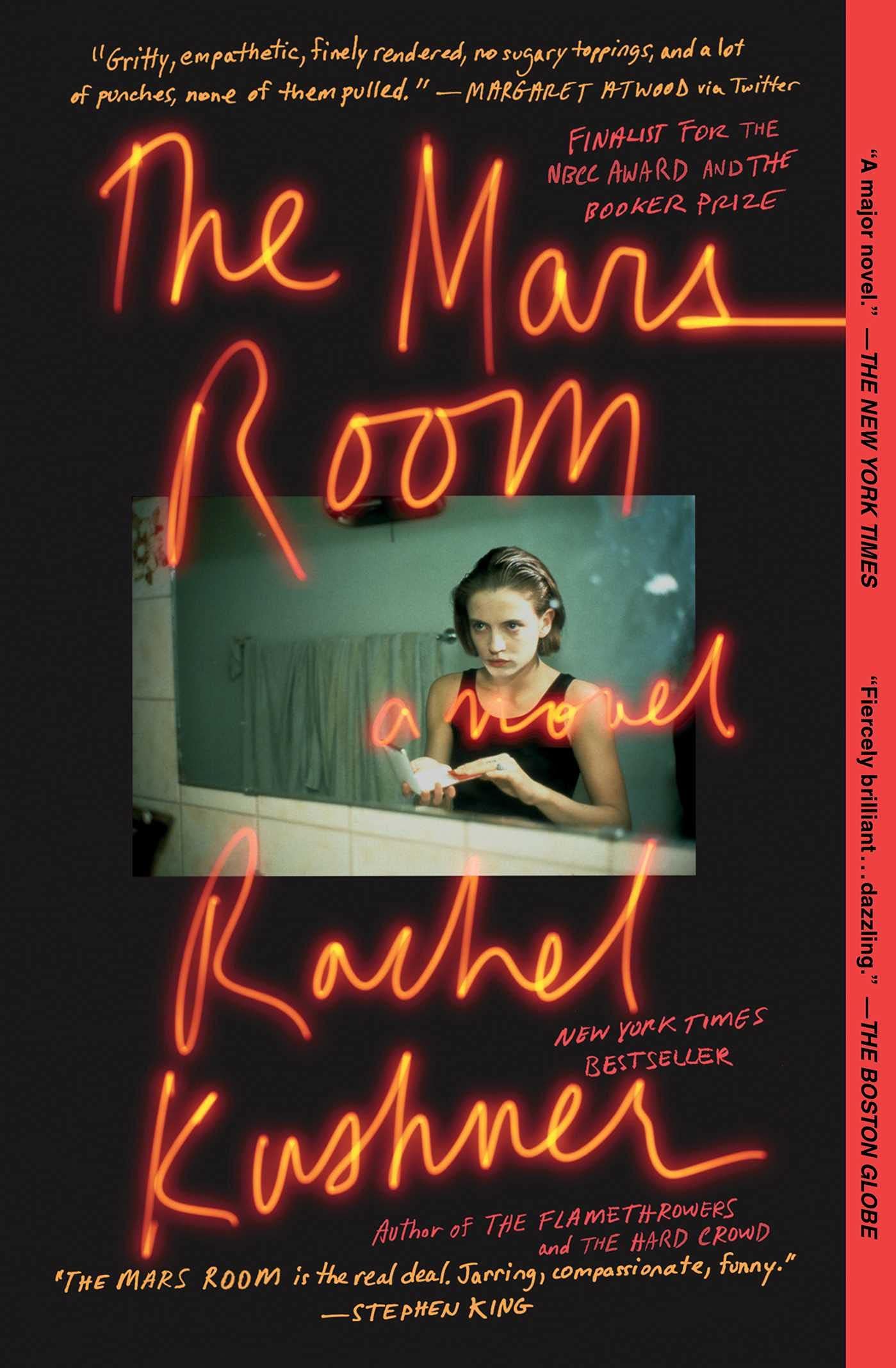
desertcart.com: The Mars Room: A Novel: 9781476756585: Kushner, Rachel: Books Review: Unprotected custody - The eponymous Mars Room is a strip club in San Francisco, where the protagonist, Romy, age 29, used to work. She liked it, because she made good money and could buy drugs, get high, and the money helped support her son, Jackson (who is now seven). Romy won’t see him anymore, though, because she is serving two life sentences plus six years. This is mostly a narrative about Romy’s life in prison, and her thoughts, and the claustrophobic existence she lives and breathes now, and her granular memories of life before. She got a raw deal, although she did live a life of crimes and misdemeanors. “I was assigned a public defender, We were all hopeful things would go differently. They did not go differently. They went this way.” The novel flows with gallows humor—I would almost call it gulag humor. This is no Orange is the New Black. The women don’t have white teeth and shining hair. They don’t have hope beyond the walls, either. But they do form a family, of sorts, with each other. Romy is an intelligent woman, never had a break. But didn’t much look for one, either. She threw the opportunities away and aimed low, but you’ll empathize with her. She’s so human, and doesn’t deserve to be treated like an animal, just because she lived an animal existence before, and didn’t really spend meaningful time doing meaningful activities. She did have a boyfriend and a hideous stalker. She unpacks her life in bits and pieces, but it all fills in within the cracks and scars. Romy muses on San Francisco, the city that outsiders think is lovely and exciting and fun. For Romy, it is not. She grew up here with her mother, and is not sentimental. “The city to us was clammy fingers of fog working their way into our clothes, always those clammy fingers… The city was wet feet and soggy cigarettes at a rainy kegger in the Grove.” Her mother took care of Jackson when Romy went to jail, her mother the chain-smoking German that named Romy after a German actress who told a bank robber on television that she liked him. A lot. Well, you get the picture. Romy expands that picture in her contracted world. This isn’t a face-paced novel, but the pages turn with a grainy 8 mm-like visual and a steady, sinuous rhythm. The plot is just enough to have a bit of an arc, but mostly it is a portrait of different kinds of grim restriction—imposed by the self or the system. There’s a number of very colorful and sinister people, and then there’s the femaile prisoners who are lifers caught up and damned by the prison system. Then there’s Gordon, a paid English teacher that works in the prison and who forms a constricted connection with Romy. They share a love of literature and loneliness. He gave up a more trapped academic life with attachments to live in a remote, isolated cabin, where he reads Thoreau and observes the natural world. Gordon gave up a girlfriend who he was glad to sever from his life, because women with need incited his escape instincts. “You had to mask your own ambivalence and pretend to be in love one hundred percent of the time, and he’d rather swim in a lake of hellfire.” But the remote life doesn’t necessarily expand his mind and calm his soul. Instead, things just become more skewed and he becomes more confined in his thoughts. Kushner has written three very different novels. She’s that rare author that also has more than one writing style, but many of her characters are fighting oppressed or reduced circumstances. She also finds these intriguing niches of humanity—a cabaret dancer, an anarchist, a French agitator, a woman biker, avant garde artists, poseurs, and others who dazzle the pages. And her main protagonists, like Kushner herself, are acute observers. In THE MARS ROOM, I felt as if I were seeing with Romy’s sharp and weary eyes. Provocative, brutal, and unsentimental, the story bites but also finds a few sweet spots in the slammer. Review: Weep for them, despise them...the characters will get into your conscience, - If you wonder how people living on the edge look at life, this book offers a believable, tragic, yet darkly humorous perspective. We meet some bruised but hopeful people who keep trying for a livable existence. Of particular merit are the descriptions of life inside low-level womens’ prisons: much less civilized than what’s portrayed in OITNB. There’s valid male perspective, also. And several questions are offered, about the inevitability of life, once choices are made. This all may sound moralistic and dry...it’s NOT! The characters presented will make you want to mother them- or wish you could have, back when they were kids. Plus: we’re given a crash course in the really seamy part of San Francisco!


| Best Sellers Rank | #151,393 in Books ( See Top 100 in Books ) #1,983 in Serial Killer Thrillers #2,450 in Murder Thrillers #5,697 in Literary Fiction (Books) |
| Customer Reviews | 3.9 3.9 out of 5 stars (5,295) |
| Dimensions | 5.25 x 0.9 x 8 inches |
| Edition | Reprint |
| ISBN-10 | 1476756589 |
| ISBN-13 | 978-1476756585 |
| Item Weight | 8.8 ounces |
| Language | English |
| Print length | 352 pages |
| Publication date | May 7, 2019 |
| Publisher | Scribner |
S**N
Unprotected custody
The eponymous Mars Room is a strip club in San Francisco, where the protagonist, Romy, age 29, used to work. She liked it, because she made good money and could buy drugs, get high, and the money helped support her son, Jackson (who is now seven). Romy won’t see him anymore, though, because she is serving two life sentences plus six years. This is mostly a narrative about Romy’s life in prison, and her thoughts, and the claustrophobic existence she lives and breathes now, and her granular memories of life before. She got a raw deal, although she did live a life of crimes and misdemeanors. “I was assigned a public defender, We were all hopeful things would go differently. They did not go differently. They went this way.” The novel flows with gallows humor—I would almost call it gulag humor. This is no Orange is the New Black. The women don’t have white teeth and shining hair. They don’t have hope beyond the walls, either. But they do form a family, of sorts, with each other. Romy is an intelligent woman, never had a break. But didn’t much look for one, either. She threw the opportunities away and aimed low, but you’ll empathize with her. She’s so human, and doesn’t deserve to be treated like an animal, just because she lived an animal existence before, and didn’t really spend meaningful time doing meaningful activities. She did have a boyfriend and a hideous stalker. She unpacks her life in bits and pieces, but it all fills in within the cracks and scars. Romy muses on San Francisco, the city that outsiders think is lovely and exciting and fun. For Romy, it is not. She grew up here with her mother, and is not sentimental. “The city to us was clammy fingers of fog working their way into our clothes, always those clammy fingers… The city was wet feet and soggy cigarettes at a rainy kegger in the Grove.” Her mother took care of Jackson when Romy went to jail, her mother the chain-smoking German that named Romy after a German actress who told a bank robber on television that she liked him. A lot. Well, you get the picture. Romy expands that picture in her contracted world. This isn’t a face-paced novel, but the pages turn with a grainy 8 mm-like visual and a steady, sinuous rhythm. The plot is just enough to have a bit of an arc, but mostly it is a portrait of different kinds of grim restriction—imposed by the self or the system. There’s a number of very colorful and sinister people, and then there’s the femaile prisoners who are lifers caught up and damned by the prison system. Then there’s Gordon, a paid English teacher that works in the prison and who forms a constricted connection with Romy. They share a love of literature and loneliness. He gave up a more trapped academic life with attachments to live in a remote, isolated cabin, where he reads Thoreau and observes the natural world. Gordon gave up a girlfriend who he was glad to sever from his life, because women with need incited his escape instincts. “You had to mask your own ambivalence and pretend to be in love one hundred percent of the time, and he’d rather swim in a lake of hellfire.” But the remote life doesn’t necessarily expand his mind and calm his soul. Instead, things just become more skewed and he becomes more confined in his thoughts. Kushner has written three very different novels. She’s that rare author that also has more than one writing style, but many of her characters are fighting oppressed or reduced circumstances. She also finds these intriguing niches of humanity—a cabaret dancer, an anarchist, a French agitator, a woman biker, avant garde artists, poseurs, and others who dazzle the pages. And her main protagonists, like Kushner herself, are acute observers. In THE MARS ROOM, I felt as if I were seeing with Romy’s sharp and weary eyes. Provocative, brutal, and unsentimental, the story bites but also finds a few sweet spots in the slammer.
E**P
Weep for them, despise them...the characters will get into your conscience,
If you wonder how people living on the edge look at life, this book offers a believable, tragic, yet darkly humorous perspective. We meet some bruised but hopeful people who keep trying for a livable existence. Of particular merit are the descriptions of life inside low-level womens’ prisons: much less civilized than what’s portrayed in OITNB. There’s valid male perspective, also. And several questions are offered, about the inevitability of life, once choices are made. This all may sound moralistic and dry...it’s NOT! The characters presented will make you want to mother them- or wish you could have, back when they were kids. Plus: we’re given a crash course in the really seamy part of San Francisco!
D**E
Did not quite live up to the hype
Kushner's writing style is immersive, drawing readers into the harsh realities of incarceration and the struggles faced by those trapped within its walls. The novel's exploration of themes such as survival, justice, and the human spirit provokes thought and reflection long after the last page is turned. However, despite its compelling narrative and vivid characters, "The Mars Room" can at times feel disjointed and meandering. The nonlinear structure may be disorienting for some readers, making it challenging to fully connect with the story's progression. Additionally, while the novel sheds light on important social issues such as poverty, addiction, and the failures of the justice system, it occasionally lacks the depth needed to fully explore these complex topics. Overall, "The Mars Room" is a thought-provoking read that offers a unique perspective on life behind bars. While it may not be without its flaws, Kushner's powerful storytelling and vivid imagery make it a worthwhile addition to any reader's bookshelf, especially for those interested in delving into the darker corners of society.
C**P
This book deserves every star, just everything.
Do not think for one minute that when you start Rachel Kushner’s THE MARS ROOM you will be able to put it down. This novel is other worldly amusing, with characters so good they charm and repulse you, and a storyline that is fraught with doom from the first page. To say that Kushner is a master storyteller would be the understatement of 2018. To tell you that her characters, each with a life story so intriguing, how they walk and talk to the point that you forget you’re reading because it feels like they are in front of you. Well, I just told you. She wrote it and you ought to read it. Romy, the protagonist, is on a prison bus with her soon to be prison mates, headed to a new location. The ride and these people alone are an indication of how bleak things are going to get as she is in for one brutal two life sentences with no parole situation. There are codes, rules between inmates, and ways to keep yourself alive within prison. Romy can play this game. She was doing it long before she was behind bars. But by no means is it easy. The struggle is real. A literary light is kindled for Romy when she meets a prison teacher who takes note of her interest and feeds her curiosity with great books. This is just one of many layers to the story. There is an overriding sense of sadness that I felt for each of these women. Even though they are fictional, and each ended up incarcerated of their own doing, some for unthinkable crimes, I could not help but think of their circumstances and how their endgame was inevitable. One takeaway for me is that people are no different whether they have freedom or not. Alliances are formed, stereotypes are prevalent, the weak do not survive, bigotry and hatred abound, a keen sense of intellect is learned quickly inside, and the ignorant are loud. Ooh wee, THE MARS ROOM is one fine, entertaining, and knock-out book. I can’t get enough of Kushner’s writing. What’s next.
S**N
Rachel Kushner is a terrific writer and it’s no surprise she’s been listed for the Man Booker. However this has to be the most relentlessly depressing book I’ve ever read. Which is as it should be, given that it’s about the doomed underclasses of San Francisco and Los Angeles. These are people destined for lives of poverty, drugs, lack of care and education, violence and probably - jail. Life inside prison is well described. Gloomy, hopeless and hard doesn’t begin to describe it, even though these people are tough and loud. Even the landscapes of the cities and a countryside blasted by agrochemicals show the worst of what humanity can do. The only relieving features in these bleak settings are Romy’s love for her sweet son Jackson and at the end, her time among giant redwoods where for the first time she can really see the Milky Way. A tour de force of social criticism.
N**R
Rachel Kushner ist für mich seit Flamthrowers die eine große (weibliche) Stimme der amerikanischen Literatur. Ein Mega-Talent.
A**A
Rachel Kushner é, sem dúvida uma das maiores escritoras norte-americanas da atualidade. Ela é tão boa que está no mesmo patamar de, digamos, uma Joan Didion, uma Joyce Carol Oates, ou uma Urusula K. LeGuin. Seus romances são comentários precisos sobre momentos históricos do passado que reverberam no presente – seja a respeito da Revolução Cubana (Tele from Cuba), ou da relação entre revolução e arte nos anos de 1970 na Itália (The flamethrowers). Em THE MARS ROOM, ela escreve um zeitroman, ou seja, um romance sobre o presente histórico em que a autora vive. O cenário central é uma prisão feminina para onde a protagonista, Romy Hall, é encarcerada depois de condenada a duas prisões perpétuas. Mas o que levou a moça de 29 anos a cometer um crime? O livro transita entre o presente e o passado – onde, eventualmente, trabalha no Mars Room, o mais notório e pior bar de striptease de San Francisco – e explora a descida da personagem ao inferno, e sua vida nele. Romy tem um filho pequeno, que ficou com sua mãe, e é sua fonte constante de preocupação e único motivo pelo qual gostaria de sair da penitenciária. O romance, em sua maior parte, é narrado pelo ponto de vista de Romy, com eventuais capítulos pela perspectiva de Gordon Hauser, que se torna professor na penitenciária. É ele quem fornece livros à protagonista - Charles Bukowski e Denis Johnson, mas as detentas gostam mesmo é de um romance de Danielle Steel que passa numa prisão feminina. A condição da mulher, na sociedade contemporânea, é uma questão central aqui, e Kushner a investiga com vigor, ao mesmo tempo que compõe um romance vigoroso e melancólico. Considerada uma das herdeiras de Don DeLillo (ele é citado na lista de agradecimentos), a autora tem uma prosa precisa, na qual nada sobra. Sua composição da personagem não busca uma empatia rápida e gratuita, é preciso que ela nos faça entrar nos pensamentos, emoções e sentimentos de Romy, e aí tudo faz sentido. O título, é claro, se refere ao bar, onde Romy diz acreditar ser “o lugar onde se podia fazer qualquer coisa que quisesse”. Ela descobre que, no entanto, as coisas não são assim, e sua prisão foi injusta, ao matar o homem que ameaçava e assediava a ela e ao seu filho. Mas sendo mulher e pobre, ela precisa pagar um preço bem alto. O resultado é um romance contundente – e, pode não ser uma leitura agradável (mas, paradoxalmente, há o prazer de o ler), mas é marcante.
R**A
Well written, fast paced novel that is sure to keep you engaged. Thought provoking look at socioeconomic factors and the justice system Highly recommend
S**Y
You feel sad for the protagonist. You want to know what happens in the end. But the story is very disconnected in terms of presentation. The narrator changes in almost every chapter.Found a few chapters irrelevant. The good part is this book is very straight. The author wants you to see how sad the lives of the people in prison are.
Trustpilot
Hace 1 semana
Hace 2 días