We remain fully operational. Our teams are working around the clock to ensure your deliveries continue safely.

Descargar la aplicación


Servicios al cliente
Sobre nosotros
Copyright © 2025 Desertcart Holdings Limited
Descargar la aplicación





Buy anything from 5,000+ international stores. One checkout price. No surprise fees. Join 2M+ shoppers on Desertcart.
Desertcart purchases this item on your behalf and handles shipping, customs, and support to Panama.
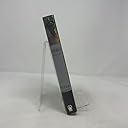
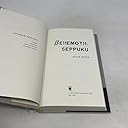
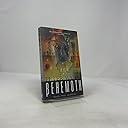
Behemoth: Seppuku [Watts, Peter] on desertcart.com. *FREE* shipping on qualifying offers. Behemoth: Seppuku Review: Satisfying conclusion to a fascinating series - First off, for those of you haven't already read "Behemoth: B-Max" (at least) you will definitely want to do so before tackling "Behemoth: Seppuku". For reasons that the author explains in the first volume, they constitute one book that was split into two due to pressures in the publishing issue. This novel does not stand alone, and will make no sense without reading the previous volume. Furthermore, there are two other volumes in the series "Starfish" and "Maelstrom" and while each entry stands on its own fairly well, reading the books in order would definitely be the approach I would recommend. For those of you who are new to the series, here is a brief synopsis that should tell you whether or not these books are for you. Essentially, the story arc is about evolution: human, animal and electronic. By mixing a blend of biology, computer science and chaos theory, author Peter Watts has created a near future Earth where man is simultaneously at the height of his powers and walking the knife's edge of total ecological failure. In an effort to maintain the high standard of Western living mankind has turned to deep sea geothermal power to meet their energy needs. Miles below the ocean, specially engineered humans culled from the dregs of society maintain these power plants. However, what no one could have expected was that they would encounter an organism that would unleash an apocalypse. Part hard science-fiction, part post-apocalyptic, the first two books represent a genuinely original voice in the genre. For those of you who have been eagerly awaiting "Seppuku" rest assured the ending is eminently satisfying. Given the two volume approach, it is difficult to offer much in the way of plot details without providing spoilers, but I can say that after the somewhat broader focus of "Maelstrom" and "B-Max" the story has gone full circle and boiled back down to the most perverse trinity of characters one is likely to find: Lenie Clarke, Ken Lubin and Achilles Desjardins. As the three engage in a power-play in which no one's motivations are clear and the fate of the world hangs in the balance, action takes precedence over thought, to sometimes disastrous effect. Nonetheless, the science and technology which has so defined this series is on ample display and is as prescient as ever. Of particular note, I found the conclusion to be perfectly enigmatic. This is post-apocalyptic fiction, and a happy ending would have been wildly out of place, but Watts' conclusion recognizes this without being entirely bleak. In this regard, his novel owes more to "Alas, Babylon" with it's open ended conclusion, than the superb, but utterly fatalistic "On the Beach". To say more would risk huge spoilers, so suffice it to say "Sepukku" is every bit the conclusion I was hoping for. Watts has combined hard science fiction and post-apocalyptic fiction and taken both in new and exciting directions. If you're a fan of the series, you'll be glad at the way it ends; if you're intrigued by this review, grab "Starfish" and start from the beginning. Jake Mohlman Review: Compelling - I am reviewing the last 2 books as one here, which is how the author intended them to be published. First, you will have a hard time with the content if you haven't read the series starting with Starfish. The story is compelling and fascinating and a more than a little horrible. The writing is excellent and the plot unfolds briskly. The science is well researched and accessible to most intelligent readers. The proposed what-ifs of a near-apocalypitcal future are totally plausable. But sheesh Watts is hard on his characters. I give 4 stars for a great book, because it is, but I admit I'm left cold by the violence: some sexually graphic and sadistic, up close and personal, some happening far away from the characters at hand but with devestating consequence. All in the name of saving the world. The ending is enigmatic: I would have loved a neat wrap up of the surviving characters and and exposition of the future, but it's not that kind of book. So be it: that is Watts' choice and I have no bones with it aside from personal preference. But what I do have bones with is the dilution of Lenie's character from a force to be reckoned with to a a whiny nay-sayer. Even if Lenie more or less killed the whole world in the previous books, at least she did it with style (ya know, in a really twisted way). Now she sets off to save the world with a whimper and a moan. Boo. So that's my beef. Conclusion: if you love terse, unshirking, compelling and serious sci-fi, Watts is your man. Read in good health.
| Best Sellers Rank | #2,673,227 in Books ( See Top 100 in Books ) #1,194 in Cyberpunk Science Fiction (Books) #5,309 in Hard Science Fiction (Books) #5,630 in Post-Apocalyptic Science Fiction (Books) |
| Book 4 of 4 | Rifters Trilogy |
| Customer Reviews | 4.2 4.2 out of 5 stars (552) |
| Dimensions | 5.34 x 1.09 x 8.98 inches |
| Edition | First Edition |
| ISBN-10 | 0765311720 |
| ISBN-13 | 978-0765311726 |
| Item Weight | 0.01 ounces |
| Language | English |
| Print length | 304 pages |
| Publication date | January 1, 2005 |
| Publisher | Tor Books |
J**N
Satisfying conclusion to a fascinating series
First off, for those of you haven't already read "Behemoth: B-Max" (at least) you will definitely want to do so before tackling "Behemoth: Seppuku". For reasons that the author explains in the first volume, they constitute one book that was split into two due to pressures in the publishing issue. This novel does not stand alone, and will make no sense without reading the previous volume. Furthermore, there are two other volumes in the series "Starfish" and "Maelstrom" and while each entry stands on its own fairly well, reading the books in order would definitely be the approach I would recommend. For those of you who are new to the series, here is a brief synopsis that should tell you whether or not these books are for you. Essentially, the story arc is about evolution: human, animal and electronic. By mixing a blend of biology, computer science and chaos theory, author Peter Watts has created a near future Earth where man is simultaneously at the height of his powers and walking the knife's edge of total ecological failure. In an effort to maintain the high standard of Western living mankind has turned to deep sea geothermal power to meet their energy needs. Miles below the ocean, specially engineered humans culled from the dregs of society maintain these power plants. However, what no one could have expected was that they would encounter an organism that would unleash an apocalypse. Part hard science-fiction, part post-apocalyptic, the first two books represent a genuinely original voice in the genre. For those of you who have been eagerly awaiting "Seppuku" rest assured the ending is eminently satisfying. Given the two volume approach, it is difficult to offer much in the way of plot details without providing spoilers, but I can say that after the somewhat broader focus of "Maelstrom" and "B-Max" the story has gone full circle and boiled back down to the most perverse trinity of characters one is likely to find: Lenie Clarke, Ken Lubin and Achilles Desjardins. As the three engage in a power-play in which no one's motivations are clear and the fate of the world hangs in the balance, action takes precedence over thought, to sometimes disastrous effect. Nonetheless, the science and technology which has so defined this series is on ample display and is as prescient as ever. Of particular note, I found the conclusion to be perfectly enigmatic. This is post-apocalyptic fiction, and a happy ending would have been wildly out of place, but Watts' conclusion recognizes this without being entirely bleak. In this regard, his novel owes more to "Alas, Babylon" with it's open ended conclusion, than the superb, but utterly fatalistic "On the Beach". To say more would risk huge spoilers, so suffice it to say "Sepukku" is every bit the conclusion I was hoping for. Watts has combined hard science fiction and post-apocalyptic fiction and taken both in new and exciting directions. If you're a fan of the series, you'll be glad at the way it ends; if you're intrigued by this review, grab "Starfish" and start from the beginning. Jake Mohlman
C**2
Compelling
I am reviewing the last 2 books as one here, which is how the author intended them to be published. First, you will have a hard time with the content if you haven't read the series starting with Starfish. The story is compelling and fascinating and a more than a little horrible. The writing is excellent and the plot unfolds briskly. The science is well researched and accessible to most intelligent readers. The proposed what-ifs of a near-apocalypitcal future are totally plausable. But sheesh Watts is hard on his characters. I give 4 stars for a great book, because it is, but I admit I'm left cold by the violence: some sexually graphic and sadistic, up close and personal, some happening far away from the characters at hand but with devestating consequence. All in the name of saving the world. The ending is enigmatic: I would have loved a neat wrap up of the surviving characters and and exposition of the future, but it's not that kind of book. So be it: that is Watts' choice and I have no bones with it aside from personal preference. But what I do have bones with is the dilution of Lenie's character from a force to be reckoned with to a a whiny nay-sayer. Even if Lenie more or less killed the whole world in the previous books, at least she did it with style (ya know, in a really twisted way). Now she sets off to save the world with a whimper and a moan. Boo. So that's my beef. Conclusion: if you love terse, unshirking, compelling and serious sci-fi, Watts is your man. Read in good health.
T**N
Satisfying ending to an intriguing series
Peter Watts concludes his _Rifters_ saga in the fourth and final volume, _Behemoth: Book Two: Seppuku_. Watts had written that he originally planned a trilogy but that changes in the publishing industry had forced him to divide his rather large final volume into two novels, but that he was fortunate to have a good breaking point between the two books and two resulting novels that were different in scope. It seems to have been a good choice, as while _Behemoth_Book One_ focused nearly entirely on the undersea refuge of the corpses and rifters (along with our old friend Achilles Desjardins), _Book Two_ spent no time there at all but instead allowed the reader a tour of a post-Behemoth North America, a taste of international politics, and of course the end game between Lenie Clarke, Ken Lubin, and Achilles (and a new character that the book introduces, a physician by the name of Taka Ouellette). Overall I found it satisfying. The post-apocalyptic world we got to see was believable and interesting though wasn't perhaps as well-explored as what we got to see in _Maelstrom_. We were shown much more of the sick and sadistic pleasures of Achilles. While never really entering "torture porn" territory, the reader is left with a sense of disquiet (at least this one was) about how far the author would go in that regard. I didn't think it gratuitous, as this was a fundamental aspect of Achilles' character and of what had happened to him regarding his conscience, but it still nonetheless made me a bit uncomfortable at times (and makes me wonder just what the future holds for some forms of entertainment, given the evolution of horror films and the continual apparent need for succeeding films to outdo one another, a point I think the author was trying to make). I liked the ending, it had two interesting twists I really enjoyed and didn't devolve into what it could have been (one character simply killing another, story over). The world at the end of the novel is fundamentally different and not necessarily a world without hope. It is also a world that would be interesting to see explored in a later novel. I would like to express my displeasure at this series being out of print despite its recent age (_Seppuku_ came out in 2004). That is a real shame, as it is a worthwhile and interesting series, an excellent addition to the end of the world sub-genre of science fiction as well as probably the finest novel to ever handle the deep sea and ocean themes. The series overall was well researched (the author himself was a marine biologist) and had well-developed characters, a fascinating setting, and was an intriguing exploration of developing trends in our world.
P**S
Apparently the last two books in the series didn't do as well as the earlier two - I found I liked them all! Again, it might help if you have a bio background - I found those ideas really interesting while the stories were still compelling. A gritty but very believable SF story!
D**H
I cannot believe it has taken me 20 years to find Peter Watts and the Rifters Trilogy! An incredible story, albeit quite technical and more than once I have had stop with a “What”!, “Really”!, or “No way”! Leaving my mental lips as I sidelined into a bit of research of my own. That aside the story rollicks along (just accept the technical stuff) and one is never quite sure who is going to survive the next chapter. Brilliant read, highly recommend.
F**E
Was not as riveting as expected. Lenies's character is such a slow learner in the trilogy that it almost borders to cretinism. A great dystopia like I would like to read more. Sent a chill through my spine for sure but need to progress in style and pace a bit.
I**L
Brilliant
Trustpilot
Hace 2 meses
Hace 1 semana