We remain fully operational. Our teams are working around the clock to ensure your deliveries continue safely.

Descargar la aplicación


Servicios al cliente
Sobre nosotros
Copyright © 2025 Desertcart Holdings Limited
Descargar la aplicación
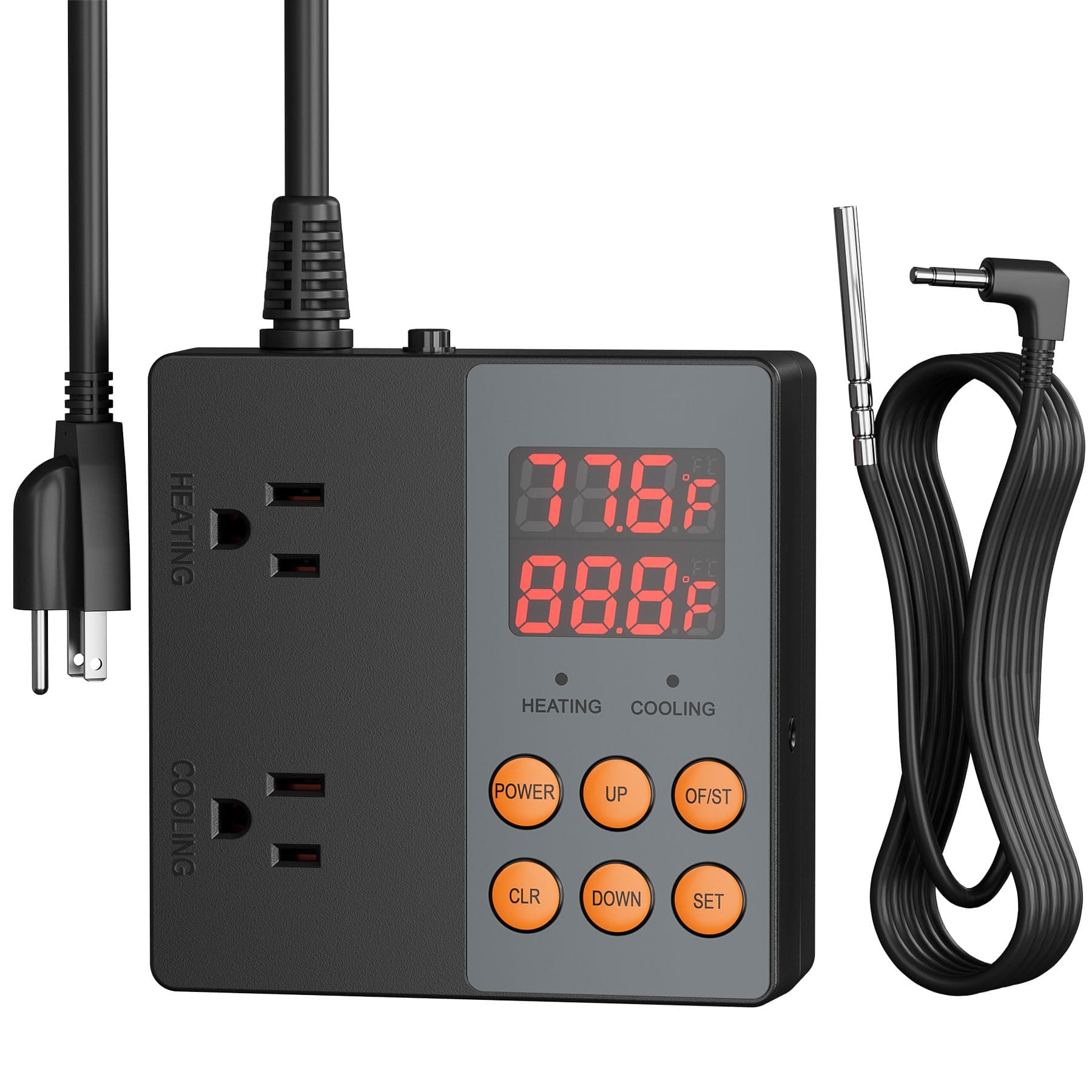

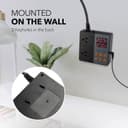

🌡️ Master your microclimate with BN-LINK — control heat and cool like a pro!
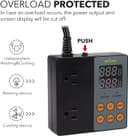
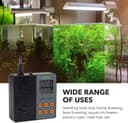
The BN-LINK Digital Temperature Controller is a professional-grade, dual-outlet thermostat designed for precise heating and cooling control across diverse applications—from reptile habitats to homebrewing. Featuring a clear LCD interface, flexible 71-inch cords, and a waterproof probe, it supports temperature ranges from -40 to 176°F with a max load of 15A/1875W. Its durable design and built-in safety features make it the go-to device for millennial professionals seeking reliable, no-fuss climate management without WiFi dependency.


| ASIN | B07Y2FDR4K |
| Best Sellers Rank | #21,244 in Industrial & Scientific ( See Top 100 in Industrial & Scientific ) #18 in Temperature Controllers |
| Brand | BN-LINK |
| Brand Name | BN-LINK |
| Color | Black |
| Customer Reviews | 4.3 out of 5 stars 971 Reviews |
| Display Type | LCD |
| Global Trade Identification Number | 00857333007479 |
| Included Components | plastic |
| Manufacturer | BN-LINK |
| Material | T9 |
| Material Type | T9 |
| Operating Temperature | 176 Degrees Fahrenheit |
| Voltage | 125 Volts |
B**D
Actually just a Solid Choice
I've been using this product for a few years now and it is genuinely one of those rare products that is just uncompromisingly good. At the risk of sounding like a review robot, I want to elaborate on my experiences with this device and why it's been one of the best electronics I've bought from Amazon. To clarify, I have only ever used this device for controlling the temperature of my living space, not for any agricultural or misc purposes. Despite this, as someone who is a nut for home automation, this device serves its purpose perfectly. HEATING OUTLET, COOLING OUTLET The device works by providing electricity to one of its two outlets based on user-defined conditions. These outlets are helpfully labeled "HEATING" and "COOLING". Having a single device that can control both a heating solution and a cooling solution is SIGNIFICANTLY more intuitive than having two separate systems, one for heating and one for cooling. A WIFI-FREE SOLUTION Many similar devices are wifi-controlled. That can be a good thing if that product allows for more advanced setups like schedules, but in positions like mine where I live in University Housing (where IoT devices are not allowed to connect to the internet, only complete devices like Computers and Phones can) having an analog system has been ESSENTIAL. Being able to just plug the device in and push a few buttons instead of filing an application with the property holder to add a special exception for the device on the network is much more elegant. PERFECTLY ADEQUATE CONFIGURATION OPTIONS The device has plenty of variables that can be used to create the exact behavior you want. Some highlights include: SU - "Set Unit" - The ideal temperature you would like Hd - "Heating Differential" - How many degrees colder than the Set Unit the temperature must be before the heat comes on. Cd - "Cooling Differential" - Home many degrees warmer than the Set Unit the temperature must be before the cooling comes on. PT - "Time Differential" - After the system reaches the SU, the system will wait for at least PT number of minutes before allowing any outputs to turn on. By mixing and matching Hd, Cd, and PT it is possible to create very specific behaviors. I will elaborate on this in the next section. GREAT FOR SPREADING OUT CYCLES One way I use the device is to control my air portable conditioner. By default, my AC will turn on when the temperature drifts by more than ~1*F from the target. This can result in a lot of really short cycles that can be distracting. By configuring my device with a Cd of 3 and a PT of 4, I can make it so that my device runs for longer but less frequently. This is ideal given how jarring the transition in volume between idle and operating modes in portable air conditioners. DURABILITY The device is extremely durable. My device has seen a fair bit of abuse and functions exactly how it did when I got it. I also appreciate how the cable that connects the device to the outlet is very thick, as this pretty much ensures any devices you plug into the outlets on the device will not be drawing too much power for thin cables to handle. My only consideration is the rather flimsy cable for the temperature probe. As long as you are gentle with it it will be fine but because its connector is a 90* angle it can sometimes be easy to bump it. That's all I've got for now. In a world where products are getting cheaper and flimsier, it's reassuring to see products that are durable and practical. No gimmicks, no risks, if you want to control a heating and cooling system through an external analog device I really think this is the device for you.
H**L
Great temperature controller
This is a great temperature controller. There’s multiple outlets for if you need multiple heating elements. It’s perfect for my pet tank. I use it for my hamster tank during the winter, just in case it gets too cold and it’s reliable. It comes right on at the correct temperature that I set. I have two ceramic lamps connected to it. It’s a good price for a controller that has two outlets, so I can even split it for another lamp in another tank.
Y**N
good
Very good temperature controller. The display is bright and easy to read, and the temperature control is very precise. Installation was simple and it works perfectly.
E**U
Know before you buy.
This temperature control (the T10 model) worked really well after I jumped through the hoops of setting it up. I used it with great success in my greenhouse for several months. The issue I ran into occurred as the temperature dipped in the winter, and I added a second heater. I was careful to put them both on the medium temp setting to stay under the maximum watt rating of the temperature controller. Apparently, the inrush current of the second heater overloaded the controller. So I take out the supplied manual to troubleshoot, and immediately notice two glaring problems. The documentation references both an overload reset button and removable temperature sensor that my device does not have. So I look at the Amazon listing, and realize that there are two models offered for the listing: the T9 and the T10. They apparently decided to use the same manual for both models. I doubt that this was a fluke, because I have two of the T10, and they both shipped with incorrect instructions for troubleshooting. So I figured that since one was dead I may as well open it up, and discovered that there is a replaceable fuse inside. If you manage to get yourself in the same situation that I did, it is possible to solder a new fuse in place. The original appears to be 15A. Would this void your warranty and set the liability in your lap? Absolutely. Will it safely solve the problem? Maybe. I still think this is a good product, but sending out the wrong instructions is inexcusable. If you are considering buying one of these, I recommend spending a couple dollars more for the T9 model, which has a replaceable temperature probe and resetable fuse.
L**S
Good job
Very good, I use it in my fish tank, which can control the temperature of the fish tank within a reasonable range to prevent accidents caused by dry burning of the heating rod, which I think is very useful.
S**X
I like the idea of this, unfortunately, I couldn't make it work
It's pretty clear an electrical engineer wrote the user manual. It's needlessly complex and left me unsure if the poor performance was due to a defect or because I don't have the right kind of degree to run the thing. The idea is pretty simple, it's got a heating plug and a cooling plug. Plug your heater into heat and you cooler into cool. Then set the desired temp followed by a value below the set temp where you want it to start heating and a value above where you want it to cool. But the manual is written in a "PV < SV - HD" type approach that is just needlessly complex to me. All it did in the end was leave me wondering if I really understood what they were saying here. PV, which I started calling Probe Value (not what they call it) is basically what temp the thermometer probe is reading. SV is set value (or the temp you are shooting for). HD is heat difference, which I think means the number of degrees under the SV at which point it's supposed to power the heat plug and CD is cool difference, which is the number of degrees over the SV at which point it is supposed to cool. Neither heating or cooling would ever kick on. The PV value would just cruise over the SV value and alarm. Then I'd manually unplug heat and the temp would drop into set range, I'd plug heat back in and then the temp would fall below the HD value and never kick on the heat plug. Since I was just using heat in this application, I could ignore the cool but I set it anyway. And no matter what I set the heat/cold difference values to, the heat would never turn on and the cold wouldn't either. There's also no way to disable the alarms permanently. So I got crazy beeping the whole time I was trying to get this thing to work. You can silence the alarm with the CLR button but only until the next breach in temp. Returned it and bought something else that is hopefully more functional, more clear and less esoteric in usage instructions
P**0
Nice piece of equipment
Used this to control my 3-yr old pool heat pump when the main board took a dump. Used in conjunction with a 24v relay, works very well so far (been about a year to date). Easy to set up and easy to use.
L**S
Purchased by mistake thinking it was something else
I actually ordered this by mistake trying to order reptile thermostats I thought this would run two different heat mats but I was wrong this is for plants to do a cool plug-in and a heat plug in I don't really understand that but I'm sure it works great for what it is. The single thermostats that are made by the same brand work great for reptiles and are very long-lasting
Trustpilot
Hace 3 semanas
Hace 2 semanas