We remain fully operational. Our teams are working around the clock to ensure your deliveries continue safely.

Descargar la aplicación


Servicios al cliente
Sobre nosotros
Copyright © 2025 Desertcart Holdings Limited
Descargar la aplicación


🔌 Power up your precision — never miss a watt or a volt!
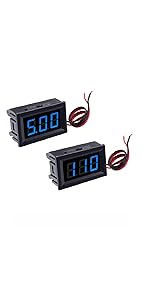
The bayite DC 6.5-100V 0-100A Digital Power Meter is a professional-grade multimeter designed for real-time monitoring of voltage, current, power, and energy in DC circuits. Featuring a large LCD display with blue backlight, a 100A current shunt, and smart energy data retention, it’s ideal for solar setups, RVs, and off-grid power systems. Certified for safety and accuracy, it includes an overload alarm to protect your devices and optimize energy management.
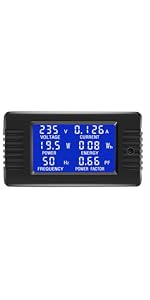


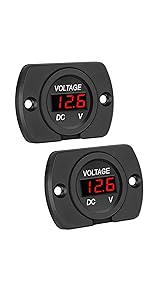
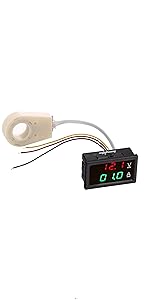

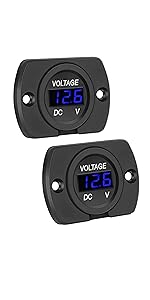
| ASIN | B013PKYILS |
| Best Sellers Rank | #42,325 in Tools & Home Improvement ( See Top 100 in Tools & Home Improvement ) #67 in Multi Testers |
| Brand Name | bayite |
| Color | Blue |
| Customer Reviews | 4.4 4.4 out of 5 stars (4,756) |
| Item Dimensions | 3.33 x 1.75 x 0.96 inches |
| Item Weight | 7.04 Ounces |
| Manufacturer | bayite |
| Maximum Operating Voltage | 100 Volts (DC) |
| Measurement Type | Multimeter, Voltmeter |
| Minimum Operating Voltage | 6.5 Volts |
| Model | PZEM-051 |
| Power Source | DC |
| Specification Met | CE, RoHS, UL |
| Style Name | Ammeter, Voltmeter, Power Meter |
| UPC | 711463670166 |
A**H
Excellent for monitoring RV solar setups
I have been using these bayite meters for almost three years now, not only in my travel trailer, but in my shed solar setup. The CHARGE and DISCHARGE meters in my photos are my original meters purchased in April 2019 and the SOLAR and INVERTER meters are the newer models ordered in April 2022. The only differences I can discern is the button on the front. The older meters had a recessed button and you needed a pen or pin to press it, whereas the newer model has a low profile button but can easily be pressed with just a finger, no device needed. The picture attached is before I upgraded the system: 10A controller with 200W solar array (upgrading to a 30A and 300W next) and these pictures were taken under partial tree shade in the late afternoon sun. The TT is running a 2000W modified sine wave inverter off a 385AH flooded lead acid battery bank, which powers mostly a residential mini fridge in the TT outside kitchen, wired through a 120V manual transfer switch to the GFCI outlets. You can see that the INVERTER load from the fridge is about 6A, while the solar output is about 4A, which correlates to the almost 2A battery discharge (including other low current devices: RV fridge circuit board, USB outlets, display lights). This type of setup is great for monitoring and measuring the performance of your batteries and solar system and if you have enough solar available or if your inverter loads are too much. To see what your actual amp-hour draw is, divide the ENERGY output by 12 (or whatever voltage you are running) to get AH so you can size your battery bank appropriately. My setup needs about 186 AH max per day and I am adequate on capacity but really should add an additional 100AH (of course I should add an additional 100W of solar too, but really there isn’t a hard ceiling to the max specs, just mind your budget). I boondock occasionally, but consider myself more of a touring adventurer, meaning I drive long distances in between destinations and camp mainly overnight in the forest or dispersed. My tow vehicle provides charging power along with the solar panels to recharge my batteries and my last 24 hours yielded 166 AH used so I never get below 50% of my battery bank. The extra 100W will help with the charge too once complete. I 3D printed a couple of meter mounts in black ABS and mounted them outside of the RV’s control panel. I could have also flush mounted them for a lower profile look but I think they look pretty good the way they are now. I used some spare Cat 6 and some jacketed landscape wiring to run from the RV batteries to the control panel. I would recommend finding some type of stranded small gauge wire for ease of crimping onto ring terminals and heat shrink tubing to protect them from separating while attached. Using ring terminals is the most secure to attach to the shunts but you can use spades or bare wire too. A good option for mounting is directly attaching the shunt to the negative battery terminal or inverter post, just remember to attach ALL load negatives on the other side of the shunt to accurately capture all discharging loads on the meter. The diagram provided by bayite on this site in the manufacturer pictures show to connect the solar meter/shunt AFTER the controller, which is a correct installation if you want to know how much power the solar controller is sending to your batteries. Bayite also provides a link to a modified diagram where the solar meter/shunt (included in my review pictures) is connected BEFORE the solar controller, directly in line from the solar panels, which will provide the meter with information with how much power your solar panels are actually producing. Each wiring is correct but provides different information; the voltages will differ as connecting before the controller will show the solar panel voltage whereas connecting after will show the battery voltage. Your shunt may have cuts in them, which is completely normal as it’s how they’re calibrated. Other reviews here say they have cuts and that they are damaged, but that’s inaccurate. These meters are good displays especially for solar controllers that don’t have displays or don’t show enough information. Great product, great longevity, and great information displayed for nerd like me who like to watch the numbers go up and down as conditions change.
C**O
Precision monitoring with a compact footprint—ideal for DIY power systems.
The bayite DC 6.5–100V 0–100A LCD Power Meter is a fantastic tool for anyone working with DC circuits, especially in solar, battery, or off-grid setups. I installed it in my camper van to monitor battery performance, and it’s been incredibly accurate and responsive. The LCD display is crisp and easy to read, even in low light, showing voltage, current, power, and energy all at once. I appreciate the real-time feedback—it helps me catch inefficiencies and optimize usage. Installation was straightforward, and the unit feels well-built for long-term use. For the price, it delivers professional-grade insight into your power flow.
F**E
Great battery monitor
This was a direct replacement for a previous unit in my travel trailer used to monitor my battery bank. I had a battery issue which may have caused the original unit to fail. Hooked this up to my new LIPO battery and it worked perfectly. Great value for the money. One caveat, the original came with a backing plate for mounting but the new one didn’t. I was able to use my previous one so no problem. Without the plate you will need to be very accurate when you a cut the hole to be sure that you get a tight fit.
C**T
A 3D Printed Case for this Meter
This little meter is just perfect to measure the voltage and current of a 48VDC power supply for a ham radio project of mine. However, I did not want to just have that small (3.5"x2"x1") meter simply lying around on the shelf or the top of the amp. So, I searched for a box that I could mount that meter into and by chance came upon EXACTLY what I wanted as a 3D Print called "Power Monitor case V2" on Thingverse. Now the problem became "How Do I Print This?" since I do not own a 3D Printer. Again, Mr. Google let me know that the local Public Library will print 3D Digital Models and only charge for the filament used. The case was printed in 2 pieces (back and front cover). Once I had it home, a half hour of trimming off any excess plastic gave me the parts I needed to mount the meter. You can see in the photos that this little 3D printed box was just perfect for this meter and was pretty simple to do. Having a custom printed box to hold this meter really adds to the utility of an already great product.
D**E
I finally can monitor exactly what my motorhome battery system is doing - a must have for any RV owner
I purchased two of these bayite DC 6.5-100V 0-100A LCD Display Digital Current Voltage Power Energy Meter Multimeter Ammeter Voltmeter with 100A Current Shunt and installed them in my motorhome a month ago. I wired them so that one meter shows all current flowing out of the house batteries and the other shows all current flowing into the house batteries. I only needed to use one amp meter shunt at the negative terminal of my battery bank output to accomplish this. This arrangement has worked exceedingly well for me. Both meters show the identical voltage readings. With these meters I can keep easy tabs on what my electrical system is doing. I can tell what the current draw is for the various loads that I have (lights, water pump, standard dorm fridge, etc.) and the watt-hour meter lets me know how much my battery has been depleted (if you know the total capacity of your battery). It also lets me see what my battery charger is doing with regards to voltage and current delivery. The illuminated display uses hardly any current (3 milliamps) so I keep the light on all the time. It makes a great night light. So far both meters have worked great and were relatively easy to install. I can't believe I waited so long to install something like this. It's so inexpensive yet so helpful. A no-brainer. EDIT 7/13/2018 - Meters are still working great and are very helpful. This should have been standard equipment. I added a photo showing how I cut out mounting holes for the two meters in a standard light switch plate and mounted this plate over a cutout on the interior cabinet wall.
V**C
It does what is set to do: tells you the state of your battery bank. Very accurate and easy to wire. Recommended.
M**A
I am using 4 of these meters to monitor my solar battery system: - Battery in - Battery out - Inverter out and - Charge controller out Installation: I found it them easy to use and install. Acuracy: I am very happy with it's performance and acuracy, I've tested it against other meters, charge controller displays and multimeters. Support: I had to contact their customer service as there was some confusion (created by me) and they were super helpful. Usage environment: I am using this with a 24V battery system (Voltax), a Epever 200W inverter and 1200W of Canadian Solar panels. You can see them in action on my EcoAmbitionsAustralia YouTube channel in more detail.
J**R
No complaints. Invaluable to a novice to evaluate parasitic current draw.
H**A
A tiempo y cumple su proposito
L**S
very good small monitoring center to track the battery charge and discharge.
Trustpilot
Hace 2 meses
Hace 3 semanas