We remain fully operational. Our teams are working around the clock to ensure your deliveries continue safely.

Descargar la aplicación


Servicios al cliente
Sobre nosotros
Copyright © 2025 Desertcart Holdings Limited
Descargar la aplicación
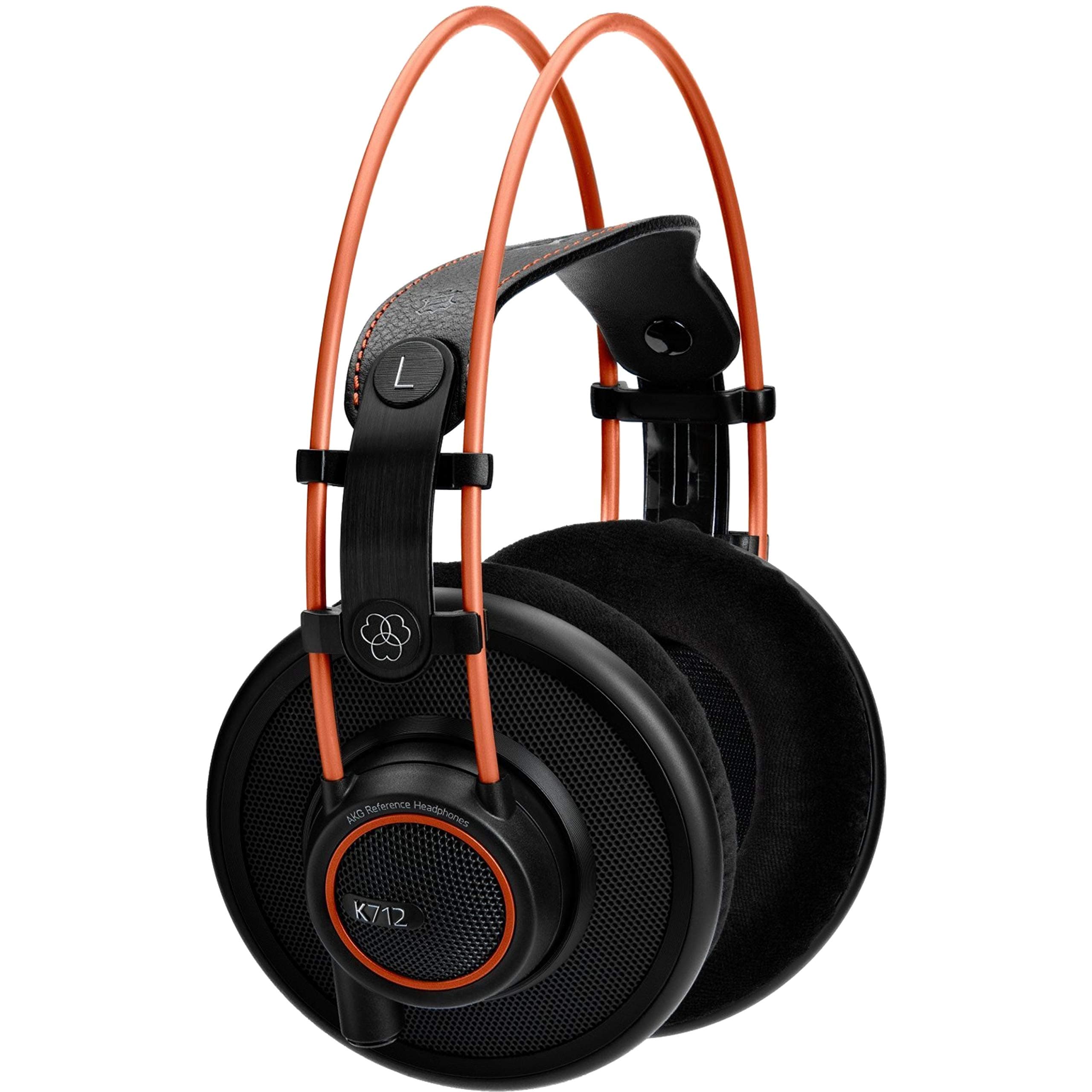
🎶 Elevate your audio game — hear every detail like a pro!
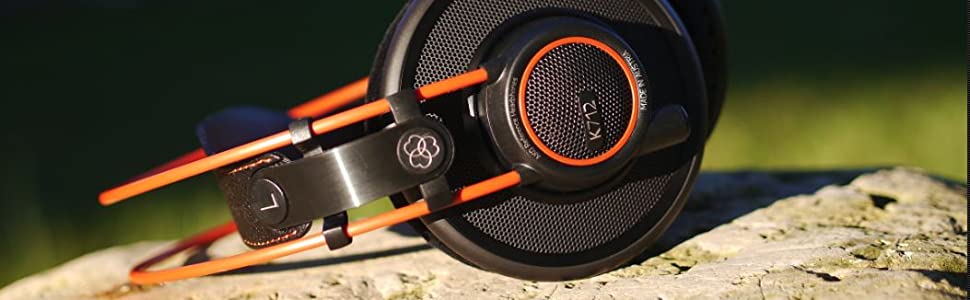
The AKG Pro Audio K712 PRO are wired, over-ear, open-back reference studio headphones designed for precise listening, mixing, and mastering. Featuring a flat wire voice coil for superior impulse response, a 3dB enhanced low-end for powerful sound imaging, and an ergonomic design with memory foam earpads, these handcrafted Austrian headphones deliver spacious, fatigue-free comfort and exceptional sonic clarity. Ideal for professionals seeking a natural, immersive soundstage in quiet environments.





| ASIN | B00DCXWXEI |
| Additional Features | Over-Ear |
| Age Range Description | All |
| Audio Driver Type | Dynamic Driver |
| Best Sellers Rank | #14,173 in Musical Instruments ( See Top 100 in Musical Instruments ) #60 in Recording Headphone Audio Monitors |
| Bluetooth Version | 4.1 |
| Brand | AKG |
| Brand Name | AKG |
| Built-In Media | Headphones |
| Cable Features | Detachable |
| Color | Black |
| Compatible Devices | Cellphones, Laptops, Desktops |
| Connectivity Technology | Wired |
| Control Method | Remote |
| Customer Package Type | Standard Packaging |
| Customer Reviews | 4.3 out of 5 stars 1,920 Reviews |
| Ear Placement | Over Ear |
| Earpiece Shape | Over-Ear |
| Enclosure Material | Fabric/Silicone |
| Form Factor | Over Ear |
| Frequency Range | 20 Hz - 20,000 Hz |
| Global Trade Identification Number | 00635040352156, 00885038035688, 09002761035681 |
| Headphone Folding Features | Over Ear |
| Headphone Jack | XLR |
| Headphones Ear Placement | Over Ear |
| Impedance | 62 Ohms |
| Is Autographed | No |
| Is Electric | No |
| Item Type Name | AKG Pro Audio K712 PRO Over-Ear Open Reference Studio Headphones |
| Item Weight | 0.52 Pounds |
| Manufacturer | AKG |
| Model Name | K712 Pro |
| Model Number | 2458X00140 |
| Noise Control | None |
| Number of Items | 1 |
| Style Name | Classic |
| UPC | 802818415805 885038035688 802818433571 635040352156 900271035681 |
| Unit Count | 1.0 Count |
| Warranty Description | MANUFACTURERS LIMITED PRODUCT WARRANTY For AKG products applies only when the purchase is made from AKG Authorized North American Dealers. |
| Water Resistance Level | Not Water Resistant |
| Wireless Technology | Bluetooth 4.1 |
T**T
An excellent introduction into high end headphones.
There are plenty of reviews raving about these and I have to back them up. These are insane headphones. For the cost, they better be fantastic, and thankfully they are on all fronts. I've been using these for a few months now and while they're not perfect for every situation, for what they're built for they're unbeatable. First, and most important, sound quality. These are absolutely outstanding as you'd hope. Everything I've played through these sounds incredible; classic R&B, 60s jazz, lo-fi indie rock, pummeling death metal, and booming hip-hop all sound stellar. The soundstage on these make it feel like you're not even wearing headphones in a quiet room; I've heard it described as "VR for your ears," and that's an accurate statement. On live recordings like John Denver's "An Evening With John Denver," you can point to where individual instruments are situated, and on Bob Marley's "No Woman No Cry" on the Live At The Roxy album, it feels like you're in the front row with the entire crowd around you. It's really hard to describe just how good these sound without hearing them for yourself. They're a little more exciting than your standard studio monitor headphones that go for completely flat frequency responses, but for general music listening that isn't a bad thing at all. Second, comfort. These are decently heavy and bulky headphones, but they don't feel like it. Suspension style headbands like AKG tends to favor are my favorite, and it's on full display here. The leather headband just disappears as you put these on, and the wide swivel means these will fit basically anyone with little issue. The earpads on here are insanely comfortable and thanks to the large driver size, my decently big ears can comfortably sit inside without touching anywhere on them. They're also deep enough that you have a decent distance from the speaker, something that isn't true of some of my other headphones such as Audio Technica M40Xs or even my other AKGs, the K240s. The build quality on these also feels great. They're all plastic which is a downside to some, but plastic quality does vary, and these are definitely made of quality materials. I've seen reports of the suspension system wearing down and breaking with heavy use, and if that happens I'll update this review, but it feels very secure as of now and everything has a great finish. I especially appreciate the ability to remove the cable as well as providing two different sized cables for different use cases. With all these positives though, don't buy these expecting to use them on a train or a bus. Not only are they difficult to drive off of a phone thanks to their relatively low sensitivity, they're completely open so they leak all the sound out with little to no isolation. These aren't commuter headphones (for those I would recommend AKG's own K371s or any of the multitude of fantastic IEMs out of China that have been dubbed Chi-Fi), they're for home listening and they excel at it. To be clear, they aren't exceedingly hard to drive, but you might be disappointed at the volume out of a phone or laptop depending on what you're using. I'm usually using these out of a Sony STR-DH190 stereo amplifier and that provides plenty of power. When I'm at home and I really want to just listen to music, these are what I'm going for 99% of the time. Depending on the genre I might reach for my Grado SR60x's just for the extra high end, but these are the best all around. $300+ is a lot of money for a pair of headphones, but if music is really important to you and you can afford it, these are worth the spend. If you want to explore cheaper options, there are plenty in the $50-120 range that will give 70-90% of the sound, such as the SHP9500 from Phillips even the cheaper planar options from Hifiman. But having heard them before, the AKG K712s are still insanely good, and I'll keep using them for as long as possible.
A**C
A steal for the sound and build quality for the near-top of the line AKG headphone
TEST SETUP: AKG K712 Pro w/ original orange cable, source: Creative Sound Blaster X-Fi Titanium HD (Game mode: Crystallizer 75%, EQ adjusted to boost mid-lower and mid-upper range), reference: Denon AHD2000 DISCLAIMER: A recent visit to an ear doctor revealed that I have lost hearing in the most upper and lower frequency ranges and I am not even 30 yet, nor do I ever listen to loud music. Please, particularly audiophiles, protect your hearing and listen responsibly. The AKG K712 Pro (and any other high-end headphone) should be used at reasonable volumes. INTRO If you're looking at this headphone, you're probably looking for something near the best from a respected manufacturer but want to spend well under $1000. Since you've read this far, you're right on target with this one. With the current prices of the AKG K712 Pro, you'd be remiss not to have it near the top of your list. This is probably one of the best buys you can get your hands on, so without further ado, read on. SONIC QUALITY The K712 is billed as a reference studio headphone and thus will be tested as such. We expect a straightforward sound that does not *sound* tweaked toward particular frequency ranges. Test music: -AOA Black - Get Out live at 2012/10/26 KBS Music Bank -AOA Black - Moya live at 2013/08/08 Mnet Countdown -Dalshabet - REWIND -Dalshabet - B.B.B. -IU - Good Day -Jevice - Don't Answer The Phone -Tiny-G - Minimanimo -T-ara - I Go Crazy Because of You -T-ara - Number 9 -T-ara - Roly Poly (Back to the Future ver.) There's a lot of different music in there but after going through them, a few points are pretty clear: -The K712 really is a reference studio headphone. There is no 'coloring' of the musical quality - if you are looking for a special sound, you may want to look elsewhere. It is literally WYSIWYG (or rather what you hear is what you get). Bass-heads and soprano lovers will undoubtedly have the sonic equivalent of hunger. You may tweak the EQ a little bit but the fundamental sound will still be there. Consider your uses before you buy. -Because of this, the K712 works for all kinds of music - pop, rock, ballads, disco, dance, etc. - a jack of all trades. -Harsh sounds (like explosions or guitar distortion) are especially pronounced depending on the recording's quality. Now for the details: Some people will turn up the volume on their headphones (a bad thing) to hear details like whispering or lip-syncing during live events. There's absolutely no need to do that with the K712 because sonic details are rendered with astute clarity at reasonable sound levels. Female rock band AOA Black is dominated by lead guitarist Choa and keyboardist Yuna, and you can hear them singing at the top of their lungs right into the microphone in the live "Get Out" performance - and you can hear it all at low volume. Some AOA fans protested that bassist Mina only does air guitar, but using the K712 to replay the "Moya" live performance proves them wrong - the bass is evidently there and remember that the K712 does noticeably boost particular frequencies. IU's 3-note noisemaker in the final verse of "Good Day" deserves particular mention because, well, the 3 soprano notes don't seem as jarring as they normally do. The same sort of phenomenon appears in T-ara's "I Go Crazy Because of You" - a pretty bass heavy song that doesn't seem as deep as it normally does through speakers. In this respect, there's a little life lost in certain songs that push the upper and lower ends of the frequency scale. Lastly, the Back to the Future version of "Roly-Poly" is a disco homage with the DeLorean time travel boom at the 3:00 mark. This mix is a test of sonic quality, and on the K712 its sonic 'accuracy' makes the distortion is particularly harsh. Listeners should keep this in mind when using the K712 for certain music or action movies. BUILD QUALITY When you pick up the AKG K712 Pro (or any of its siblings, K602/K702/Q701), the headphone seems fairly simple. Non-leather pads, relatively thin leather headband, plastic here and there, no obvious adjustment system. However, once you try it on, you will realize that the design is quite ingenious if you're coming from another manufacturer. There is hardly any weight from the headband, which auto-adjusts based on the size of your head via elastic bands connected to the earpads. You quickly realize that having sturdy, non-degrading (read: environmentally-unfriendly) plastic headband will last a long time unless you purposely drop the headphone. The earpads are memory foam and, because they are fabric-covered, won't get shredded over time by my facial hair like my old Denon AHD2000 did. The round design means that if you don't have the headphones exactly perpendicular to your head, the sonic quality will not change as they might on other headphones. The K712 is provided with 2 cables, a straight orange cable and a coiled black cable, both of which connect to a 3-pin port on the left earpad. Whether you prefer single cable or Y-connector is personal taste, but practically the K712 has a simpler build. In the end, the light weight and comfort means that you can leave this on your head for hours; you will take it off first to do other tasks than you will from discomfort. AUDIO SOURCE AND POWER USAGE Obviously, this and any other high-end headphone should be used with equally high-end sources, audio processor and music both. The K712 WILL pick up audio artifacts more noticeably than lesser headphones, so if the explosion you are seeing in the movie playing wasn't rendered in the highest quality, the sound will be considerably harsher and distorted. Any musical remixes will most likely suffer because the tracks weren't originally written with each other in mind regardless of the closeness in rhythm. Furthermore: -If you listen to music mostly from your computer, invest in the highest end soundcard such as the Creative X-Fi Titanium HD or Asus Xonar Essence STX, both of which can be found for ~$150-$200. Both have amps capable of driving the K712 plenty loud at low levels. -If you mostly use a home stereo, you can use an amp but it is only necessary if you are looking to change the sonic character (i.e., a tube amp) - the low impedance of the K712 does not require much power to drive. -If you mostly used your smartphone, nothing additional is necessary - you can try a USB portable amp but remember that you are limited the connection on your phone; in my experience, USB connections are never that great for audio. OTHER THOUGHTS Keep in mind that this is an open headphone: sound leaks to the ambient air for better resonance (i.e., increased sonic clarity). The K712 are best suited for a quiet environment where you are not concerned about disturbing others or being disturbed. Also, there is a burn-in time required, though they will already sound much better out of the box than lesser headphones. A few days (~100 hours) is reasonable. PRICE/PERFORMANCE AND CONCLUSION As of this writing, Amazon lists the AKG K712 Pro at $379 (MSRP $700). You can usually find most high-end headphones on Amazon at greatly discounted prices, but since the K712 regularly sells at ~$500, under $400 for this item is an absolute steal. Comparable headphones will cost ~$500, so if you happen to be strapped for cash but want something near the top, it is difficult to beat this price/performance ratio. Also recall that the top AKG model, the K812, is the only one above the K712 and provides a bit better sound at $1500...and is not on Amazon yet. So before this seller runs out of $380 K712's, and you happen to be in the market for a studio headphone, give this a good listen - you won't be disappointed.
D**T
Good, but only with a good amp. Otherwise just forget it.
So I'm going to try and justify my scoring here first, and then summarize. -- Sound quality -- First of all, I gave the sound a 3/5 because these headphones sound absolutely awful without a good amp. And by good amp, I mean a good amp. Not a little mobile DAP, or a budget 1.5-2w USB DAP. A dedicated amp that can handle almost any headphone presented to it. When I got these headphones, I used them with a Fiio K3, before moving to a K5 Pro. They just never sounded good. No low end at all, details were missing, and there were no dynamics. For some reason they sounded better on my phone than they did in these too DAPs. It also felt like they were never loud enough as there was no detail (not in the sense of gain), so I'd find myself raising the volume, only to find it hurting my ears. It reminded me of what it was like listening to headphones with the jack half way in a 3.5mm port, where something's missing from the signal. After extensive testing, I ended up giving up on them and sticking to my R70X and HD660S pairs. Fast forward a month to now, and I got an SMSL SP200 THX-certified amplifier along with an SMSL M300 DAC, and they sound so much better, it's baffling. My thinking was if I had to rate the K712s with my K5 Pro, I'd give them a 2/5 (they sound worse than headphones half their price), but with a good amp, it's a 4/5, due to the sound still being quite coloured (as many AKG 7xx headphones are), but tremendously better. They become far more revealing and feel like they have a tight if under-emphasised low end, as opposed to having none at all before. There's actual meat in the bass when it gets low enough. The contrast this adds makes them sound so much better. As such I went with the middle ground between the two scores just so people are a bit more aware of this issue, as I'm sure someone is going to be using a similar amp to those I've had in the past, and I really hope they take this to heart. Honestly, if you have a cheaper amp or setup you'd be better off getting a Sennheiser HD58X which is easier to drive and less prone to sounding completely different across amps, or even the R70X which has really really high impedance (470 ohm!) but still sounded awesome on my K5 Pro, and even my K3. Another note about the sound of the headphones, is that they have less separation than you'd be used to on most other headphones at this price point. The sound comes together, almost as if into a single entity, and this is why it lacks detail compared to other headphones, but also has a fun nature to it, as it feels like a cohesive thing, as opposed to an analytical sounding headphone with every individual part of the song standing noticeably on its own, in it's own little space within the sound stage. So depending on how serious you are about separation and accuracy, keep this in mind. -- Comfort -- They're one of the most comfy headphones I've worn, due to the large cups with very soft and airy memory foam. I'd say that Sennheiser could take notes on this, as the foam on my HD660S is far cheaper feeling than on the K712s. The reason I took a point off for comfort though, is that the clamp is too weak. I know this differs between people and it's impossible to get the right clamping force for everyone due to head size differences, but this the only headphone I have that feels like it can fall off easily, particularly if I lean forward. For comparison, the HD660S, R70X, HE4XX and M50Xs all feel far more secure. So if you move around a lot or don't like having the background anxiety of the headphones falling off your head when you least expect it, then I'd skip these, or possibly get pads that are wider to make up for some of the space between the cups and your head. -- Gaming -- For gaming they're perfectly fine. I play a lot of FPS games, presently playing COD MW and Apex Legends and CS GO, and come from a competitive Counter Strike background (started back in the 1.3 days), so I know the importance of having a headphone with good imaging and revealing mids and highs so that you can hear footsteps or distant shots. Their sound stage is great, but it's not always easy to isolate exactly where a sound is coming from, even though it's easy enough to identify the general vicinity the sound came from due to the wider sound stage, vicinity being the keyword. -- Final thoughts -- Get 'em if you have a good amp and you don't mind a less neutral sound. They have great highs that stop just before they get too harsh and they make treble heavy songs, such as less bass-heavy electronic tracks or older rock like Van Morrison, sound awesome due to their particular sound profile. They do have less detail overall though especially when compared with the HD660S, but it isn't majorly obvious. Bass isn't as present as with other headphones because it tends to kick in further down, but the distinctive sound of these makes it fun to listen to music and compare with other headphones, as I've not heard a sound like this before (though I'm still just getting my feet wet in the audio space, with only 4-5 decent pairs presently, and 4 cheaper pairs that I've accumulated over years and years). So if you want a "fun" headphone with less clamp and (to reiterate for the umpteenth time) possess a good amp, these are a good choice! Otherwise, just stay away.
C**M
For those looking to buy a very comfortable, mid-range audiophile headphone with plenty of bang for buck, look no further
For those of you looking to buy a really good set of headphones without breaking the four-figure barrier, these are a great choice. However, please be aware, these are neither noise isolating nor noise cancelling. Also, they have fairly high impedance and need an amp to really shine. For those of you folks who might be new to high quality headphones, I'll explain what those terms mean. For the rest of you folks, feel free to skip over this section. :) Noise Cancelling - this is a feature that is regularly touted as being desirable. To some extent it is, but it might not be what you want either. Noise cancelling headphones have hardware and programming that actively cancels out background noise. These tend to be desirable for a people who use their headphones in noisy environments. They tend to work best in high white-noise environments, such as planes, etc. They tend to be less effective when the noise is something like a lot of talking or yelling. But, there is a trade off. By using space and power to cancel noise, you sacrifice sound quality. So, while the Quiet Comfort line, by Bose, will provide decent sound on a plane, they will not cancel other kinds of sound (like yelling kids) very well. And while they might sound good to the average listener, to date, they are not capable of audiophile sound. Noise Isolating - this is a headphone that physically seals sound out. These headphones will completely enclose the ear and, generally, press fairly tightly against the head. They are completely closed in order to keep outside sound out. They tend to be less effective blocking white noise, but better overall at blocking outside sound. Again, with these, there is a sound trade off. Because they are closed, in a nutshell, there is some "echo" inside the headphone. Essentially, the sound of whatever you're listening to will bounce around inside the headphone and will result in some distortion. While noise isolating headphones can have very good sound, they will always have a lower sound ceiling than open headphones. (And lest I be misunderstood, I'm not saying that all noise isolating headphones have inferior sound compared to all open headphones. I'm saying that they will always have an inherent handicap that open headphones will not have.) Ok, the above said, the K712 Pro's are open headphones. I've probably spent about 40 hours listening to music on mine so far. As is true of most good headphones, they require some burn in time. While the sound was eye-openingly good right out of the box, they have definitely improved with use. (According to what I've read, they should continue to noticeably improve until about the 100 hour mark.) Now, I'm no stranger to good headphones. While I've never listened to cans that sell for the price of a used car, I own a pair of Sennheiser HD280's and Beyerdynamic DT770's that I've spent a lot of time with. Those are both well-respected, closed headphones. These are my first pair of open headphones, and, all I can say is wow. Big difference. No distortion at all, from Led Zep IV to Beethoven's 9th - the sound is totally clean, clear, and powerful. I'm not exaggerating when I say that, having listened to that particular Led Zeppelin album hundreds of times, I heard things I've never heard before - I could hear John Paul Jones plucking the bass strings on Black Dog. I could hear all the string sections clearly even with the choir singing at full volume during the Ode to Joy. It was unreal. It was sitting front and center at a live performance. You get the idea. Ok, so, a couple of caveats with the K712 Pro's. First of all, they need a lot of power to run at their peak. And because they're open, they're not ideal for mobile use. While this may turn off those who spend all day with earbuds jammed into their ears staring at their iphone screen, it shouldn't be a problem for those who use these cans as they're intended. That is, they're at their best when listened to in a setting where there is access to a power outlet (for an amp) and a small to minimal amount of outside noise. I am fortunate enough to be able to listen to them at work in my office as well as at home (when my young children are in bed that is!). Some of you might be wondering, if I'm spending this much on headphones, why should I buy an amplifier?! Well, like any good speaker, they need power. You wouldn't plug your surround sound system into an iphone and expect its battery to be able to power the speakers. Similarly, these headphones, while they will work plugged straight into a smart phone or tablet, they will not provide their optimal level of sound without a bit more juice. Never fear though. There are plenty of very good, portable amps that will boost these headphones for up to 8 hours on a single charge. Or, they can be plugged directly into the usb drive of your smart phone, tablet, or laptop and will charge as you use them to listen to music or watch movies. (See, eg., for $50, the surprisingly good Creative Soundblaster E1 portable amp. See also the outstanding $300 dac/amp the Meridian Explorer 2. If you're wondering what a dac is, well, the short answer is, it's an accessory that will decompress a digital signal, like an MP3, and will improve the quality of the sound that is sent down the line to your headphones.) Ok, the above said, I'll try to explain why I feel the above headphones deserve 5 stars. Appearance - no score. I, personally, think that these are gorgeous. Their looks reflect their quality (and their price tag!). But, this is a subjective category. Some people hate orange. Some people hate round shapes. Whatever. I like them. You might not. But I think that appearance is probably the least important factor to consider when deciding which headphone to purchase. Moving on . . . Build - 4/5 Ok, these are just a bit more "plasticy" than I would like. I think that high-quality plastic was substituted to keep the weight down (see comfort below). I don't know. I've had them about 3 weeks. I've dropped them a couple of times and they don't have a scratch (yes, I'm a huge clutz). They come with 2 detachable cords, as well as a real velvet carrying bag. The bag looks and feels great, but it's more of a dust cover than a protective device. One cord is a roughly 8 foot, straight cord. Another is a 3 foot, spiral cord. They both snap in solidly and require a button to be pushed to release. The nice thing about this is that, most often, it is a cord that goes bad first in a headphone. Both feel very solid - not cheap at all. But, if you want to upgrade cords (some audiophiles swear by super-expensive, silver cords) you can do so. Or if one goes bad, you can replace the cord, rather than the entire headphone. The earpads themselves are velvet covered memory foam (again, see comfort, below). They are also replaceable, as is just about everything else on these cans. So, again, rather than having to replace the whole thing, if a component goes bad, you can just replace that one component. However, I've read reviews written by people who have used their's every day for a couple years and never had a problem. Also, the headband is a really soft, but tough feeling leather. Comfort - 5/5 These are, hands down, the most comfortable headphones I've ever worn. The memory foam conforms to my head without pressure, and the velvet feels great and stays cool. The headband is self-adjusting. No, really, it is. They are incredibly light for their size. You put them on, you listen to your music, you forget you're wearing them. (Unlike my other two headphones the Senn HD280's and the Beyer DT770's. Because they're noise isolating, they put a pretty good amount of pressure on my head. I have a fairly large, but not a huge head. I still use the Beyer's. I don't use the Senn's anymore; they get downright painful after half an hour or so of use.) The K712's are marvelous. Sound - 5/5 Of course, the most important facet. This is also, possibly, the most hotly contested. Opinions about headphone sound are as common, and can be as extreme, as opinions about a political candidate. One person will think the sound is amazing while another person will think it's just the worst thing ever. I won't bore you with technical data. However, I have looked at the data provided by some very well qualified engineers who have run these through rigorous sound tests and have determined, basically, these are very, very accurate overall - much more so than any mass-market, celebrity-endorsed set of headphones that are out there right now. There are more accurate headphones out there. But, you know, to get a set of headphones that are noticeably more accurate, you'll need to spend a mortgage payment or two, depending on your neighborhood. ;) AKG's are generally criticized for being somewhat lacking in the bass department. These are AKG's answer to that criticism. While the bass remains tight and controlled, it is definitely present. I was watching the HD trailer for the upcoming Star Wars film with these plugged into my amp. I felt like I had a subwoofer strapped to my head - in a good way. It was pretty amazing. For the mids and highs, these are plenty accurate enough for my taste and budget. Maybe someday I'll be a more discriminating (i.e., snooty) headphone user. But for now, these are fantastic. They easily sound better than my Senn's or Beyer's. I am very, very pleased with them and would highly recommend them. Final Thoughts - would I buy these again? Absolutely! Are they the best for riding on a plane or a crowded subway? Probably not, because they'll let in some background noise. Are they going to wow and amaze every middle schooler who sees them because the company that markets them just spent about a bazillion dollars hyping them and paying for celebrities to endorse them? Thankfully, no . . . unless that's what you're into. I'm not judging; just saying. But, you know, they're comfortable enough to listen to all day while working at your computer or while you're at home, and the sound is just phenomenal.
E**Y
Very controversial headphones.
I was choosing a new pair of headphones and immediately ordered a dozen models. Including several from AKG, namely the K612, K712, K701 and K371. Let's start with the K371. Although they are the cheapest, they are a very decent device. They don't press on the head, and the soft ear cushions allow you to wear the headphones for a long time. The device stays on the head very securely, you can easily take it outside for a run, a bike ride or just a walk. The rather strange design raises some questions. It's unclear how fragile it is. Judging by many reviews here: very fragile. The headphones sound decent for their price, a little bassy. The K612, K712 and K701 headphones are of a completely different type: they are open-back and significantly larger, you can't take them outside, and there's no point. A detachable cable is only available on the K712, and that's a shame. I believe that absolutely all headphones more expensive than ~$100 should have a detachable cable. But there are detailed photo instructions on the Internet on how to add and solder a connector yourself. They all sit on the head perfectly, albeit with slight differences. The K712 is the "older brother" of the K612, so the ear cushions are slightly improved. They are a little thicker, softer and made of a different material (memory foam, it seems). So the K712 is a little more comfortable than the K612, but that doesn't mean that the K612 themselves are uncomfortable. There are practically no differences between the K612 and K701 in terms of comfort. Sound. Personally, I liked the K612 the most for its clean, "unbiased" sound. In them, you can focus on all the instruments or vocals, and none of them "stick out" too much. The K712 are generally considered a more bass-heavy version of the K612, but I only partially agree with this: there is a difference, but it's very small. At the same time, it seemed to me that the K712 lost some clarity and purity compared to the K612. The K701 are a completely different pair. They have very strong high frequencies, and the low frequencies are, on the contrary, weakened. While the K612 and K712 are easily suitable for simple and enjoyable music listening, the K701 might seem "boring" due to the unexpressive bass, but they are very detailed! You can hear all the nuances of the composition, and that's really cool. I also think they would be well suited for FPS games. Regarding reliability. Things are bad here. There are many bad reviews with photos of the K371 regarding the reliability of the construction. The K series headphones have known problems with the quality of soldering of the thin cables inside, which often leads to the sound disappearing in one of the headphones. I personally encountered a similar problem twice: the first pair of K701 I received had a non-working left earphone, and in the K712, during testing, the sound started to cut out. Also, in the K series, the black headband is held by four thin elastic threads, two on each side. They constantly pull the headband down, allowing people with different head shapes to wear the headphones comfortably. However, over time, these threads degrade and deteriorate, like office rubber bands, which means the headband will always be in the highest position, making it difficult for people with smaller heads to wear the headphones. One of the pairs I received had exactly these worn-out elastic bands, and I could only wear the headphones because my head is quite large. In the end, I returned all the AKG headphones and kept a pair from a completely different brand, but if it weren't for the build quality issues, I would have kept the K612 for home listening, I really liked them. Or the K371 for the gym and cycling trips. I hope this short review will help someone make a decision and find their favorite pair of headphones.
S**E
Worth the Extra $$$?
I'm a former AKG K702 owner, a set of cans I appreciated (after a very long break in period - at least 120 hours of white noise and listening). They were very accurate, neutral and provided superb imagery: whatever is in the mix is there for the listener. My last set died (an accident, not a product failure) not long after AKG moved production of the 701/702 to China. There were reports of poor quality, so I went to my second fav. maker: Beyerdynamic. When they died (again an accident - cans and power wheelchairs don't mix well), I came back to AKG. The 712 series is made in Europe and has gotten sterling reviews, so I thought I'd buy from Amazon and take advantage of their great return policy if I didn't like them. What's Good: No.1 Comfort. As a musician I've owned many headphones from many quality makers, and I've never worn cans as comfortable as AKG: reasonable weight, a generous ear cup means no pinching, excellent padding plus an auto-sizing means never taking them off to adjust- just put them on and they fit, with a very low clamping force every time. I can wear the 712's for extended studio sessions without any discomfort. That's much more than can be said for the Beyerdynamic 880's these replace. No. 2 Sound quality. With just two days of break in, the AKG 712's are far and away my favorite cans of all time. I thought my old 702's were accurate and transparent. These are a clear step up. Both the Beyerdynamics and the 702's seem as if they have a bit of a head cold compared to these 712's. This is especially true of the mid to upper treble were woman's voices lay in the audio spectrum. Good source material (192K or better recordings) makes it clear that these cans are both more transparent and more articulate in this upper mid-range, and also at the very high end (which producers are using much more these days), which adds to the snap of a drum stick striking a snare, and an overall sense of air (some reviewers refer to spaciousness) as well as an enhanced perception of the stereo field. The low ends is by no means missing. While the overall sense is that these phonbens reach for a sense of neutrality - giving you exactly the mix the artists/producers intended, they do not have the pumped up mid-bass of many cheaper headphones and in-ear models. Listening to the double bass section of Berlin or a sound designers favorite explosion or even a recordists take on wind and storm sound shows that these headphones have a reach downward that is rarely im-proved upon, even by reference quality speaker systems, and much, much better in terms of accuracy and crud-free punch than almost any subwoofer system. So, are the 712's worth the extra money? The 702's have dropped in price (over $100 less than my last purchase) and AKG has reportedly got quality control issues on this line in hand, so if budget matters the 701's and 702's are worth your consideration, and the same could be said of the Beyerdynamic 800 and 900 series cans, or even the Sennheiser 660's. But having heard all these and more, I think at the current price, the AKG712's are a steal. Yes, they are a couple hundred more than their cousins in the AKG line up, but they represent the pinnacle of design in a well regarded and even venerable design series. If you can afford the AKG K712, you will not be disappointed.
C**S
Leader of the pack!!!
I bought the AKG 712 Pros, the Meze 99s and the Beyerdynamic DT 880s.. The AKG 712s won the contest. The Beyerdynamic DT 880 came in second. The Meze were quickly put back in the box and returned. The DT880s headphones are beautiful, and pretty darn comfortable. To be clear - they are quality headphones. However, I could not pull myself away from the spaciousness and "reality" of the AKGs. The 880 headphones were just not as clear and spacious. There was less detail and the bass was not as precise. Also, to be clear, I am 65 years old and my hearing is a bit compromised. But, I had my wife ( who hears everything ) take a listen and she agreed. I listened to Billie Eilish, electronic EDM "A" sides and stuff like JP Saxe, Patrick Droney, Phoebe Bridgers, and Julia Pruitt. All of these are modern, high quality audio productions. I listen through my iMac which feeds into a MusicStream DAC and then into a Schiit Audio Magni amp. (on the Magni I flip up the gain switch, which does make everything sound better) This also feeds my JBL Pro 5" powered speakers and a Jamo 8" sub. The sound I get with this without headphones is amazing. It is important to me that the headphones equal or surpass this. Sadly, neither the Beyerdynamics or the Meze reach this. My son (who produces EDM music at home) brought over his Beyerdynamic 700 series and I felt the same way - but he loved them, but he never got to hear the other ones I auditioned or the AKG 712s. My goal was to purchase a set of cans that would be the best I have ever had. (I have a pair of the ATH 50s from 2012. They are ok for a closed back headphone, but no where near the AKGs.) The AKGs hit the goal. These are the ones that when you put them on, your get a far off gaze and you drop into the music. The instruments and the voices have "air" and space around them. There is no "muddy" bass -but the the deep EDM stuff and Billie Eilish have great, satisfying, low end. It is full and sweet. I put these on my wife and I saw her face change as she listened. "Wow, these are so much better than the others". I agree, sweetheart. I am also using these to record and master my own music on Garageband. They are very accurate!! Because they are open, they may not be the best for singing into a mic, but I actually did this and there was not enough bleeding into the mix to be noticed. At least at my level of concern. I may upgrade the foam on the ear surrounds some day - but no hurry. They are great just like this for the time being.
C**E
Excellent sound quality, truly neutral headphones if you have the appropriate equipment...
First of all, these are great headphones for the money. They have an excellent sound stage, are very neutral sounding with a clean and accurate bass... That is, if you have the right equipment. Despite having a reasonably low impedance, if you want the high fidelity sound that you're expecting you'll need plenty of power. All my tests were conducted with 320kbps MP3s or loseless audio files. I tried these cans with my LG G3 cell phone just for the kicks at first. Due to the impedance, they're a little bit on the quiet side but I was able to get them to a comfortable level at full volume, but, they are still very much underpowered. On some tracks, most notably on anything by Mastodon, there is a slightly consistent crackling noise I did not experience on other set ups. It is almost like a very subtle clipping. Now honestly this didn't bother me too much as I had no intentions of using these headphones connected directly to my phone, but as a simple test. In most tracks, the mid ranges sound reasonably alright. Not particularly clear or good reproduction but present. The treble sounds somewhat low quality and fake, but the more exaggerated echoes of the vocals sound clear and crisp. The bass is present but does not have a lasting effect and does at times sound rather weak. The sound stage of the headphones on the G3 is notable, but certainly not the highly esteemed sound stage the AKG brand is typically well known for. I received some of the similar results with my FiiO E10k DAC and Headphone Amp combo, retailing at usually around $90-100, but with an overall increase in mid range clarity and sound stage. The phony tremble still remained, and the bass surprisingly now sounded even less present. It had a more lasting effect due to the power increase, but it wasn't as present in the music. The crackling was gone now. The sound stage was larger, but still not notably big. Vocals and instruments now had more noticeable echo to them (as they are supposed to) but it was still not as noticeable as it is intended to be. Finally, I hooked these bad boys up to my current set up which is a Schiit Bifrost DAC and Schiit Lyr 2 headphone amplifier and the results were instantly noticeable. The mid range is beautifully clear and well represented, not more than anything else but not less either. The bass is articulate, defined, present, and deep, but like so few headphones on the market, not overpowering. The treble, is like everything on this headphone, beautifully clear and not piercing whatsoever. The sound stage is wide, and really helps to display the intent of the recording, whether a factory, studio, or basement. Vocals echo as intended. These headphones sound very neutral and really do showcase the track as it was intended. So what about comfort? These headphones are very light and comfortable on my head, the earphones themselves have very wide openings for your ear. I have slightly malformed cartilage in my left ear so usually after about four hours that ear will become slightly fatigued, but I feel nothing on the other ear. In summary, I'm extremely pleased with these headphones due to their well represented ranges and extremely clear audio fidelity, however, if your equipment is not higher grade it will be showcased through the headphones.
Trustpilot
Hace 1 mes
Hace 1 mes