We remain fully operational. Our teams are working around the clock to ensure your deliveries continue safely.

Descargar la aplicación


Servicios al cliente
Sobre nosotros
Copyright © 2025 Desertcart Holdings Limited
Descargar la aplicación
Buy anything from 5,000+ international stores. One checkout price. No surprise fees. Join 2M+ shoppers on Desertcart.
Desertcart purchases this item on your behalf and handles shipping, customs, and support to Panama.
✨ Unlock the adventure that started it all — your next legendary read awaits! 📖
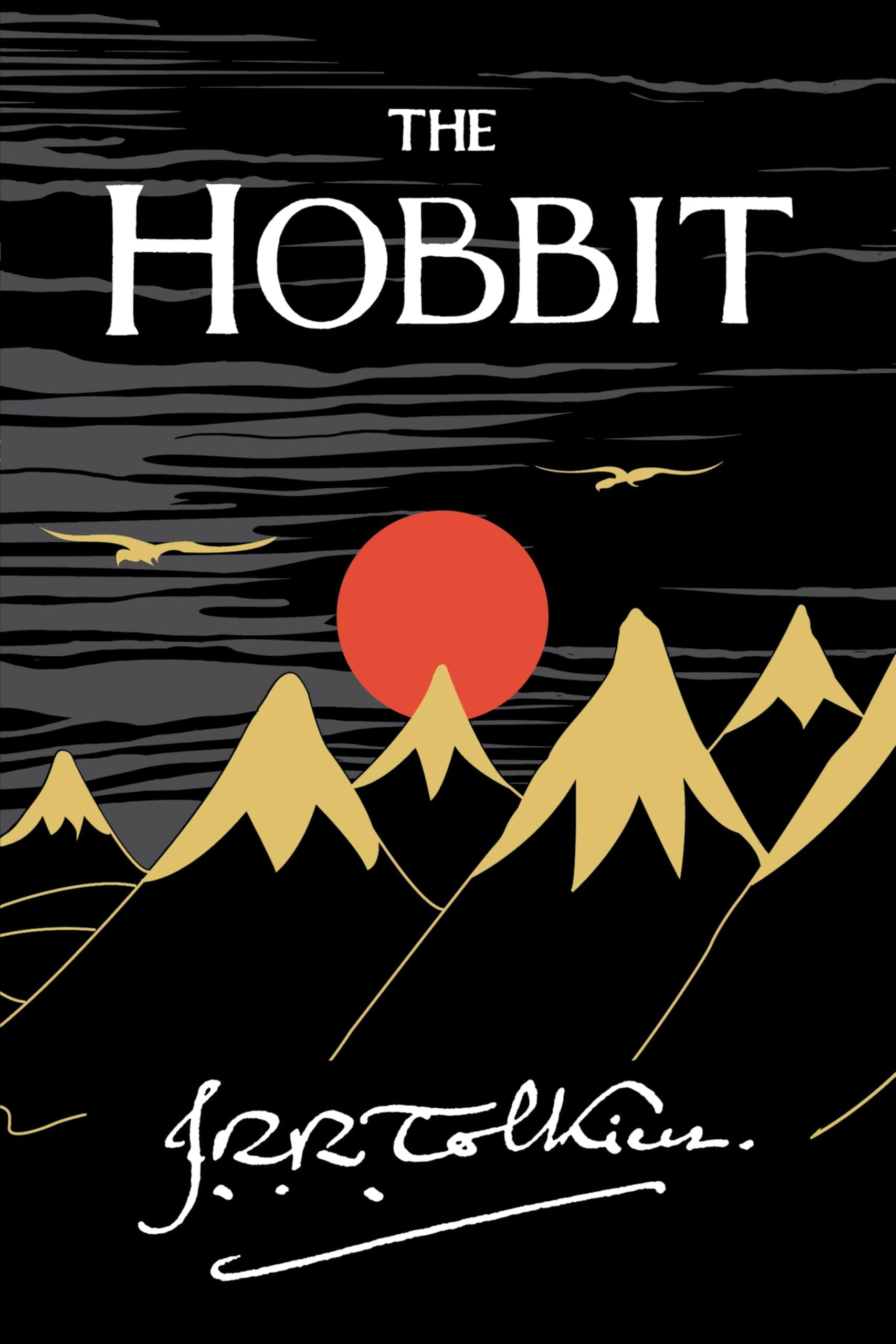
The Hobbit, authored by J.R.R. Tolkien and published by Houghton Mifflin Harcourt in 2012, is a 300-page paperback edition of the classic fantasy novel that serves as the prelude to The Lord of the Rings. Celebrated for its timeless storytelling and rich world-building, it ranks among the top 20 in Classic Literature & Fiction and boasts over 78,000 glowing reviews with a 4.7-star average, making it a must-have for any serious fantasy enthusiast or professional seeking a literary escape.


| Best Sellers Rank | #1,398 in Books ( See Top 100 in Books ) #27 in Classic Literature & Fiction #49 in Paranormal Fantasy Books #68 in Action & Adventure Fantasy (Books) |
| Customer Reviews | 4.7 4.7 out of 5 stars (79,488) |
| Dimensions | 5.5 x 0.85 x 8.25 inches |
| Grade level | 2 - 9 |
| ISBN-10 | 054792822X |
| ISBN-13 | 978-0547928227 |
| Item Weight | 2.31 pounds |
| Language | English |
| Print length | 320 pages |
| Publication date | September 18, 2012 |
| Publisher | William Morrow Paperbacks |
| Reading age | 12 - 17 years |
M**N
An Enduring Epic and Heroic Fantasy That Is Often Unfairly Dismissed As "Just For Kids"
*The Hobbit* is one of the most beloved books of all time. Though actually originally written as a children's story, it almost immediately transcended such a classification, and through the years many adults have read the delightful story of a small, but tough Hobbit named Bilbo Baggins. Most folks know the basic premise of the story. If not from reading it, then certainly they know part of it from the prologue to *The Lord of the Rings: The Fellowship of the Ring* movie, and likely went out to learn the rest of the tale. A wizard, Gandalf the Grey, goes and visits the son of an old Hobbit friend, and after spending time with him, surreptitiously marks Bilbo's door with a sign that is an advertisement of services for a professional burglar. The dwarves that Gandalf was helping look for a burglar promptly knock on poor Bilbo's door, and up he finds himself enlisted in an adventure to slay a dragon and find lost gold. Initially the dwarves belittle Bilbo, and this just makes him all the more determined to prove them wrong about him, which attitude he does, to put it mildly, regret more than once on their quest. Eventually he finds the Ring and the adventures are many, but that is too much of a spoiler for this review. Suffice it to say, it is one grand adventure after another. It is said that the Hobbit was published on the recommendation of the publisher's son, who heartily endorsed the tale. It also was published on the strong recommendation of Tolkien's friends, including C. S. Lewis. Tolkien was a man of a very exacting nature. The debt owed to Tolkien's close circle of family, friends, and a few close academic peers is incalculable. For their insistence that Tolkien merely "publish it already" ensured the book kept the whimsical tone it may otherwise have lost. *The Hobbit* is often criticized, to be sure, for not having the extremely "serious" tone and "complex" plot lines of its sequel, *The Lord of the Rings*. While this criticism is perfectly fair, it also greatly misses the point. Yes, Tolkien included fantasy elements in the story derived from the epic fictional history of Britain that he was writing. But that was all that these were, small derivatives. There was not a concerted effort when he wrote the *children's* story, to include all of these. Indeed, while Tolkien had to go back and rewrite the section "Riddles in the Dark" to make the story of the Ring and Gollum coincide with the overall story of *The Lord of the Rings*, that is as far that he was able to go. He realized that to make the tone and story of *The Hobbit* match that of it's sequel would effectively make it no longer the fun story that everyone loved. So the question is, what is *The Hobbit*? What kind of story is it? It is lighter, but with a sense of foreboding. It is the story of a fat, happy, contented age coming to a close in a devastating war that will change the face of the earth. It is the origin of a story that is an attempt to explain how a variety of myths can be true. To this, many may object that *The Silmarillion* is the beginning of the story, but this is untrue. *The Silmarillion* is the beginning of *all* stories, and only concerns the events of the later periods of Middle-Earth very faintly, and near the end of that epic narrative. It is the Creation myth, one that connects with the Christian faith of the author surprisingly well. In fact, the light-hearted tone of *The Hobbit* is the pefect bridge for the reader. It is the most "modern" in perspective, and introduces the reader to the peoples, geography, and events that they will find are connected from the First and Second Ages in *The Silmarillion* and the Third Age in *The Lord of the Rings*. J. R. R. Tolkien didn't like allegory, as he himself attested, but he did try to do "applicability", which is really just a way of saying that he didn't directly do "x = x" in the story, but allowed his Christian worldview to mesh with ancient epics in an effort to reconcile the two differing myths, or as he later convinced Lewis, to separate the "one, True Myth" to which the other myths copy and pay homage. Perhaps the most important link, however, to *The Lord of the Rings*, however, (besides the Ring itself, of course) is the importance of characters and the emphasis on certain truths and values. Among these are loyalty, the Providence of God, and the simultaneous righteousness and brutality of warfare. Before entering the military after the outbreak of World War I, Tolkien and his closest friends, who made up the core of a club that was likely the inspiration for the later Inklings and other clubs Tolkien loved to found at the various colleges at which he taught, had this notion of the glory of war, and how they would find renown for their deeds. This is shown in the perspective of Bilbo and the other heroes at the end of the story. While they were happy to have won the battle against evil, they also felt the horrors of war quite keenly. For the careful and patient reader, this book contains so many nuggets of truth for a "children's" book. It is most definitely *not* only a simple story. It is WELL worth your time. Highly Recommended.
P**E
A *FILM* review of Peter Jackson's *The Hobbit -- Part I*
Peter Jackson's *The Hobbit* (Part I -- "Into the Wilderness"): TITLE: *Martin's Freeman's Bilbo Baggins is inspired!* [***** 5 stars. Until *The Hobbit, Part I* becomes available on DVD, I'm posting the film review here.] WARNING: Spoilers ahead! While Gandalf the Wizard [Ian McKellan] remains timeless, it was obvious from the start that the Bilbo Baggins of three *The Lord of the Rings* films fame [Ian Holm, now pushing 80 years old] would have to bow out for the making of *The Hobbit*. Director Peter Jackson had surely asked himself, "Who could portray a young Ian Holm?", (but not necessarily a younger Bilbo Baggins since we now perceive Bilbo to look like the actor.) Answer: Martin Freeman. And he was right - Freeman effortlessly coalesced into the lead role. In the first of the two *The Hobbit* entries [sub-titled: *Into The Wilderness*], a more youthful Bilbo Baggins is craftily crow-barred by Gandalf into embarking upon a great adventure (Hobbits *despise* adventures!) and by serving as a burglar for a grumbly troupe of thirteen dwarves, all of whom are determined to reclaim their lost family treasure from the Evil dragon, Smaug; however, the actual battle with Smaug at the Lonely Mountain will have to wait until Part II [to be entitled: *Into the Fire*] is released. Part I largely focuses upon the history of the dwarves and the initial hazards that they encounter during their single-minded quest, chiefly battling orcs in the Misty Mountains and finishing with their tribulations with the giant spiders of the vast and ominous Mirkwood forest. It's worth noting right off that the screenwriters very shrewdly rehabilitated the puerile songs of the dwarves [found throughout the book], transforming them into a range of vivid action scenes. This strategy achieved a pair of worthy ends: 1. I've heard audio versions of this story and to include the dwarf renderings of these archaic and lengthy songs would have been in profound conflict with an effective film conveyance. 2. These newly-fashioned scenes provide additional fodder for the artful expansion of the general lack of book material, thereby reinforcing audience interest. Honestly, a movie version of Tolkien's *The Hobbit* could feasibly have been corralled within a single feature-length film [just think of all the ground that was covered in Avatar (Original Theatrical Edition) ] -- but the financial anticipations of the producers [greed], which tended to tenon seamlessly with Peter Jackson's lust for detail, had dictated long ago that viewers would have to hang on for a "final" conclusion. Part I features an ending of a sort but perhaps it would be more forthright to regard it as a dramatic finale. One looming uncertainty which has kept Tolkien fans off-balance was whether the screenwriters would go dark with *The Hobbit* in an effort to effectively link it up with The Lord of the Rings - The Motion Picture Trilogy (Platinum Series Special Extended Edition) series, particularly since Tolkien originally penned the earlier work as a sort of kids' fairy tale. In retrospect the answer to the question was probably evident to Peter Jackson from his earliest conception of a film version, noting additionally that his time-honored philosophy is that first-class films cannot simply mirror the books from which they are taken. A good screenplay massages a book for all it's worth but the visual and audio aspects must be fully accommodated too. Particular figures such as Gandalf, Elrond [Hugo Weaving], Galadriel [Cate Blanchett] and, Gollum [Andy Serkis] have already been firmly established in terms of image and it would be less than prudent at this juncture to radically manipulate the personalities of these prominent returning characters. And speaking of Galadriel, she was never a personage to be found in *The Hobbit* but Peter Jackson mined her from Tolkien's trilogy, casting her very strategically in his film version (along with Legolas, played by Orlando Bloom who also did not appear in *The Hobbit*) to further expand the script. Blanchett's presence additionally helped to overcome the gender gap of the book version. Still, these two actors are not in any way just add-ons -- their respective roles and performances have imparted considerable gravity to the story. It is impossible to separate this film's noir-ish ambiance from Howard Shore's magnificent soundtrack. He's done it again! Upbeat and even a bit frivolous at the outset, the filmscore soon slips furtively into darker realms as the story advances, a few heroic themes being reserved for the appropriate dramatic moments. One is acutely taken with the leitmotif which Shore appended to Beorn, a Prokofiev-ish ponderousness integrated with a more serious Beethoven-like dignity... the perfect musical emulsion for the venerated skin-changer. Once initial New Zealand and Australian actors' guild stumbling blocks were surmounted, the Kiwi locations again became a reality, a twin-island geography wholly adequate for the production when supplemented by studio settings, all of which have lead to the presentation of an astonishingly exceptional end-product. It would certainly have proven problematic to reproduce The Shire's Hobbiton in Eastern Europe, a location which was suggested during the early union-troubled days. Martin Freeman's dazzling performance has eclipsed even that of Elijah Wood's stellar lead role in *The Lord of the Rings* films. The former's ebullient energy ironically seems to have retrospectively amplified Ian Holm's earlier portrayal of Bilbo in the New Line Cinema trilogy of films. The remaining cast members have also set the viewers at complete ease as they creatively played out their respective roles. Peter Jackson undoubtedly learned early in his career that, given spot-on casting, at least half the battle is won. And it's hardly surprising that a particular limelight shines on Fili [Robert Kazinski] and Kili [Aidan Turner] since this caveat, for those of us who already know the story, will markedly impact most of us when we get to view the second film. The director is clearly looking ahead. In the larger view *The Hobbit* story lacks the bulwark of heroic figures which we encountered throughout *The Lord of the Rings* series, Aragorn, Boromir, Theoden, Faromir, and so on. Still, imposing characters such as Elrond, Beorn, and Bard the Bowman provide us with a subliminally more-than-adequate melodramatic security blanket. The bottom line is that this superb movie is not simply the detritus of *The Lord of the Rings* films. It's gratifying that Peter Jackson was shrewd enough to not endeavor upon such a futile follow-up attempt -- he created this film from scratch. Embracing that same notion, the screenwriters saw to it that the storyline endured sufficient jumbling so that the tale is not precisely as linear as the one we encounter in the book. This film stands on its own. With better than a baker's dozen of little folks in starring roles the temptation to over-incorporate moments of comic relief [vignettes of Gimli] must have rivaled the gnawing urge which only The One Ring could normally generate. While some tasteful levity fell well within the bounds of a palatable script, I did actually breathe a sigh of relief once I realized that few such incidents were forthcoming. The computer generated images aspect of the movie, while perfectly executed and integral to the overall work, are nicely supplemented by scale doubles, forced perspective images, miniatures, and other Jackson-ish tricks of the trade. No fear -- these facets of the film are all first-class and delightfully palatable. Gollum is better than ever. Additionally, due accolades can hardly be suitably imparted to all the folks who helped to polish this film to excellence by means of effective make-up, articulate stunt work, unequaled cinematography, precise production design, and all the other crew activities which only ever seem to rate a fleeting line of scrolled credit. One is pleased to observe that the new role of Warner Brothers and MGM [Hollywood-based companies which recently acquired New Line Cinema] did not perceptibly obstruct Peter Jackson's proclivity for artistic detail. The casual but essential impedimenta present at every place where the Dwarfish Crusaders land aids us all to subconsciously believe in the reality of Middle Earth along with its numerous and varied inhabitants. Probably much credit for the focused attention upon the near-infinite number of magical nuances should go largely to Alan Lee, a man with an unbounded imagination coupled with a vast artistic talent. I present only a singular critique of this film and it has nothing to do with the body of the movie itself: I feel compelled to comment that the decision to incorporate the endless scroll of Tolkien Fan Club members' names within the end credits is ill-advised and indirectly demeaning to the actual cast and crew. What do these people actually contribute to the film's production? Loyalty and moral support? The folks who have indeed delivered something more tangible are appropriately noted elsewhere within the credits. But most of the listed individuals have played no real part whatever, regardless of the syrupy patronization conducted by the film-makers toward this particular faction of Tolkien enthusiasts. Including these names in the film credits, which also takes in the so-called self-appointed "guardians" of Tolkien's work [a trivial minority of Tolkien Fan Club members], amounts to little more than a shallow ego-bribe. It's presumptuous as the devil to assert that Tolkien's books *need* guarding by anyone -- the affiliation here is more akin to pretentious posthumous tail-gating on the venerable Old Master. The credits perquisite imparted by the film producers, appears in my view to ostensibly head off any whining outrage raised on the internet by those Tolkien radicals who are wholly unyielding in regard to the slightest manipulation of Tolkien's texts. This posture is pure nonsense. In the end, if one's name is included in the film credits then how can s/he ever issue an untainted appraisal of the film? In truth, such an individual could never ethically issue a fruitful critical review, (nor would they likely be *inclined* to criticize, which leads me to question the motives and ethics of the producers on this front.) But here I ramble witlessly upon a topic which only faintly deserves to be dignified by my attentions to it. In truth, my mini-rant is not even a legitimate film criticism - it's really just a pet peeve. In summary, *The Hobbit* contains enough MacGuffins and other surprise moments to make it seem like a new story while still paying a more than adequate tribute to Tolkien's original manuscript. Martin Freeman was surely a brilliant choice to play Bilbo. I can hardly wait to see Part II!
R**Y
"In a hole in the ground there lay the YA fantasy genre. A nasty, dirty, wet hole, filled with the ends of swords and a perfumed smell." One of my favourite genres seems to have gone to the wargs in the last few years. The rot probably started when J.K. Rowling introduced a new generation of young people to the joys of fantasy fiction. Standards dropped and social media helped create huge fandoms, and cult like followers, loyal to the brand. Fan fiction has also allowed anyone, no matter the talent, to write a "book" based on any intellectual property they fancy. Then Twilight happened and that was the beginning of the end. Publishers saw the kind of drivel that could make them rich and the Young Adult Fantasy genre was ripe for the picking. It began to move towards a new type of story, appealing to a new audience and asking a new question. "What if Fantasy but with a girl one?" Alongside the Strong-Female-Character™ protagonist, this new normal often contains a sprinkling of the following; "diversity*", some unsubtle social commentary, a patriarchal villain and most importantly, a poorly written, chemistry free romance with a handsome boy/angel/girl/minority/vampire/furry/other** that takes up half the book, often causing the plot to grind to a halt so the perfect lovers can stare passionately at each other for 50 pages. Bonus points for inserting a third wheel to create some false tension and so fans can pick a team. After all, these books are written primarily for teenage girls, by former teenage girls***. Then there are the hordes of twenty-something women that receive advanced review copies and post their reviews on Goodreads****. These Goodreads girls, as I shall call them, might not be able to make a book successful, but they surely hold sway with publishers and more importantly, the content they publish. For it is said that "those who control the review copies, control the genre". Thank Tolkien then, for the classics, and for the sexless, romance free world of The Hobbit. Although not entirely romance free as this book contains a beautiful relationship between a Gollum and his precious. Then there's the love between a Hobbit and his home, his breakfast/second breakfast/lunch/afternoon tea/supper/dinner/elevenses and his weed. Then finally there's the relationship between a dragon and/or a dwarf, and his treasure. I'd take that superficial love over all the beautiful-perfect-people-fall-in-love-because-they're-both-beautiful-and-perfect-and-sometimes-there's-a-faux-love-triangle dross, that's infected the YA Fantasy genre since Twilight first ruined the word twilight. I never thought I'd be pining for the days of Hunger Games knock-offs, but here we are. But what of The Hobbit, you ask? Well, it's one of the finest young adult books ever written. At it's heart, The Hobbit is an adventure story. THE adventure story really. In fact, it's so jam packed with adventure, there's very little time for character development. Bilbo gets the lion's share and it's his adventure so I can't really grumble too much about the rather bland companions. Besides, there's so many wonderful things crammed into this short novel, it's never anything less than an entertaining page turner. I truly envy any child who has yet to experience The Hobbit in book form as they read -or are read to- about Bilbo Baggins, dwarven guests, pipe smoking wizards, singing elves, hungry trolls, goblin caves, tricksy riddles, magic rings, eagle saviours, shape-shifting men, murky forests, giant spiders, prison breaks, barrel riding, secret doorways, greedy dragons, brave bowmen, brave hobbits, great battles and most of all, burglary. Saviour this book. Read it to your kids and hope it inspires them to read more, and maybe even to write. The beginnings of the next Fantasy classic might be this one story away... Someone has to drag the genre back from the brink. If, like me, you have the stunted, feeble arms of a mammalian T-Rex, then you can listen to The Hobbit on audiobook, and it is a fine way to experience this most excellent of adventures. This review is based on the rather wonderful recording by Andy "CGI" Serkis. Riddles in the dark is even more memorable with the voice of Gollum™ and the whole thing is a joy to listen to. I can't say anymore really, just read it if you haven't. There are still quality YA fantasy books to be found, even if you have to go 'there and back again' to find them. * Black, trans and/or lesbian minorities -in order of perceived oppression by the American online- are the click generating hashtags of the moment. Make said minority the main character for more critical acclaim but less commercial gain. The readers might claim to be allies who want to read more books from a none cis-hetero perspective, but what they really, really want is a book in which the straight, white, female protagonist (them), gets a beautiful, shiny boy. ** But mostly boys, because that's hot insert-self fan fiction in the making. *** Who may have started out writing terrible fan fiction. I blame Twilight, fifty shades of grey and low standards of literacy for this. **** They're also liable to have Instagram accounts full of pictures of books next to foodstuffs, candles (dangerous), flora (not the marge), bedding and Apple products. The book lovers lifestyle is obviously lots of reading in bed by candlelight, surrounded by houseplants, munching on snacks and incessantly checking ones social media
K**R
One of the best reads Recommend
C**N
Les cartes sont magnifiques! Le livre est de très bonne qualité, le petit livret est intéressant, les cartes magnifiques, bref il n'y a rien a redire sur cette édition deluxe. Plus qu'à le lire!
J**W
Depends on one’s taste.
M**T
It's so beautiful, definitely worth the money!
Trustpilot
Hace 3 días
Hace 1 mes