We remain fully operational. Our teams are working around the clock to ensure your deliveries continue safely.

Descargar la aplicación


Servicios al cliente
Sobre nosotros
Copyright © 2025 Desertcart Holdings Limited
Descargar la aplicación
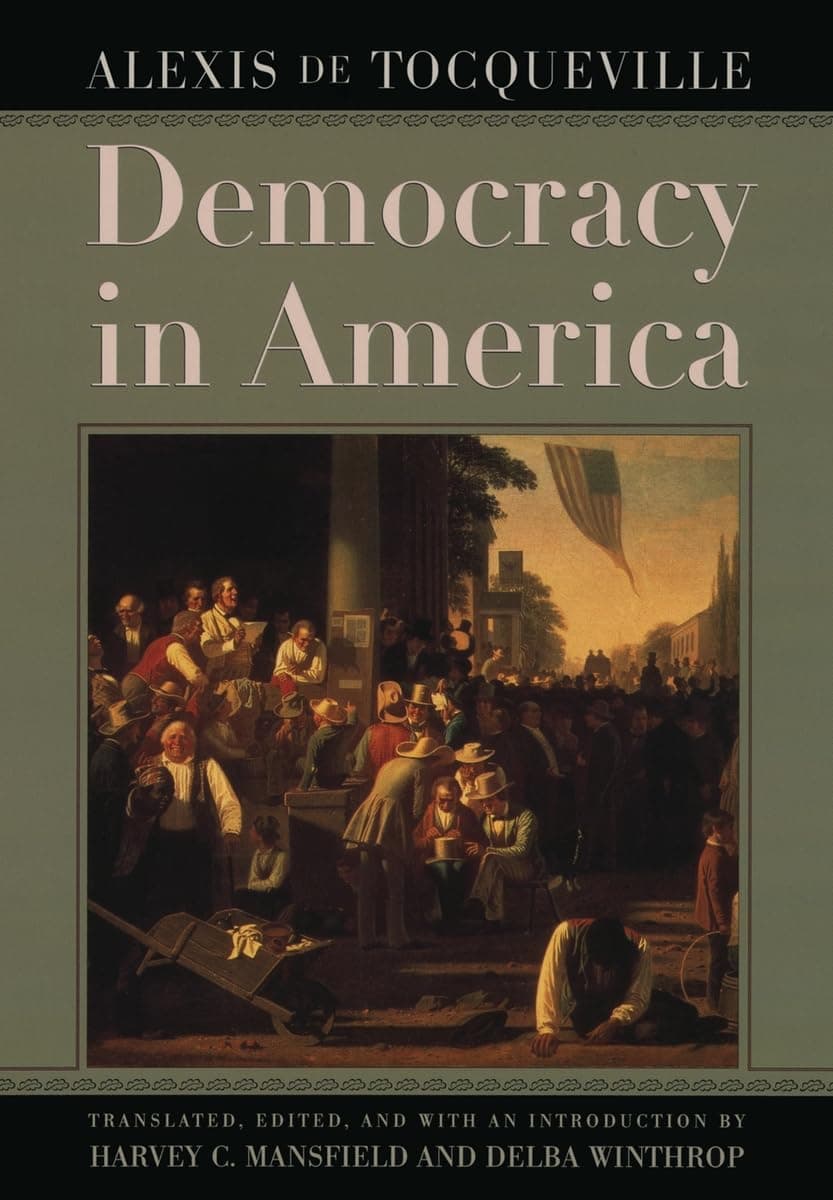
Democracy in America [Alexis de Tocqueville, Harvey C. Mansfield, Delba Winthrop] on desertcart.com. *FREE* shipping on qualifying offers. Democracy in America Review: The best interpretation of Tocqueville’s seminal writings on American democracy. - I am a Tocqueville fan so this is my third reading and version of “Democracy In America” and by far my favorite. I am still amazed at the relevancy of this Frenchman’s ability in 1838-40 to visit America during Andrew Jackson’s Presidency and see our country so clearly that this work remains as relevant now as it was then,180+ years ago but now projected into our country's future. The difference in this edition is that these two scholars did an extremely solid job of translating Tocqueville’s original meaning into the most readable and understandable format thus far. The footnotes are equally as elucidating. It is nice that the two volumes have been placed together as one book — but clearly indicate where the first one ends the second one begins. This way you are able to move between the two volumes without losing the essence of his commentary. Also, it is easier to catch the two year pause in Tocqueville's writing that he, personally, took to complete them. Nevertheless, this has always been “THE” seminal piece on American Democracy and remains even more so thanks to these talented interpreters. This is the piece worth reading and grappling with it’s pertinence today. To translate Tocqueville's words, "America is great because America is good. America will cease to be great when it is no longer good." These two sentences are the reason these two volumes remain as the singular, most important analysis of America, even today. Debbie Leister Delray Beach, FL Review: Observations on American Democracy and Democracy in General - I marveled at Alexis de Tocqueville's trenchant insights into what made (makes) American Democracy what it is. Indeed, I think Tocqueville knew more about us than we do (partly a benefit of being a foreigner). But it's not just observations on American Democracy that we get in this indispensable book, but useful analysis between the democratic revolutions and societies in Tocqueville's native France and other countries, and the incessant contrasts the author makes between aristocratic and democratic societies. Tocqueville lived in a time in which the old orders of society (mainly aristocratic) were dissipating and hence his careful examination of the promises and problems that democracies posed for this country and others for his day and for the future. I can't possibly begin to touch on every issue Tocqueville discusses in this book, but I'll try to mention a few. For Tocqueville, America offered a unique opportunity for democracy to grow and flourish. He discusses the advantages of geographic location, the Puritan settlers in New England, the townships that developed, the formation of the states and the eventual Union formally established by the U.S. Constitution written in 1787. In addition to the external factors that evinced a democratic society, he gave careful attention to the interests, beliefs, habits and mores that united Americans North and South, East and West (though there were some obvious economic and social differences between these geographic segments). America did not possess a ruling class, and Tocqueville discusses what he called the equality of conditions that he saw in this county. Americans believed they were equal to each other, especially in regards to their ability to obtain wealth and prosperity. The people also viewed themselves as sovereign; they had representative leaders, but ultimately those leaders were and remain accountable to the people. Tocqueville is not hesitant to point out some bad sides to democracy, or at least potentially bad tendencies that could develop. Such topics as the tyranny of the majority, individual impotence in the face of democracy's dependence on the force of the public as a single body, lack of greater intellectual pursuits and accomplishments (though he admits this is a result of our busy lives and our desire to find quick answers and solutions). He seems to be most disappointed with the mediocrity that he sees as resulting when all things seem equal. The dangers of tyranny and despotism also linger. Tocqueville saw signs of potential future conflict, especially considering the presence of slavery. He envisioned a war between the races as very possible. He also discussed the effects of white settlement and their interaction with the Native Americans as well. His judgement seemed to be that the Native Americans were doomed once the white settlers arrived and started moving west. In addition to conflicts among people, he saw the growing concentration of power as almost inevitable. Our history has especially proven the growth of our national government. And there are so many other observations Tocqueville discusses on the future of democracy not only in this country, but for any democratic society. He had his fears and hopes. There are so many things I'm leaving out, but I was truly impressed with this man's astute observations on our form of government and our society in general and what some of the positive and negative sides to democracy were (and are). There are topics touched on that will cause you to immediately grasp how applicable they are to life today. A must read.


| Best Sellers Rank | #21,409 in Books ( See Top 100 in Books ) #7 in General Elections & Political Process #18 in Democracy (Books) #46 in History & Theory of Politics |
| Customer Reviews | 4.7 4.7 out of 5 stars (738) |
| Dimensions | 8.9 x 6 x 1.8 inches |
| Edition | 1st |
| ISBN-10 | 0226805360 |
| ISBN-13 | 978-0226805368 |
| Item Weight | 2.3 pounds |
| Language | English |
| Print length | 722 pages |
| Publication date | April 1, 2002 |
| Publisher | University of Chicago Press |
D**R
The best interpretation of Tocqueville’s seminal writings on American democracy.
I am a Tocqueville fan so this is my third reading and version of “Democracy In America” and by far my favorite. I am still amazed at the relevancy of this Frenchman’s ability in 1838-40 to visit America during Andrew Jackson’s Presidency and see our country so clearly that this work remains as relevant now as it was then,180+ years ago but now projected into our country's future. The difference in this edition is that these two scholars did an extremely solid job of translating Tocqueville’s original meaning into the most readable and understandable format thus far. The footnotes are equally as elucidating. It is nice that the two volumes have been placed together as one book — but clearly indicate where the first one ends the second one begins. This way you are able to move between the two volumes without losing the essence of his commentary. Also, it is easier to catch the two year pause in Tocqueville's writing that he, personally, took to complete them. Nevertheless, this has always been “THE” seminal piece on American Democracy and remains even more so thanks to these talented interpreters. This is the piece worth reading and grappling with it’s pertinence today. To translate Tocqueville's words, "America is great because America is good. America will cease to be great when it is no longer good." These two sentences are the reason these two volumes remain as the singular, most important analysis of America, even today. Debbie Leister Delray Beach, FL
D**Y
Observations on American Democracy and Democracy in General
I marveled at Alexis de Tocqueville's trenchant insights into what made (makes) American Democracy what it is. Indeed, I think Tocqueville knew more about us than we do (partly a benefit of being a foreigner). But it's not just observations on American Democracy that we get in this indispensable book, but useful analysis between the democratic revolutions and societies in Tocqueville's native France and other countries, and the incessant contrasts the author makes between aristocratic and democratic societies. Tocqueville lived in a time in which the old orders of society (mainly aristocratic) were dissipating and hence his careful examination of the promises and problems that democracies posed for this country and others for his day and for the future. I can't possibly begin to touch on every issue Tocqueville discusses in this book, but I'll try to mention a few. For Tocqueville, America offered a unique opportunity for democracy to grow and flourish. He discusses the advantages of geographic location, the Puritan settlers in New England, the townships that developed, the formation of the states and the eventual Union formally established by the U.S. Constitution written in 1787. In addition to the external factors that evinced a democratic society, he gave careful attention to the interests, beliefs, habits and mores that united Americans North and South, East and West (though there were some obvious economic and social differences between these geographic segments). America did not possess a ruling class, and Tocqueville discusses what he called the equality of conditions that he saw in this county. Americans believed they were equal to each other, especially in regards to their ability to obtain wealth and prosperity. The people also viewed themselves as sovereign; they had representative leaders, but ultimately those leaders were and remain accountable to the people. Tocqueville is not hesitant to point out some bad sides to democracy, or at least potentially bad tendencies that could develop. Such topics as the tyranny of the majority, individual impotence in the face of democracy's dependence on the force of the public as a single body, lack of greater intellectual pursuits and accomplishments (though he admits this is a result of our busy lives and our desire to find quick answers and solutions). He seems to be most disappointed with the mediocrity that he sees as resulting when all things seem equal. The dangers of tyranny and despotism also linger. Tocqueville saw signs of potential future conflict, especially considering the presence of slavery. He envisioned a war between the races as very possible. He also discussed the effects of white settlement and their interaction with the Native Americans as well. His judgement seemed to be that the Native Americans were doomed once the white settlers arrived and started moving west. In addition to conflicts among people, he saw the growing concentration of power as almost inevitable. Our history has especially proven the growth of our national government. And there are so many other observations Tocqueville discusses on the future of democracy not only in this country, but for any democratic society. He had his fears and hopes. There are so many things I'm leaving out, but I was truly impressed with this man's astute observations on our form of government and our society in general and what some of the positive and negative sides to democracy were (and are). There are topics touched on that will cause you to immediately grasp how applicable they are to life today. A must read.
B**M
Deep wisdom and honest awareness of human nature
Wow. This is dense intellectually like a Donald Knuth textbook, but it's important to exercise our "brain muscles" to gather an appreciation for the timelessness of core socioeconomic factions, their tendencies, and the preventative steps that must be vigilantly and energetically maintained to retain a just, functional, and productive society.
K**3
Great story, embalmed translation.
The subject matter is so marvelous and so apropos to current events that it survives this archaic "translation" into late 19 th century textbook obtuseness. If diagrammed the grammar of typical sentence would suggest an aerial image of the Mississippi delta, including (almost) the alligators. Hard to imagine an editor allowing the folly of interjecting footnotes smack dab in the middle of the text .... and the same type point. It may be, as the editor boasts, a verisimilitude: an English equivalent of mid-18th century French. But why? We are not French, and this is the 21 St Century ... buzzing along in hit-the-ground running 'Merica. 'Tis we who, one supposes, are the intended customers. I'll slog through it cuz the tale is extraordinary and the (original)author incredibly prescient. And it reminds me of my first adventures in reading: ancient tomes in my grandmother's library ... yes; 80+ years ago. Go ahead. Buy it. It's a romp. are the hoped for consumers, yes?
E**.
Should be required reading for every U.S. citizen.
Should be required reading for every U.S. citizen.
C**N
Il m'a bien été livré pour les cours mais je peut pas dire que je l'ai lus donc bonne chance a tous ceux qui doivent se taper ce truck.
B**A
This is just superb from the beginning to the end.
J**E
Both books are not the usual best seller variety and I was happy to find them on Amazon. Excellent and rapid service!
A**N
I give this collection 5 stars. But dark stars, full of hate and bloodlust, burning in an ebony night, where the great ones lurk and the old gods await...
R**R
The old ones are behind the present government are'nt they?
Trustpilot
Hace 1 mes
Hace 4 días