We remain fully operational. Our teams are working around the clock to ensure your deliveries continue safely.

Descargar la aplicación


Servicios al cliente
Sobre nosotros
Copyright © 2025 Desertcart Holdings Limited
Descargar la aplicación
Buy anything from 5,000+ international stores. One checkout price. No surprise fees. Join 2M+ shoppers on Desertcart.
Desertcart purchases this item on your behalf and handles shipping, customs, and support to Panama.
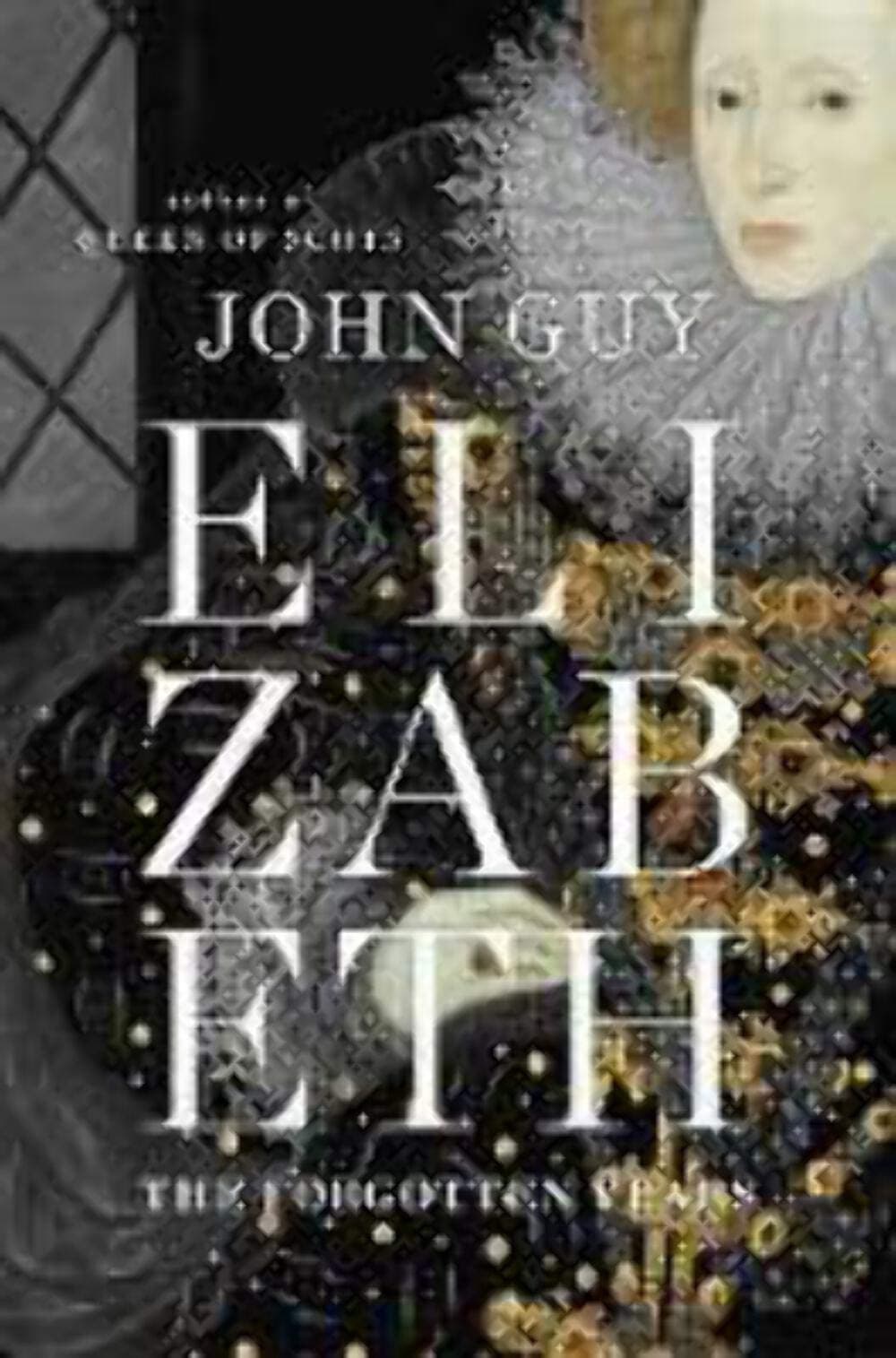
Elizabeth: The Forgotten Years [Guy, John] on desertcart.com. *FREE* shipping on qualifying offers. Elizabeth: The Forgotten Years Review: ... amazingly researched book that will give the reader a better edge on the politics of Elizabeth the First's reign - This is an amazingly researched book that will give the reader a better edge on the politics of Elizabeth the First's reign. It is a period of her life that I am fascinated with. He gives an excellent introduction to Elizabeth's life, but wastes no time getting into his topic: the last ~20 years of the "Golden Age." Whether a scholar, an Elizabethan era performer, or just an admirer of the period, this book will be amazing for you. Guy's writing style is scholarly but not dry. You may want a thesaurus nearby because Guy does not assume the reader is limited or stupid. He's a bit of a run-on sentence master, but you will never be lost. Pro: This book taps primary sources. It evaluates, debunks, supports, and demystifies secondary sources without being dismissive. There's a touch of snark in his narrative, but not too much and nothing that won't have the reader nodding in agreement. This book also fills a vacuum of knowledge as so many authors glance over this period, which Guy calls "the War Years." His rendering of Elizabeth fits far closer to those we see in movies such as Elizabeth R (Glenda Jackson,) Elizabeth 1 (Helen Mirren,) and the Virgin Queen (Anne-Marie Duffy.) He dodges the mythical Gloriana image and presents a complex and fascinating woman in an equally complex and fascinating time. Con: He doges the mythical Gloriana image. If you are someone who is in love with the Great Queen or are looking for a book supporting the image presented at nearly every Renaissance Fair, you may be thrown off by his approach. He does not hold back from presenting Elizabeth as a vain, sometimes indecisive, temperamental, aging woman in an era that dismissed all things female. Also, if you are a fan of the Cecil's and are expecting him to speak highly of Lord Burleigh, you will be shaken in your belief. He is harsh on Burleigh, citing letters and actions from primary sources that show Burleigh's disbelief in Elizabeth's ability and his manipulative nature. I'll probably earmark, highlight, mark-up, and re-read this book. Review: It is a fine look at a specific part of the Elizabethan reign - It is a fine look at a specific part of the Elizabethan reign. It punches factual holes in many venerable beliefs about the Queen. It also corrects some myths and misunderstandings based upon new information and more detailed research,, to the extent of discerning exact definitions of words as they were used at that time, rather than later understandings. It also happily avoids the bane of most historians writings, that of judging historical people by current moralities and beliefs rather than the ones existing at the time of the subject. It is a refreshing avoidance. For less than experts on Elizabeth, it is a good read and the writing is very engaging
| Best Sellers Rank | #2,035,112 in Books ( See Top 100 in Books ) #248 in Royalty Biographies #1,453 in Historical British Biographies #2,328 in England History |
| Customer Reviews | 4.4 4.4 out of 5 stars (340) |
| Dimensions | 6.3 x 1.5 x 9.25 inches |
| Edition | First Edition |
| ISBN-10 | 0670786020 |
| ISBN-13 | 978-0670786022 |
| Item Weight | 1.7 pounds |
| Language | English |
| Print length | 512 pages |
| Publication date | May 3, 2016 |
| Publisher | Viking |
T**R
... amazingly researched book that will give the reader a better edge on the politics of Elizabeth the First's reign
This is an amazingly researched book that will give the reader a better edge on the politics of Elizabeth the First's reign. It is a period of her life that I am fascinated with. He gives an excellent introduction to Elizabeth's life, but wastes no time getting into his topic: the last ~20 years of the "Golden Age." Whether a scholar, an Elizabethan era performer, or just an admirer of the period, this book will be amazing for you. Guy's writing style is scholarly but not dry. You may want a thesaurus nearby because Guy does not assume the reader is limited or stupid. He's a bit of a run-on sentence master, but you will never be lost. Pro: This book taps primary sources. It evaluates, debunks, supports, and demystifies secondary sources without being dismissive. There's a touch of snark in his narrative, but not too much and nothing that won't have the reader nodding in agreement. This book also fills a vacuum of knowledge as so many authors glance over this period, which Guy calls "the War Years." His rendering of Elizabeth fits far closer to those we see in movies such as Elizabeth R (Glenda Jackson,) Elizabeth 1 (Helen Mirren,) and the Virgin Queen (Anne-Marie Duffy.) He dodges the mythical Gloriana image and presents a complex and fascinating woman in an equally complex and fascinating time. Con: He doges the mythical Gloriana image. If you are someone who is in love with the Great Queen or are looking for a book supporting the image presented at nearly every Renaissance Fair, you may be thrown off by his approach. He does not hold back from presenting Elizabeth as a vain, sometimes indecisive, temperamental, aging woman in an era that dismissed all things female. Also, if you are a fan of the Cecil's and are expecting him to speak highly of Lord Burleigh, you will be shaken in your belief. He is harsh on Burleigh, citing letters and actions from primary sources that show Burleigh's disbelief in Elizabeth's ability and his manipulative nature. I'll probably earmark, highlight, mark-up, and re-read this book.
T**R
It is a fine look at a specific part of the Elizabethan reign
It is a fine look at a specific part of the Elizabethan reign. It punches factual holes in many venerable beliefs about the Queen. It also corrects some myths and misunderstandings based upon new information and more detailed research,, to the extent of discerning exact definitions of words as they were used at that time, rather than later understandings. It also happily avoids the bane of most historians writings, that of judging historical people by current moralities and beliefs rather than the ones existing at the time of the subject. It is a refreshing avoidance. For less than experts on Elizabeth, it is a good read and the writing is very engaging
D**N
This Biography of Queen Elizabeth Sheds Light on Who Wrote Shakespeare
John Guy's superb book unintentionally illuminates the contentious debate about who wrote Shakespeare, the most important author of the period that his biography covers. Since the shaky but still prevailing authorship theory turns out to be faith-based, it is helpful to have Guy's fresh look at recently discovered archival evidence about Queen Elizabeth and her era, so we can construct a more accurate, evidence-based picture of Shakespeare's real identity. Perhaps inadvertently, Guy repeatedly links pivotal court events with the works of Shakespeare. He thus provides support for the relatively new consensus that Shakespeare wrote not just for the Globe, but also for court performances. It is extremely fruitful to assume he always had the Queen in mind when he wrote. This is consistent with Guy's repeated references to Shakespeare in connection with the life of Elizabeth. Let me offer you some salient examples. Which Shakespeare character does the following quotation make you think of? "[The Queen] stamps with her feet at ill news, and thrusts her rusty sword into the arras in great rage." That's according to Queen Elizabeth's favorite godson, John Harington, in 1600. Give up? It is Hamlet who famously thrusts his sword into the arras behind which Polonius was hiding, killing him, when he thought he was stabbing his step-father, King Claudius. Several Shakespeare plays refer to swords and rapiers rusting. The character Coriolanus in Shakespeare's play of that name is terrific in battle, but not so good when it comes to civilian affairs. Guy links this mixed description with the colorful career of the Earl of Essex, who alternated between pleasing and infuriating the Queen. Anthony Bacon, in encouraging Essex's quarrel with Robert Cecil, lampooned Cecil as a proverbial "little pot too hot," possibly echoed by Petruchio's servant Grumio saying in Taming of the Shrew "were not I a little pot and soon hot..." You need to know that the actual author of Shakespeare's works was Cecil's brother-in-law, and he couldn't stand Cecil. He also cruelly ridiculed Robert Cecil's prominent hunchback with his historically false characterization of King Richard III as having a hunchback, when both the historical record and his recently discovered skeleton show Richard III suffered from scoliosis, with one shoulder higher than the other. In 1595, the previous taboo against any public discussion whatsoever of the royal succession was shattered by a widely read and deliberately seditious book, A Conference about the Next Succession to the Crown of England. It was written (under a pseudonym) by Robert Parsons, the exiled superior of the English Jesuits. Guy believes the impact of this book influenced the discussion of dynastic civil wars, usurpation, and legitimate monarchs in the Shakespeare plays King John and Richard II. (The mainstream scholar Hannibal Hamlin, in his fine book The Bible in Shakespeare is confident that Shakespeare read an earlier work by Parsons.) Whoever he was, "Shakespeare" knew intimate details of court politics, and alluded to them repeatedly, though usually between the lines. By the way, the book's index is incomplete. I noticed that with several topics, including Shakespeare. In my edition of the book (an earlier one, with the subtitle "The Forgotten Years"), the index omits these additional references to Shakespeare's works: pp. 173, 243, 249, 268, 347, 364, and 403.
B**S
The later years of Queen Elizabeth's life
Very interesting, addresses that later years of Elizabeth's life, the controversies about her heir, and the aftermath of her death. Shows Elizabeth as a functioning head of state, rather than as the young beautiful flirt that other biographies focus on. It's more fun to read about her affair with her beloved Robin. And her reign if often written about as though everything was always beautiful, the people adored her, she was a kind and careful caretaker of her kingdom. But this was not so much the case in the second half of her reign. Written well. A little dry and scholarly for those who are expecting this biography to read like a romance novel. Personally, I appreciated the serious tone of the book. If you think you know all there is to know about Elizabeth, read this book.
V**A
One of the best reading of my life. The reconstruction of the story by Guy is really exciting, enthralling, moving... Must have!
R**Y
Having been impressed with John Guy's biography of Thomas Gresham I thought I would try this. It doesn't disappoint. John Guy goes back to original sources and thus avoids the pitfalls of poor translations and seconhand information. The result is an insight to a well rounded Elizabeth. A more believable character than she appears in most histories. Well worth the read.
V**D
Historical figures are often mythologised, and more accurate, human, and balanced assessments might take centuries, and the unearthing of new sources, to come along. Elizabeth I is no exception. She was neither the glorious unifier of the realm and defeater of the Armada, or the temperamental easy prey of male young courtiers’ machinations. Guy’s biography, which centres on the last two decades of her reign, presents us a much more nuanced, and hence credible portrait of the Queen. Each of the author’s statements is craftily supported by his research, brushing aside previously entrenched and widely accepted truisms. He has done a fantastic job humanizing Elizabeth.
P**S
Having read over 10 books on Elizabethan history this one is by far the best imo. Easy to read prose, meticulously researched including important recently discovered primary sources, it covers both the Queen's full history, plus the social and economic context in which she lived.
E**B
John Guy is undoubtedly a masterly biographer, and his earlier work on Mary Queen of Scots remains one of the finest historical biographies I have ever read. This one features Mary's nemesis, Elizabeth the First of England, in the latter years of her reign when, inevitably, her youthful personal glamour and the relief of the country at having a fairly benign and stable ruler had faded and she and her powerful advisors had become the establishment. Her obstinate refusal to marry and have heirs of her own in her younger years (for whatever phsychological or practical reasons, which can be argued over endlessly) left her reluctant to name a successor – her “winding sheet” as she put it - which put unwelcome focus and pressures on members of her family with relatively distant, but still valid claims to the throne. These were the years of wars and rumours of wars, the terror of the Armada, the victory, the disaffected troops left to starve after serving her so well; the years when her endless marital guessing games had come to their inescapable menopausal end. The years when the image of Gloriana overtook the real woman who did not age well, losing her famous red hair, her looks and many of her teeth. The years when younger and more beautiful women came to Court, suffering greatly from her jealousy. These were also the years when her dearest “Eyes”, Robert Earl of Leicester, passed away, when Mary of Scotland was executed, when she fell hugely under the spell of Robert’s stepson, Essex, by turns adoring and spoiling him to the point of ridicule, or criticising his military expertise and starving him and his troops of money and supplies. The book spends much of the latter chapters explaining and examining the complex international situation against which the temperamental, vain and self-absorbed Essex was intent on making his military and political career. Elizabeth, having pushed him too far once too often and having finally lost patience, then faced a rebellion instigated by him: thereafter, justice had to take its course, leaving her betrayed and heartbroken. Guy makes clear that in these later years, her councillors and ministers of State were much more powerful and in control than might have been expected given Gloriana’s all powerful image: but it was just that, an image, fostered and refined over the years until the actual human being pretty well disappeared behind the iconic painted mask, the lavish wigs and spectacular gowns that we see in all the famous portraits. They were also the years when the Court, tiring of an aging monarch who was basically no fun anymore, started looking North to her successor, James of Scotland son of her tragic cousin Mary and his ideally protestant bride, Anne of Denmark. This is as close to the real, elderly and increasingly cantankerous Elizabeth, as we will ever come. However, I do get the sense that John Guy whilst having produced an amazing biography, is not as emotionally connected to Elizabeth as he was to Mary Queen of Scots and not as moved by her either life or her passing.
Trustpilot
Hace 3 semanas
Hace 2 meses