We remain fully operational. Our teams are working around the clock to ensure your deliveries continue safely.

Descargar la aplicación


Servicios al cliente
Sobre nosotros
Copyright © 2025 Desertcart Holdings Limited
Descargar la aplicación

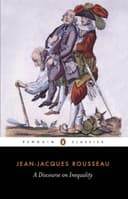
A Discourse on Inequality (Penguin Classics) [Rousseau, Jean-Jacques, Cranston, Maurice] on desertcart.com. *FREE* shipping on qualifying offers. A Discourse on Inequality (Penguin Classics) Review: The Genesis of Modern Sociology - Generous reader, The introduction by Maurice Cranston is almost 50 pages long, but it is well worth the read. In it he describes the institutional history of the Genevan republic (into which Rousseau was born) and the life of Rousseau up to the time he wrote his Discourse on Inequality from the late fall of 1753 to the early spring of 1754. Cranston also does a great job of explaining the essential arguments Rousseau makes in this text. This work, as Cranston explains, was instrumental in the development of the social sciences, including anthropology and political theory. To a greater extent than either Hobbes of Locke, Rousseau sets out to explain what human beings in a hypothetical “State of Nature” would have been like living in solitariness. Unlike Hobbes and Locke, Rousseau contends in the preface to the Discourse that humans would not have been philosophers before they had at least developed a capacity for abstract language, which could only have emerged after humans had left the State of Nature. Notions of property, therefore, could only have arisen within a societal context, as would rights in general. Agree with him or not, Rousseau makes very interesting arguments and follows a pretty solid method in his approach to answering the question on the origins of inequality, which came from a prompt by the French Academy of Dijon. Whether you find his ideas compelling or ridiculous, there is no denying the powerful language Rousseau uses, as it comes across even in translation. This is an indispensable essay for anyone interested in political and/or social theory, and a vital text in conflict and concord with the the Enlightenment tradition. Apparently, Voltaire loathed it and wrote scathing critiques of it in his personal copy while Diderot sympathized with it, being the closest Rousseau ever came to expressing a philosophy similar to Diderot. Farewell, generous reader. Review: classic - this is a classic worth reading written by the philosopher, rousseau. i was a little surprised with his approach / maybe expecting a 21st century we are all really equal. while equality is suggested, it reflects the writer and his times (for example, the belief, "what? a woman can think as well as me?") kind of thinking. he discusses selections, particularly from western culture and experience, of the history and natural or biological basis of various inequalities. brilliant logic. A-, it comes recommended for individuals who want to read about inequality. since it's so inexpensive on kindle, i recommend your looking through this if you have a kindle. if not, i'd probably just read more recent treatises on equality from the 20th and 21st century that adequately summarize this piece.





| Best Sellers Rank | #165,645 in Books ( See Top 100 in Books ) #234 in Political Philosophy (Books) #305 in History & Theory of Politics #501 in Philosophy of Ethics & Morality |
| Customer Reviews | 4.5 4.5 out of 5 stars (322) |
| Dimensions | 7.78 x 5.03 x 0.47 inches |
| Edition | Reprint |
| Grade level | 12 and up |
| ISBN-10 | 0140444394 |
| ISBN-13 | 978-0140444391 |
| Item Weight | 2.31 pounds |
| Language | English |
| Print length | 192 pages |
| Publication date | February 5, 1985 |
| Publisher | Penguin Classics |
| Reading age | 18 years and up |
J**Z
The Genesis of Modern Sociology
Generous reader, The introduction by Maurice Cranston is almost 50 pages long, but it is well worth the read. In it he describes the institutional history of the Genevan republic (into which Rousseau was born) and the life of Rousseau up to the time he wrote his Discourse on Inequality from the late fall of 1753 to the early spring of 1754. Cranston also does a great job of explaining the essential arguments Rousseau makes in this text. This work, as Cranston explains, was instrumental in the development of the social sciences, including anthropology and political theory. To a greater extent than either Hobbes of Locke, Rousseau sets out to explain what human beings in a hypothetical “State of Nature” would have been like living in solitariness. Unlike Hobbes and Locke, Rousseau contends in the preface to the Discourse that humans would not have been philosophers before they had at least developed a capacity for abstract language, which could only have emerged after humans had left the State of Nature. Notions of property, therefore, could only have arisen within a societal context, as would rights in general. Agree with him or not, Rousseau makes very interesting arguments and follows a pretty solid method in his approach to answering the question on the origins of inequality, which came from a prompt by the French Academy of Dijon. Whether you find his ideas compelling or ridiculous, there is no denying the powerful language Rousseau uses, as it comes across even in translation. This is an indispensable essay for anyone interested in political and/or social theory, and a vital text in conflict and concord with the the Enlightenment tradition. Apparently, Voltaire loathed it and wrote scathing critiques of it in his personal copy while Diderot sympathized with it, being the closest Rousseau ever came to expressing a philosophy similar to Diderot. Farewell, generous reader.
R**H
classic
this is a classic worth reading written by the philosopher, rousseau. i was a little surprised with his approach / maybe expecting a 21st century we are all really equal. while equality is suggested, it reflects the writer and his times (for example, the belief, "what? a woman can think as well as me?") kind of thinking. he discusses selections, particularly from western culture and experience, of the history and natural or biological basis of various inequalities. brilliant logic. A-, it comes recommended for individuals who want to read about inequality. since it's so inexpensive on kindle, i recommend your looking through this if you have a kindle. if not, i'd probably just read more recent treatises on equality from the 20th and 21st century that adequately summarize this piece.
L**M
Interesting, short read. Easy to follow
Used it as a source for some classes. I like that it includes references, seems a lot of the points made were refuted, which is funny, but still has some ideas applicable to modern times. Rosseau was a bur ahead if his time, I think.
E**N
What is the Origin of Inequality Among Men?
This, the "Second Discourse" of Rousseau, is a must read for anyone interested in Western philosophy, politics or sociology. Rousseau explores the basis of inequality, and divides it into two fundamental elements: Nautral Inequality - those components that are God-given, such as size, speed, health, latent intelligence. Societal Inequality - those components that are driven by the drive for more material goods, more control, and leisure. Rousseau notes the general happiness that simplicity brings, and that the evolution of civilization has exacerbated the inequalities of man. Rousseau also presages the writings of Darwin by touching in a scientific way on elements of evolution, social behaviors, and comparison of humanity and various wild species. Fascinating and thought provoking read.
F**8
Five Stars
A classic expose of how concentrated wealth oppresses human rights, how property rights led to inequality. It also advances the critical distinction between human nature (self-love and compassion) and a corrupt society's perversion of that nature (egoism). Some parts are not easy reading.
G**N
Prophetic though a bit of a slog
The Kindle format again proves problematic. This read like one long paragraph due to format.
C**T
The Human Condition
The human condition being descended from a primitive, natural condition when we lived as one to one with nature is now deplorable as we we need to live with others and we use others abusively or is it we use others to our best personal advantage and that is a deplorable and abusive relationship? In our groups, in our societies we do our best to get to the top and miss the good life.
R**N
Definitely worth getting
When you read this book, whether you believe it to be or not you have to respect the writing and there's so much I can relate to from this guy. Rousseau writes really well. I love this guy's writings. He won me over. I'm purchasing most all his books..... That's how much I relate to him. He's my favorite philosopher now.
C**B
Spoiler: All things being equal... is not what this book is about. Rousseau reflects on natural inequality and inequality brought about by 'progress' and societal conventions – we were more equal when we were primitive, he argues. A great read if you're into natural, political and social arguments about inequality roundly dissing the social condition in the 18th Century, and modern man in general, which I think still resonate soundly in today's world.
P**R
hard to understand i stopped reading after first 3 or 4 pages.
S**M
If your a student, great value book and price
G**R
It was thought provoking. Agree on some of his claims but disagree on others. It was easy enough to understand
A**R
Good book.
Trustpilot
Hace 5 días
Hace 3 semanas