We remain fully operational. Our teams are working around the clock to ensure your deliveries continue safely.

Descargar la aplicación


Servicios al cliente
Sobre nosotros
Copyright © 2025 Desertcart Holdings Limited
Descargar la aplicación
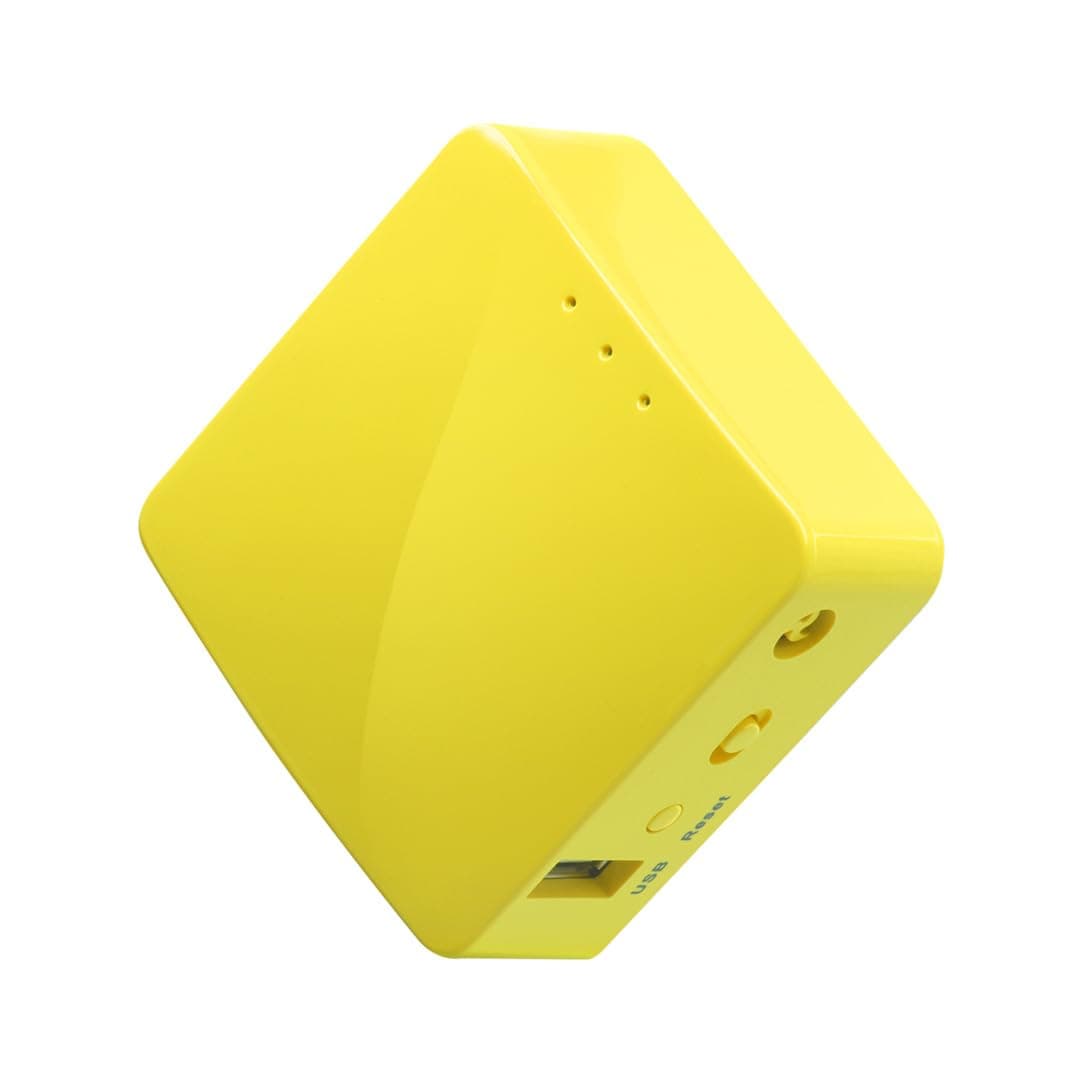
🌍 Stay connected, stay secure—your pocket-sized travel guardian!
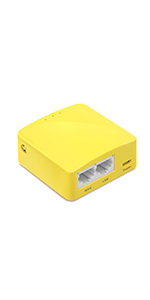
The GL.iNet GL-MT300N-V2 (Mango) is a lightweight, portable mini travel router featuring dual Ethernet ports, 300 Mbps Wi-Fi 4 speed on 2.4 GHz, and pre-installed OpenWrt firmware. It supports OpenVPN and WireGuard for secure browsing on public networks, offers easy setup via a user-friendly admin panel and app, and is powered via USB for ultimate travel convenience.





| ASIN | B073TSK26W |
| Antenna Location | Business |
| Antenna Type | Internal |
| Best Sellers Rank | #4,081 in Electronics ( See Top 100 in Electronics ) #39 in Computer Routers |
| Brand | GL.iNet |
| Built-In Media | GL-MT300N-V2 (Mango) mini router (2-year Warranty), USB cable, Ethernet cable, User Manual. |
| Color | Blue, Grey, Black |
| Compatible Devices | Personal Computer, Smartphone, Tablet, Gaming Console, Smart Television, Printer, Security Camera |
| Connectivity Protocol | Ethernet, Wi-Fi |
| Connectivity Technology | Ethernet, USB, Wi-Fi |
| Control Method | App |
| Controller Type | App Control |
| Coverage | Personal use and travel |
| Customer Reviews | 4.2 4.2 out of 5 stars (12,799) |
| Data Transfer Rate | 300 Megabits Per Second |
| EU Spare Part Availability Duration | 2 Years |
| Frequency | 2.4 GHz |
| Frequency Band Class | Single-Band |
| Has Internet Connectivity | Yes |
| Has Security Updates | Yes |
| Is Electric | Yes |
| Is Modem Compatible | Yes |
| Item Dimensions L x W x H | 2.28"L x 2.28"W x 0.98"H |
| Item Weight | 40 Grams |
| LAN Port Bandwidth | 100 megabits_per_second |
| Manufacturer | GL Technologies |
| Maximum Upstream Data Transfer Rate | 300 Megabits Per Second |
| Mfr Part Number | GL-MT300N-V2_SML |
| Model Name | GL-MT300N-V2 |
| Model Number | GL-MT300N-V2 |
| Number of Ports | 2 |
| Operating System | OpenWrt |
| Other Special Features of the Product | Access Point Mode, Internet Security |
| RAM Memory Installed | 128 MB |
| Router Firewall Security Level | High |
| Router Network Type | multi-mode |
| Security Protocol | WPA2-PSK |
| Unit Count | 1 Count |
| Voltage | 5 Volts |
| Warranty Description | 2 Years |
| Wi-Fi Generation | Wi-Fi 4 |
| Wireless Compability | 802.11bgn |
D**.
A tiny device that's easy to configure and use. Simple VPN setup with on/off toggle switch.
This is the best travel modem out there. It's tiny. It's light. It's full featured and incredibly configurable through a simple administrative panel that's easy and intuitive to use. It uses open source OpenWrt firmware but the Admin Panel tames all the complexity. It's just so darn useful. The main function is the repeater mode where you can login to a public Wi-Fi connection, and the device creates another Wi-Fi connection you or your entire party can login to. It's also easy to add a VPN (OpenVPN or Wireguard) to the connection and has a little toggle switch to enable and disable the VPN as you want. It can get Internet from any Wi-Fi source or through tethering from your smartphone or from a cellular data dongle if you have one of those. It also has an ethernet WAN port if your Internet connection is wired and an Internet LAN port if you want to connect your computer wired to the router. They thought of everything. The configuration panel makes all these various setups easy to select and configure. It's a really good device and so small and easy to travel with. Whatever your situation, this little device works and works well. It's 2 Ghz only but has 300 mbps throughput. No power supply is included, just the USB power cord and a short flat Ethernet cable are included. Since it supports OpenWrt, you can install custom firmware if you want and use this for something else. It has a built in system to install factory firmware from scratch if you have to. The GL.iNet people have done a great job with this little thing.
A**N
Nice travel router
2025 Update: Took the rating from 3 stars to 5. First: Mainline OpenWRT now supports the device chipset which means I can use official downloads instead of ones made by the company that did not provide source code. Second: While the Ad-hoc/IBSS mode is not supported by the chipset, 802.11s mesh point mode *is* supported. This is a better long-term solution, and works great. I wanted to do B.A.T.M.A.N with some Pi Zero units (which can only do Ad-hoc, station, and AP modes), but that project fizzled out. Combining these with my home router also setup with 802.11s gave a very reliable mesh network (these provided extended wifi out on the patio). Original review: First, let me say that I did not purchase these (I bought two) to use in their intended purpose as a travel router. I was more interested in them as a cost-efficient learning platform for building a batman-adv mesh network. Unfortunately, the chipset in this little device is a MediaTek MT7628AN v1 which doesn't seem to have mainline OpenWRT support. The manufacturer does maintain several firmware images and an opkg repository, but I do not see any source code posted for their customized OpenWRT images (GPL violation?). The good: * Small and travel friendly. * Sufficient wifi signal * Easy to set up and use its basic functionality out of the box. Easily sets up as a wifi repeater. * Has a custom web UI that simplifies the most frequent, basic configurations. For more advanced options, LuCI is also available. The bad: * The wireless chipset doesn't support ad-hoc / IBSS mode which means they're useless as-intended for my batman-adv mesh project. * Can't even query the capabilities of the wireless chipset. "iw phy" returns nothing, and all of the radio interfaces seem to be "hardwired" into pre-defined modes (ra0 = iface used for AP mode, apcli0 = iface used in STA mode, wds0-3 for WDS). * I honestly don't trust this device not to send every secret that flows through it to Beijing, and the next thing I do will be a WireShark analysis. Assuming the silicon itself isn't compromised, I was hoping to simply reflash a vanilla OpenWRT image and build on that, but the architecture is not supported in mainline, and the chipset of the device was not published in the product description. Before giving up on these, I'm going to look into setting up a build environment for the chipset and compile my own image. * The OpenVPN client is garbage. It periodically disconnects and refuses to reconnect without several reboots. Clients lose internet access completely. Internet is otherwise solid with VPN disabled. Working on setting up WireGuard to see if it is any better. This is pretty much a core advertised feature of the product, so this is pretty unforgivable. * Chipset isn't supported in mainline OpenWRT. While the manufacturer's opkg repo does provide packages for that architecture, and that repo has so-far covered my needs, it makes me solely rely on the manufacturer. I suppose I could mirror their repo locally, but community support would be much preferred. * 3rd party OpenWRT packages are pretty much off the table. As with OpenWRT itself on this device, I'm looking into compiling the packages from source myself to bypass this limitation.
J**K
Updated - Works well once you get past setup (otherwise would be 5 star).
Update: I'm leaving this at 4 stars due to setup and restart issues but this device is definitely worthwhile owning. I used it on a month long cruise as a repeater for a single device captive login and after learning how to configure it, it was flawless in operation and permitted multiple devices to easily connect. The primary setup difficulties have to do with using an IPhone as the interface (I don't know if Android phones will experience the same issues). With the IPhone, I found it necessary to turn off the DNS attack protection feature. Then, when restarting the router using my IPhone, it was necessary to turn off my phone WiFi, turn it back on and select the router (enter router password if necessary) to get the captive (Cruise ship) login to pop up. Once the captive login credentials were entered, my other devices were able to connect to the router. Note - using my MacBookPro to connect, it wasn't necessary to turn off WiFi for the captive login to pop up automatically. I haven't tested using the MacBook with the device's DNS option in its default state though. (Original Review) Gave this only 4 stars because of setup issues. I initialized the GL-MT300N-V2-ed1 mini router per instructions and personalized the admin password and SSID. I set it up as a repeater for my 2.4G Xfinity home router, however the mini router kept saying “internet not connected”. I also set the “remember” button when I selected the Xfinity router. Thinking I might have done something wrong, I reset the mini router (reset button 10+ seconds) and reinitialized/set up the same way (did not need the defaults “goodlife” admin pw after first reset). I repeated the admin reinitialization and (repeater) wifi setup with the same negative internet warning. Also checked my Xfinity router admin page and saw that the mini router was connected but still not passing data. Tried moving away from Xfinity router, incase the Xfinity signal was swamping the mini router signal, without success. I then shut down the mini router for a while and after about 10 minutes, I powered the mini router up again. With my IPhone connected to the mini router SSID (cellular data off), I logged back into mini router admin using the previously personalized pw and was astonished to see it was connected to Xfinity router and passing data (the wireless led was blinking). I tried browsing several different sites and was initially rebuffed by an Xfinity “device paused” warning page. After several attempts accessing different sites, I tried ignoring the Xfinity warning and discovered that reloading immediately brought up the desired site. After that, I was able to power down (disconnect) and automatically reconnect to the remembered wifi connection on power up without any login password. Some other notes: online help pages mention a green power led and a red wireless connection led - however, all the leds are white. The power led comes on quickly once the mini router has power, but it takes about a minute for the wireless led to light up. Also, the slide switch next to the reset button is apparently a programmable function switch that by default has no function. I've only tested this with a 2.4G wifi signal but the online literature suggests that it is also capable of 5G with a different wireless channel selection. Overall, once I got past the initial hiccups, the mini router works like a charm and I’m looking forward to using it with multiple devices on an upcoming cruise (cruise wifi only permits a single device connection).
M**O
📝 DESCRIPCIÓN Mini enrutador WiFi portátil ideal para viajes, con funcionalidades avanzadas de seguridad y extensibilidad. * En Amazon puedes encontrar un modelo superior, con wifi dual: https://amzn.to/3VBX7sR 🧾 ESPECIFICACIONES - Marca: GL.iNet - Modelo: GL-MT300N-V2 - Banda de frecuencia: 2.4 Ghz - Estándar de comunicación inalámbrica: 802.11m - Velocidad máxima: 300 mbps - Tecnología de conectividad: USB, Por cable, Ethernet, Wifi, Inalámbrico - Color: Blanco 📦 CONTENIDO · Enrutador inalámbrico GL-MT300N-V2 · Manual de usuario · Cable de ethernet · Adaptador de corriente (enchufe UE+Reino Unido) · 2 años de garantía 📲 APP • glinet 💶 PRECIO • 14 de Marzo de 2024: 25,49€ 🟢 PROS • Diseño compacto y portátil, ideal para viajes. • Económico • Funciona como repetidor para redes Wi-Fi públicas. • Fácil de configurar y usar. 🔴 CONTRAS • No tiene banda de conexión de 5Ghz • No tiene puertos Gigabit para una conexión de alta velocidad. 8️⃣ VALORACIÓN Este router inalámbrico es ideal como opción para viajeros que necesitan conectividad privada y segura. También es perfecto para poder utilizar en tu vivienda, para mantener una red privada con VPN. Este router es el más básico de la gama, sin compatiblidad con wifi 6, sin doble banda wifi, con velocidades mayores en la banda de 5 Ghz y sin puerto de ethernet de gigabit. En cuanto a velocidades, tengo las siguientes: - Sin VPN: 85 Mb - Con VPN TCP: 6 Mb - Con VPN UDP: 9 Mb - Con Wireguard: 22 Mb Con algunos protocolos puedo ver IPTV sin problemas y jugar online. En cuanto a su diseño, es muy compacto y portátil, con diferentes opciones avanzadas de configuración, que garantiza una experiencia de uso satisfactoria. Tiene una fácil configuración y es muy versátil, que lo hace ideal para una variedad de situaciones gracias a su portabilidad. Entres sus funciones, tienen la opción de funcionar como: - Modo Router: En este modo, el router funciona como el dispositivo principal que gestiona la red local. Se conecta al módem de Internet y distribuye la conexión a Internet a través de cables Ethernet o de forma inalámbrica a dispositivos como pcs, móviles, tablets, etc. También realiza funciones como asignar direcciones IP a los dispositivos conectados, administrar el tráfico de la red, y proporcionar seguridad a través de cortafuegos y protocolos de seguridad como WPA2. - Modo Punto de Acceso (AP): En este modo, el router se utiliza para extender la red existente cableada a dispositivos inalámbricos. Se conecta a un router principal a través de un cable Ethernet y luego emite una señal WiFi para que los dispositivos inalámbricos se conecten a la red. Es capaz de realizar funciones de enrutamiento y gestiona la asignación de direcciones IP en su red. - Modo Repetidor (Repeater) o Extensor de Rango: En este modo, el router recibe la señal WiFi de otro router o punto de acceso y la amplifica para extender el alcance de la red inalámbrica. Se coloca en un área donde la señal WiFi existente es débil y la amplifica para proporcionar una cobertura más amplia. Funciona retransmitiendo la señal WiFi recibida desde el router principal. - Modo Tethering: El tethering permite compartir la conexión a Internet de un dispositivo móvil con otros dispositivos, como ordenadores o tablets, utilizando un cable USB, Bluetooth o Wi-Fi. Es útil cuando no hay acceso a una red Wi-Fi tradicional, convirtiendo tu móvil en un punto de acceso portátil. Su configuración se realiza desde un explorador, una vez conectado a él y también tienes la opción de configurarlo desde la app glinet. ✅ CONCLUSIÓN Es la primera vez que utilizo uno de estos router y me gustó la facilidad de uso y configuración. Soy usuario a nivel básico y conseguí de una manera rápida, crear mi propia red vpn. Tiene una buena relación calidad / precio, en comparación con otros modelos que encontré por Amazon. No es un dispositivo para grandes velocidades, pero es válido para transmisiones en streaming. 👍 RECOMENDABLE. ✳️ Espero que mi comentario ✍️ te haya sido útil 😃
L**0
Recomendo uso para o PS2..
P**U
Ce routeur est vraiment pratique, joli, performant, et securisé en déplacement, mais montre vite ses limites si plusieurs équipements y sont connectés. Facile a configurer, et pour les experts OpenWRT est présent sur le routeur. Un vrai plus. Il prends en charge WireGuard et autres VPN. On peut lui mettre une camera pour faire de la video protection, ou un disque dur pour le transformer en NAS. Satisfait de ce routeur en déplacement jusqu’à 5 appareils
A**E
Since July 2018, I have acquired six GL-iNet routers, and I can say without hesitation that these are some of the finest networking devices I have ever owned. Within their price range they are a class of it's own . My collection includes: - **1× GL-XE300 (Puli)** – Compact 4G LTE router (purchased July 2018) - **1× GL-X750 (Spitz)** – Versatile cellular router (purchased May 2022) - **1× GL-X1200 (Amarok)** – Dual-band wireless industrial gateway (purchased May 2022) - **1× GL-X3000 (Spitz AX)** – Their flagship 5G Wi-Fi 6 cellular gateway (purched June 2023) - **2× GL-MT300N-V2 (Mango)** – Ultra-portable travel routers (most recent purchase, December 2025) Over seven years as a loyal customer, every single one of these devices has exceeded my expectations in terms of build quality, functionality, and longevity. Outstanding Technical Support – They Go Above and Beyond What truly sets GL-iNet apart from other networking companies is their exceptional customer support, here are two concrete examples: Custom OpenWRT Compilation Support When I needed a specific OpenWRT configuration for my GL-X1200, the support team didn't simply point me to documentation and wish me luck. Instead, they worked with me directly to create a custom OpenWRT configuration that I could compile and flash onto the device. This level of technical engagement is unheard of from most hardware vendors. Persistent Problem-Solving With my GL-X3000, I encountered a frustrating SIM card compatibility issue with my German provider. The support team invested many hours working through the problem with me, meticulously testing different configurations and modem settings until we resolved the issue. Their patience and technical expertise were remarkable. They treated my problem as their problem until it was solved. The support staff are friendly, respond quickly, and possess genuine technical depth. They don't read from scripts – they understand their products at the firmware level. Hardware Quality and Durability These routers are built to last. Until this day I am still using the GL-X750 in my motorhome. Firmware Updates and Long-Term Support GL-iNet provides firmware updates for several years after product launch, which is increasingly rare in the networking industry. They actively patch security vulnerabilities and add new features. But here's the real beauty: even when GL-iNet officially ends firmware support for a product, you're not left with abandoned hardware. All their routers are based on OpenWRT, and the community maintains OpenWRT images available on GitHub that extend the useful life for most of these devices for many more years. You can continue running secure, updated firmware long after most consumer routers would have become e-waste. The GL-X3000's Game-Changing eSIM Feature The GL-X3000 (Spitz AX) deserves special mention for its exceptional eSIM management capabilities. Using GL-iNet's physical eSIM card, you can store multiple eSIM profiles on a single card and switch between them through the admin panel. This is invaluable for: - Travellers who need connectivity across multiple countries - Anyone wanting to avoid expensive roaming charges - Users who want to switch carriers without physically swapping SIM cards - Privacy-conscious users who can purchase eSIM profiles anonymously The profile management is intuitive – you simply scan a QR code from your eSIM provider, download the profile to your router, and enable it when needed. I've used this feature extensively across Europe with excellent results. OpenWRT Foundation – Power User Paradise Every GL-iNet router runs on OpenWRT with their user-friendly interface layered on top. This gives you the best of both worlds: - **For beginners**: A polished, intuitive web interface that makes VPN setup, repeater configuration, and basic settings accessible to anyone - **For power users**: Full LuCI access and the ability to install additional OpenWRT packages, SSH into the device, and customize everything Want to run AdGuard Home, Tailscale, WireGuard, or ZeroTier? It's either built-in or installable. This flexibility is unmatched by most mainstream consumer routers. Conclusion If you're looking for networking hardware that combines professional-grade features, open-source flexibility, exceptional build quality, and genuinely helpful technical support, GL-iNet is the answer. These routers have earned a permanent place in my network infrastructure. After six routers and over seven years of continuous use – from my first GL-XE300 in 2018 to my newest GL-MT300N-V2 just last week – my only regret is not discovering GL-iNet sooner.
F**.
Ottimo. Ho provato a collegarlo al mio modem come router e funziona perfettamente. La connessione wifi è superveloce. Come è scritto, si può usare come ripetitore di WiFi o in altre modalità. È dotato di cavo lan e cavo alimentazione USB ma non di alimentatore. Si attacca ad un caricabatterie da cellulare o ad un PC o ad un power Bank. Le istruzioni per l'installazione sono in un foglietto ben fatto ma in inglese o cinese, ma è comunque facilissimo accenderlo, basta attaccarlo all'alimentazione. Sotto l'apparecchio sono stampate le credenziali per l'accesso. Appena entrato nella schermata di configurazione mi ha fatto mettere una password nuova per accedere come amministratore e mi ha fatto scegliere la lingua. Incredibile, c'è l'italiano ed è tradotto bene! Sono entrato nella scheda aggiornamento e si è aggiornato anche il firmware. Si può attivare l'aggiornamento automatico del programma di controllo e del firmware ad una certa ora della giorno. Ha anche la rete ospiti che si può facilmente configurare ed accendere e spegnere. Ha due prese che possono essere una wan (entra internet) e una LAN (esce internet) o entrambe LAN. Mi sembra facilissimo da configurare, ha anche il captive portal! Ha la possibilità di limitare la velocità di banda internet per alcuni utenti. Si può impostare un DDNS per manovrarlo da remoto. Ci sono un sacco di altre cose, come le regole di portforwarding. Ha diversi livelli di potenza. Si può inserire una chiavetta USB per condividere file. L'unica cosa che non ho trovato è il salvataggio su file delle impostazioni. Sarebbe cosa utile, sopratutto perché premendo il pulsante di reset per 10 secondi, ritorna alle impostazioni di fabbrica (provato). Assorbimento a 5V (con qualsiasi livello di potenza) tra 160 e 210 mAh. Facendo la media di 190mAh come si vede in foto, consuma poco meno di 1 wh. All'anno 8,3 kwh sono circa €1,6 di corrente. Insomma, incredibile. L'ho pagato €18,27 in offerta. Aggiornamento A qualche mese dall'acquisto continuo ad essere soddisfattissimo. Lo sto usando per creare una piccola rete fra due computer per giocare con mio figlio al vecchio Age of Empires. Dapprima l'abbiamo usato in WiFi, poi siamo passati alla modalità via cavo, settando la seconda porta da WAN a LAN e senza essere davvero connessi ad internet.
Trustpilot
Hace 1 mes
Hace 1 semana