
Descargar la aplicación


Servicios al cliente
Sobre nosotros
Copyright © 2025 Desertcart Holdings Limited
Descargar la aplicación
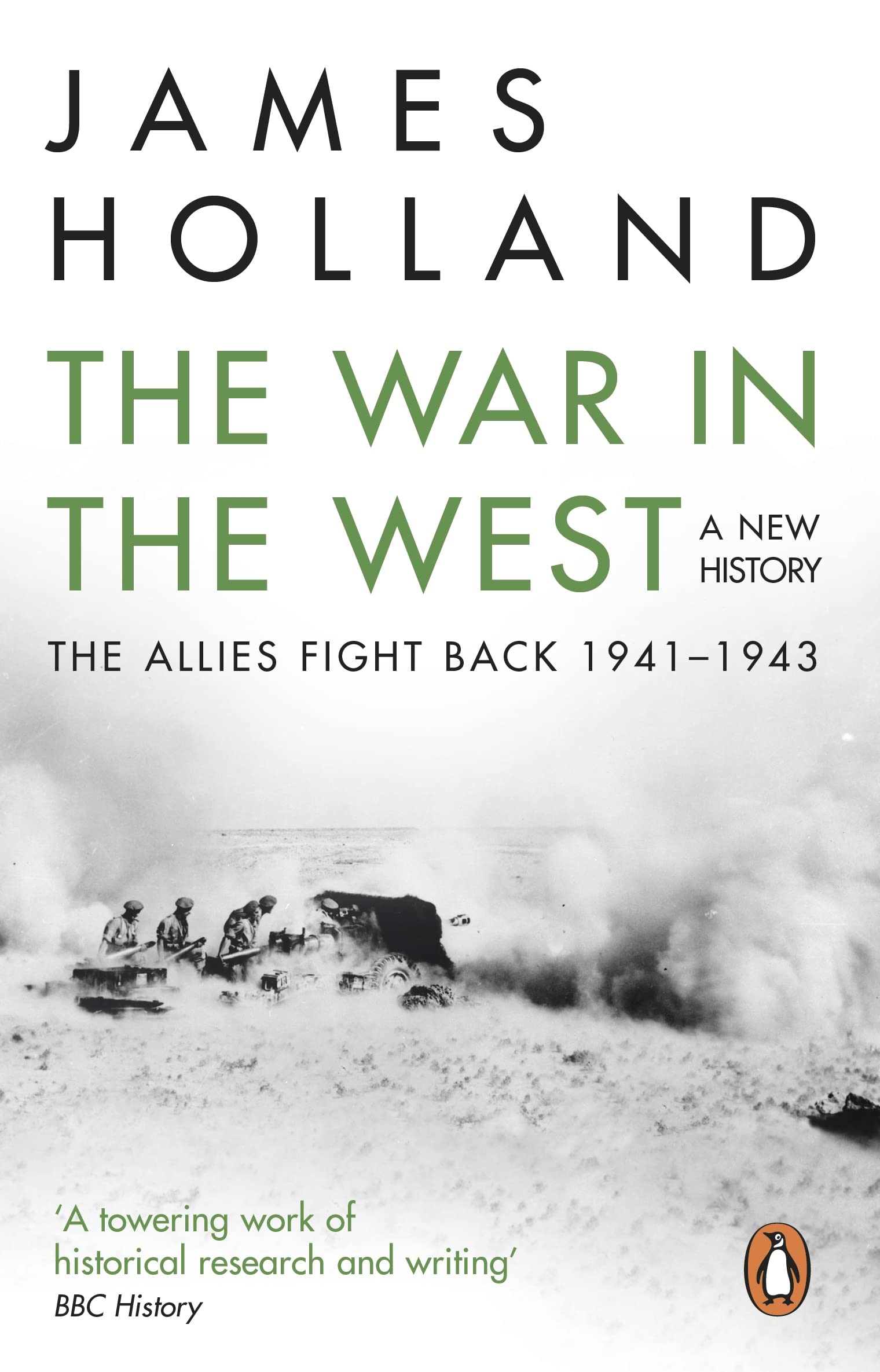
War In The West A New History
J**T
Strategic Logistics
A military truism is "Amateurs talk tactics. Professional talk logistics." Holland is the first major popular historian of the Second World War to place what might best be called "strategic logistics" at the heart of his narrative. There are a lot of books about the war, but Holland is the first author to describe how overwhelmed Germany was by the resources of its opponents. Everyone knows that the United States outproduced Germany and Japan, but few realize that the British Empire had enormous resources at its disposal as well. Everyone knows that Germany had the resources of its conquests to exploit, but few are aware of how badly they did so, or how badly they used their own. Holland's other contribution is to show how awful Hitler was as a war leader. He had no real grasp of strategy, nor of the way the world actually worked. This is an excellent series, and I await the last volume with great anticipation.
I**9
Great transaction!
Shipped quickly and exactly as expected.
J**A
BEST EVER
My husband is CRAZY HAPPY, FAN BOY FOR JAMES HOLLAND. The list of living Most Excellent World War 2 historians starts and ends here.....James Holland.
F**R
Massive but entertaining read
Not for the faint of heart! Holland builds on his successful first volume on the War in the West to deftly weave in historic events, human drama and enough tactical and technical detail to satisfy just about any aficionado of WW2. All of this is the necessary “entertainment” to tell the true story of how Allied (and Soviet) production buried the Axis under an implacable and ever-expanding wave of steel, armaments and fuel. Holland clearly enjoys telling this story the most - and it is an under-appreciated chapter of Allied victory - but he clearly recognizes that no one will read a book about production alone; and he realizes that it would be as wrong to focus exclusively on the operational level as other works have erred in focusing exclusively on the strategic or tactical levels. Holland attempts to tell “the whole story” - is it any surprise that he requires three massive tomes to do it? But be warned: you may soon find yourself overwhelmed as you attempt to follow the stories of twenty or thirty individuals as they live out their experiences across the Western Theater of war between 1941 and 1943. It will become confusing: but then, that was the reality of the war. It was a massively confusing and often impenetrable chaos, not the neat lines and convenient dates we learn in schools or the History Channel. It is no wonder that even the best
M**N
Very good read!
Great read!I always enjoy reading "new" histories of WWII. Lots of newer information. Look forward to reading the next volume!
R**R
Five Stars
Well written and easy to follow. I am waiting for vol. 3
T**R
Could not put it down.
A really great read. Could not put it down!!
T**.
Easy to read.
So far, Holland's two volume (of three) history of the War in the West is one of the easiest, reader-friendly such works I've encountered in over 50 years of reading. It's important to note, as Holland makes clear, that this is a history of the Second World War as it was fought in western Europe. One reader here finds fault that Holland does not talk much about the Battle of Stalingrad. That reader was not paying attention. Another reader finds fault that Holland tells the stories of numerous participants in the War and finds that to be confusing. I find it insightful and never confusing. What better testimony can we have than that of those who lived the experience? The reader is never overwhelmed with statistics, yet gets a large picture of the progression of the various combatants. I've taught writing at the college level for years and the main thing I told my students was always "make it clear." That's what Holland does with his story and the reader is the lucky benefactor of his style.
Trustpilot
Hace 2 semanas
Hace 2 semanas
Hace 5 días
Hace 2 días