We remain fully operational. Our teams are working around the clock to ensure your deliveries continue safely.

Descargar la aplicación


Servicios al cliente
Sobre nosotros
Copyright © 2025 Desertcart Holdings Limited
Descargar la aplicación

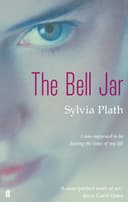
📖 Unlock the haunting genius of Sylvia Plath’s classic — where beauty meets brutal truth.
The Bell Jar by Sylvia Plath is a 240-page English-language novel published by Faber & Faber, ranked among the top 50 fiction classics. It offers a semi-autobiographical, poetic exploration of a young woman’s descent into mental illness, blending stark realism with imaginative prose. Praised for its cultural significance and literary depth, it remains a vital read for those seeking profound insight into mental health and feminine experience.
| Best Sellers Rank | 2,539 in Books ( See Top 100 in Books ) 28 in Poetry & Drama Criticism 43 in Fiction Classics (Books) 272 in Social Sciences (Books) |
| Customer reviews | 4.3 4.3 out of 5 stars (36,625) |
| Dimensions | 12.6 x 1.4 x 19.8 cm |
| Edition | Main |
| ISBN-10 | 0571226167 |
| ISBN-13 | 978-0571226160 |
| Item weight | 173 g |
| Language | English |
| Print length | 240 pages |
| Publication date | 2 Jun. 2005 |
| Publisher | Faber & Faber |
V**R
A feminine portrayal of darkness
I find The Bell Jar an intriguing book that covers the areas of relationships/mental health realistically. This book is based on the author's experiences. It is an adult book and describes (but does not analyse unsurprisingly) many aspects of relationships from the perspective of Esther Greenwood (the main character). The story starts off quite slowly in a feintly amusing sort of way and some might find this uninteresting. Gradually a picture emerges of an unhappy young woman who has contact with men but is unfulfilled emotionally by them. The portrayal of a woman's attitude and thought process provides an insight into the way certain kinds of sophisticated women might think. The book has a natural flow to it and unlike some fictional books there is nothing here that seems unlikely or out of place. Esther's difficulty is her partial dislike for her intended, severe dislikes of some males and a lack of interest from males she does like. As you progress more and more through the book you begin to see more of Sylvia's beautiful and imaginative writing. One example that comes to mind is when her man (Buddy Willard) describes his mother saying `- a man is an arrow into the future and the woman where the arrow shoots from'. There are many dark elements to this novel: the sinister descriptions of medical laboratories, mental institutions and the negativity and depression contained within. What makes it surreal is the background of parties, student life and past recollections. This must have been a rather difficult book to write as unlike many books it doesn't have multiple stories or characters that interact or exciting events throughout. The fact that the book is over 200 pages also makes it long for a story about one person's depressive illness. So whereas some books draw you in to a story because The Bell Jar is not like this there is a tendency to become a little disinterested until the next gem of imaginative brilliance. The Bell Jar is a story of two halves. The first half describes the cause of Esther's illness and the second describes the effect of it, although the reader comes to realise that Esther is already ill in the first section. In the book a man who hates women attacks Esther. The analogy of a snake in a glass cage (the woman hater) is memorable description of which there are a number sprinkled throughout the novel. With these kinds of experiences Esther's character becomes cold. A magical element of this book is the way her other friends find things so easy; they are all contented. Sylvia might have focussed on the inevitable friction this would cause but elects not to. From chapter 10 onwards the second part of the novel describes the consequences of the earlier events. Some may find this the most interesting part of the book. With chilling accuracy Sylvia describes the form of Esther's breakdown. Its all there: the aspects the sufferer clings to that don't make any difference, the futile attempts to change things, rejection from a writing course, ending her relationship with Buddy etc. Sylvia vividly shows how Esther's high ability works against her, how she starts things but gives them up and how she stays in bed for days unable to sleep. The author has quite an unusual writing style that I find disorienting, only later on in the story am I able to perhaps understand things. She sometimes describes subsequent events in the story before the other events. Whether this is a surreal element of the writing or simply annoying will depend on the reader. The book is harrowing in its descriptions of self-harm as the terrible state Esther is in becomes clearer and clearer. This novel is for purists and adults. It is sometimes hard going but rewarding in the way it complexly evolves. Perhaps the method/style/form of writing is in itself a portrayal of the malaise of mental health problems. It certainly makes the book different to other classic works. Overall I am confused by The Bell Jar and am at a loss to determine its worth. For: Flashes of genius Realistic depiction of slide into mental illness Interesting perspective on human relationships Against: Realism that makes it occasionally difficult to maintain interest
L**N
Thoughtful and interesting
The Bell Jar begins with Esther Greenwood explaining how she came to be in New York and how she was feeling during that time. Plath adds in current events of the time to make it easier to relate to the place and time in which it is set. The first descriptions of New York are not the most pleasant and while explaining about the extravagances of the magazine industry, Plath manages to make the city seem dark and grey. The opening of the book made me want to know more about Esther, her life and how she spent her time in New York. As Esther's time in New York is further explained, it is clear quite quickly that she doesn't feel at home there. Esther, used to being known for doing well in school and winning scholarships feels like an extremely small fish in a huge pond. Although the other characters are not described in too much detail, Esther makes it known that she doesn't feel anything like them and doesn't think that she has much in common with the other girls at all. The way that Esther's character is written would make me think that at the time the book was published, women everywhere would have been able to relate to her. She isn't the most confident of characters and is open about her fears and worries about the world and her future. This was something that I found really intriguing about Esther. The Bell Jar is partly autobiographical of Sylvia Plath's life and deals with the topics of mental illness and suicide. These themes are strong throughout the whole book. When in New York, Esther knows she doesn't quite fit and this begins her slow descent into depression and an intense sadness. Even though Esther keeps her personality throughout the book, parts of her slowly get lost in the big world that she is experiencing. She is cold and calculating about some major issues like losing her virginity and her views about marriage are far from those of other women during that time. Esther becomes mentally unstable following her return home from New York and this is where the novel mirrors parts of Plath's own life. I thought that this was going to be a really depressing book after knowing the subject matter but everything was so interesting instead. Watching Esther's mental health get worse and worse and seeing the different kinds of establishments that she was put in gave me more perspective on what Plath's own life would have been like. Due to Esther's condition and her life experiences, Plath made me like her but also feel empathy for her at the same time. The Bell Jar is a wonderfully written novel full of poetic prose and crisp descriptions. While the novel tackles tough themes, especially for the time it was written, it is a compelling read and one that I enjoyed thoroughly.
C**A
Leí The Bell Jar con muchas ganas y no me decepcionó. Es un libro que remueve bastante, especialmente si alguna vez has pasado por momentos difíciles a nivel emocional. Sylvia Plath escribe con una claridad brutal, sin filtros, y eso hace que todo se sienta muy real. Hay partes incómodas, tristes, incluso agobiantes, pero también momentos de observación aguda y una forma muy especial de mirar el mundo. La protagonista no busca caer bien, simplemente es honesta, y eso me gustó. No es una lectura ligera ni bonita en el sentido clásico, pero sí importante. Me pareció muy valiente. En cuanto a la edición, esta de Faber es sencilla pero bonita. La portada es llamativa y el papel tiene buena calidad. El tamaño de letra es cómodo para leer. Lo recomiendo, sobre todo si te interesa la literatura escrita por mujeres o los libros que exploran la salud mental desde dentro.
P**S
I knew it would be good; this was far better than expected. A dark story that draws you in with its borderline characters and unexpected outcomes. Brilliantly written. I will have to read it again.
S**M
Came in good condition but smells terrible.
B**M
Ci sono libri che non si limitano a raccontare una storia: ti prendono per mano e ti trascinano dentro un mondo interiore fatto di fragilità, sogni, paure e desideri. Sylvia Plath ci fa vivere, attraverso Esther Greenwood, la sensazione di essere intrappolati sotto una campana di vetro invisibile: il mondo continua a muoversi, ma tu sei lì, immobile, a guardare la vita da dietro un vetro che ti soffoca. È il ritratto lucidissimo della pressione sociale, delle aspettative sulle donne, del peso delle scelte e dell’identità in bilico. Indimenticabile la “teoria dei fichi”: un albero pieno di futuri possibili, ognuno dolce e promettente come un frutto maturo. Ma mentre rimani indecisa, incapace di scegliere per paura di rinunciare, i fichi uno dopo l’altro marciscono e cadono a terra. Una metafora che colpisce ancora oggi, perché parla di noi, delle nostre paure di sbagliare, di perdere occasioni, di rimanere bloccati mentre la vita va avanti. Un romanzo intenso, doloroso, ma bellissimo, che scava a fondo nella mente e nel cuore di chi legge. Non è solo la storia di Esther, ma il riflesso di un’intera generazione di donne (e non solo) in cerca di aria, di libertà, di se stesse.
M**M
Great
Trustpilot
Hace 2 meses
Hace 3 semanas