We remain fully operational. Our teams are working around the clock to ensure your deliveries continue safely.

Descargar la aplicación


Servicios al cliente
Sobre nosotros
Copyright © 2025 Desertcart Holdings Limited
Descargar la aplicación
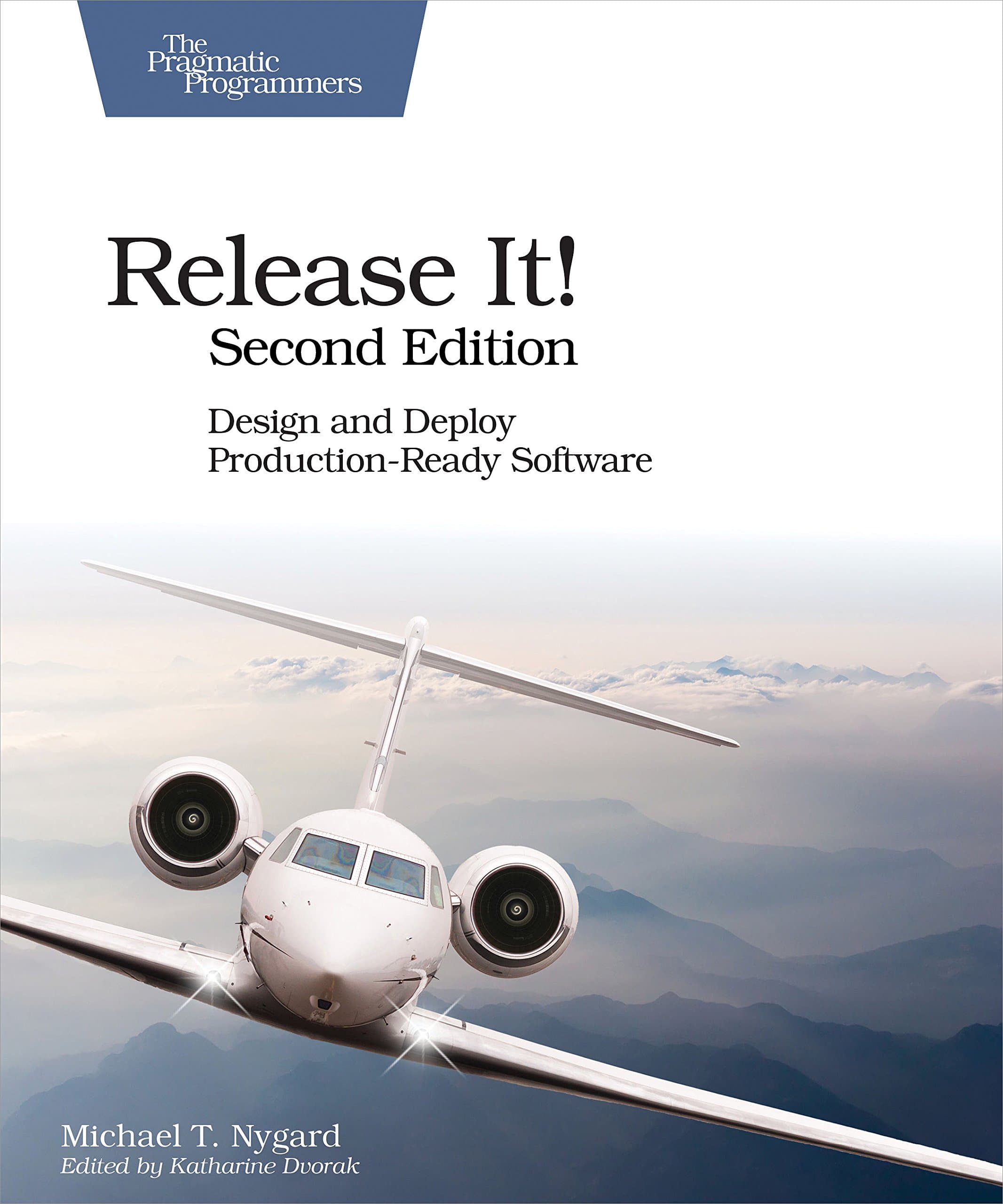
Release It!: Design and Deploy Production-Ready Software [Nygard, Michael] on desertcart.com. *FREE* shipping on qualifying offers. Release It!: Design and Deploy Production-Ready Software Review: Easy reading, high-value content - Highly recommend this to developers, engineers, and project managers. Very helpful to inform readers about the consequences of building non-robust systems, best-practice approaches to building-in robustness, and value and methods of building testable systems. Has enough technical depth to carry the discussion yet remains accessible to those who may not have worked in the specific area being discussed. Reading this, I feel like I have been chatting with a very experienced system developer who gladly shares his hard-earned lessons. As an engineer who develops large systems this book helped me become more aware of how to think of ways to avoid designed-in problems and how to better test and validate. This book is also helpful for software project managers to be more aware of what software development teams should be doing. You can skim over the more technical sections. Review: An entertaining informative read. - Michael has a talent for injecting just enough humour into his writing to make it engaging without sacrificing technical detail or critical observations. This books contains valuable lessons learnt the hard way from real world mishaps. Anyone who has been developing software long enough will identify with the "ohnosecond" that follows pressing [enter] on a poorly thought through action. Revel in Schadenfreude if that is your thing but remember "if it can go wrong, it will go wrong" and none of us are immune. Consider this book as both prophecy of your impending doom, but also as a manual of the many traps you will encounter along the way and how to disarm them.

| ASIN | 1680502395 |
| Best Sellers Rank | #132,427 in Books ( See Top 100 in Books ) #4 in Client-Server Networking Systems #17 in Software Design & Engineering #70 in Software Development (Books) |
| Customer Reviews | 4.6 4.6 out of 5 stars (497) |
| Dimensions | 7.5 x 0.78 x 9.25 inches |
| Edition | 2nd |
| ISBN-10 | 9781680502398 |
| ISBN-13 | 978-1680502398 |
| Item Weight | 1.43 pounds |
| Language | English |
| Print length | 378 pages |
| Publication date | February 13, 2018 |
| Publisher | Pragmatic Bookshelf |
P**E
Easy reading, high-value content
Highly recommend this to developers, engineers, and project managers. Very helpful to inform readers about the consequences of building non-robust systems, best-practice approaches to building-in robustness, and value and methods of building testable systems. Has enough technical depth to carry the discussion yet remains accessible to those who may not have worked in the specific area being discussed. Reading this, I feel like I have been chatting with a very experienced system developer who gladly shares his hard-earned lessons. As an engineer who develops large systems this book helped me become more aware of how to think of ways to avoid designed-in problems and how to better test and validate. This book is also helpful for software project managers to be more aware of what software development teams should be doing. You can skim over the more technical sections.
H**M
An entertaining informative read.
Michael has a talent for injecting just enough humour into his writing to make it engaging without sacrificing technical detail or critical observations. This books contains valuable lessons learnt the hard way from real world mishaps. Anyone who has been developing software long enough will identify with the "ohnosecond" that follows pressing [enter] on a poorly thought through action. Revel in Schadenfreude if that is your thing but remember "if it can go wrong, it will go wrong" and none of us are immune. Consider this book as both prophecy of your impending doom, but also as a manual of the many traps you will encounter along the way and how to disarm them.
B**E
Helpful way to get going in release automation
DevOps is a hot topic at many organizations today, and this book can help software developers and IT operations folks implement a workable DevOps strategy. Often, the difference between success and failure are the little things that are common in every site, and this book has a good balance of simple, straightforward advice that can still accommodate the complex needs of any large organization. Overall, I found the material well written although suited more to the newcomer than to seasoned pros...indeed, there are a few passages that aren't wrong, but will make the little hairs on the back of salty old IT operations staff stand up. Plus, many large organizations will be taking the release automation journey hand-in-hand with a set of vendor-written products that are usually optimized to work a certain way, and of course that will have a big impact on how you proceed. But, as a starting point for a person or team just trying to get their head around streamlining the release process, this book will definitely give the reader lots of good ideas. Definitely recommended if you're in the early stages of DevOps and release automation.
P**.
A must read - the title undersells it
From a 35 year software professional...one of the best, most thought provoking books on the subject of software engineering I've read in years. It's not about releasing software so much as how to design software that you can feel confident in releasing. Much insight, not just into real-life problems, but guidance on ways to solve them. Changed my perspective and my designs for the better. Highly recommended.
S**A
but the book is still amazingly useful.
This is a must-have. Almost every real-world stability issue I'm observing in production is described, with solutions, in this book. Both principles and practical tools are very well explained. A discussion about function-as-a-service (which, I'm sure, will become the default for a lot of new software) is missing, but the book is still amazingly useful.
K**Y
A great read if you are interested in building a culture of reliability
Well written because it is clear and engaging. It articulates many things about stability and failure modes that need to be said. Few will remember a checklist but the way anti patterns and patterns are shared with experiences will make the concepts digestible and committed to memory. It reads like a compilation of post mortem with thoughts arranged systematically. If you want to build a culture of engineering this book is a great read.
D**E
You should own this even if you already know the content
I was looking for a "go to guide" that basically encapsulates all of the concepts of Continuous Delivery and the intersection of Agile Ways of Working, xTreme Programming (XP) and modern DevOps practices applied to Cloud and Service Ecosystems. This came up as a suggestion via a couple different searches. (not Google) I then read the table of contents as I was in a hurry, bought and downloaded... only to realize... Oh... It's Nigel... Of course it has everything I need. Well done, Nigel!
F**A
How things work and what yiu need know about a software in production. Recommended for anyone to produce a better software and how keep online
K**N
One of the best software engineering books I have encountered in years. I enjoyed it from the beginning to the end: examples, patterns, and war stories in particular. It is in particular helpful if you are running a web request, micro services or clustered application, as many parts of the book at applicable when your problems fall within those areas.
I**I
It's a long read, but filled with interesting details on how to build, release, and maintain software. A good read not only for ops engineers, but for developers as well.
R**T
Bought this book off the recommendation of Jim Webber - simply wonderful book on engineering. The writing is amazing - the author knows how to capture the attention of the reader, and more importantly, knows how to raise an engineer to a level of professionalism required in the field through the various horrible engineering stories that could've been avoided by being careful about development. Great book that made me be more self-aware of the importance of little things - little things that can crash a whole distributed system. Prolly a must-read in the literature.
A**N
Ce livre est tout simplement génial ! Michael n'explique pas comment faire du code propre et maintenable, il explique comment faire du code qui survit à la vraie vie, c'est-à-dire la production. Une liste d'anti pattern est d'abord dressée, puis les patterns qui les corrigent arrivent ensuite, le tout saupoudré d'expériences concrètes. Je recommande fortement !
Trustpilot
Hace 5 días
Hace 1 mes