We remain fully operational. Our teams are working around the clock to ensure your deliveries continue safely.

Descargar la aplicación


Servicios al cliente
Sobre nosotros
Copyright © 2025 Desertcart Holdings Limited
Descargar la aplicación
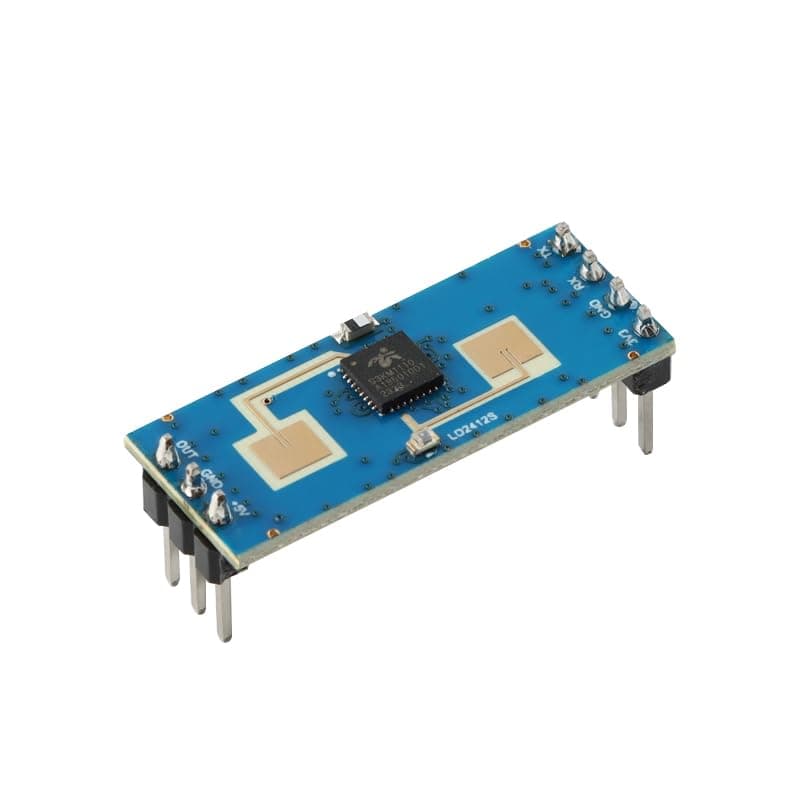
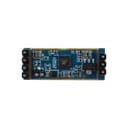
🚀 Elevate your smart space with next-gen human presence sensing!
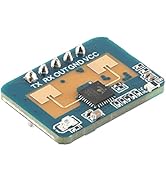
The LD2412 Human Presence Sensor Module leverages advanced 24GHz millimeter wave FMCW radar technology to deliver highly sensitive, real-time detection of human presence within a wide 75° angle and up to 9 meters distance. Its compact, low-power design supports customizable sensitivity and range settings via an intuitive visual configuration tool, while offering versatile GPIO and UART interfaces for seamless integration into smart home and security systems. Ideal for professionals seeking precise indoor motion and presence monitoring with future-ready connectivity.







| ASIN | B0DLN4T2X6 |
| Best Sellers Rank | #81,858 in Electronics ( See Top 100 in Electronics ) #29 in Radar Detectors |
| Brand | EC Buying |
| Customer Reviews | 4.8 4.8 out of 5 stars (5) |
| Display Type | LCD |
| Frequency Bands Supported | 24 GHz |
| Manufacturer | EC Buying |
| Mfr Part Number | LD2412 |
| Model Number | LD2412 |
| Power Source | Corded Electric |
C**A
Good
O**D
This board is an upgrade to the LD2410 human presence detector module. It appears to be relatively new to the scene as it appears (to me anyway) that there aren't any Arduino libraries that'll work correctly with this (yet). As I do not own a computer that runs windows (and given that wine is nearly always a struggle) I'm unable to properly communicate with this module right now. I did however find these things: 1) If you find the the "datasheet" at hlktech for this, you'll note that they provide a link to a google drive directory that contains a respectable amount of detail for this board - and it's pretty readable. 2) It is pin-for-pin "the same" as the 2410 with the exception of an additional VCC pin; you can choose to power it either with 5v or 3.3v. There is also an additional ground pin. 3) The default baud rate has changed. The 2410's default rate was 256000 - meaning that it was occasionally tricky to connect to straight from a computer (I never did this - I made a ESP32 thing for configuring them, which supports that data rate). The new rate is 115200, which is much better supported. 4) After I figured out that the baud rate had changed, I could in fact initialize serial communication to the device ncmreynolds' LD2410 arduino library. Using that library, however, I was unable to do anything other than query the version. Specifically, reading the configuration doesn't work (so I didn't want to mess it up by trying the write-config stuff). I did a search for LD2412 Arduino libraries but did not find anything. 5) With its default configuration, it *does* detect human presence. I'm just unsure what the default parameters are. It does indeed seem more sensitive, but without a working api I can't fully evaluate that yet. The documentation appears to be good enough that I stand a fair chance of being able to update ncmreynolds' library and I may take that on at some point, but not right now. I subtracted 1 star for the "windows only" utility that you can get from the manufacturer for this. We're past that now - they should do something that's cross platform (python, ruby...). Four stars for decent documentation and some "benefit of the doubt" that this is indeed an improved module. I will not know that for certain 'til I can properly talk to it.
R**R
This is relatively a new radar detection chip. There's not a lot of libraries which support the LD2412 yet for use within Arduino. I'm using this mostly as a tinker and learning device while hooked to an ESP32. Eventually, it'll be fun to use this as a motion detector and tracker for controlling lights, or triggering cameras to record without the need for any visible motion sensors.
Trustpilot
Hace 1 semana
Hace 1 mes