We remain fully operational. Our teams are working around the clock to ensure your deliveries continue safely.

Descargar la aplicación


Servicios al cliente
Sobre nosotros
Copyright © 2025 Desertcart Holdings Limited
Descargar la aplicación


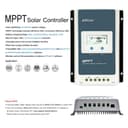

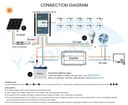
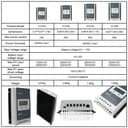
Specification:1.Advanced Maximum Power Point Tracking (MPPT) technology, with efficiency no less than 99.5%2.LCD display design, dynamically displaying tool's operating data and working condition3.Compatible with lead-acid and lithium-ion batteries and have charging power and current limitation function4.Multiple load control modes: manual control, lighting ON/OFF, light On+Timer5.Rated charging current and charging power automatic limit function6.Blacklight LCD Display / Common Negative Ground / Support lithium Battery / More Safety ProtectionTracer AN MPPT Charge Controller Features:1. 12 / 24VDC Auto2. Rated charge current: 30A3. Rated charging power: 390W/12V, 780W/24V4. Max.PV open circuit voltage:100VDC (92V at 25℃ temperature)5. Battery type selection: lead-acid (Gel, Sealed, Flooded) and Lithium6. Charging Power and Current Limitation Function7. User programmable for battery types, load control etc.8. Accurately recognizing and tracking of multiple power point9. PV short circuit / PV reverse polarity /Battery over voltage10. Battery over discharge / Battery reverse polarity / Load overload protection11.Never connect the soalr panel array to the controller Without/Before a Battery.12. You can connect two or more Tracer charge controller to the batteries bank in parallel, but do not share PV Panels. Dedicate a number of PV panels to each MPPT controller.Warm tips:Step: Connect the system in the order of 1.battery-->2. load-->3.PV array, and disconnect the system in the reverse order 3. 2. 1.1.Battery must be connected first !!!2.Never connect the soalr panel array to the controller Without/Before a Battery.3.DO NOT connect any inverter/ wind/Alternator or Charger into the charge controller! Review: Simple to set up and use. Shame they don't build in connectivity to network. Easily done nowadays. I have mine running 24/7 on a hydroponics system. Review: This is the second one of these chargers that I have owned. I live in a caravan on a building plot that has become hoplessly entangled in bankruptcy & corruption. The net result is that my stay in a caravan for a six month build has turned into 3 years of no Electricity, water or sewage. After a while I started to look at solar power to enable me to live without a generator running 16 hours a day. Through a process of trial and error I have wound up with 3 ex-solar farm panels, 8 100Ah lead acid batteries a Honda 2KvA Generator and this solar charge controller. It is easy to set up and provides good monitoring of both the Solar PV output and the battery state and on bright sunny days provides a steady 40A charge current. It also highlights the weakness of solar power if, like me, you are off grid. From the end of September until the end of April there is simply not enough energy from the solar to keep the batteries charged despite the undoubted efficiency of this controller. The first one of these showed that it really is only splash proof , the electronics were destroyed by water getting in round the LCD display, I had the lid of the box that it is stored in open for a few minutes whilst I checked a connection in a rain storm. It did not stop working completely but became very erratic and it was only when I opened the box up in desperation to find out why it was so erratic that I discovered the water damage. In my installation, this charger, my generator fed mains charger and my inverter all live in a plastic garden storage box with a two 12v computer cooling fans, one at each end of the box to keep the whole installation cool as the solar charger becomes quite hot when running flat out. Ventilation for this unit is essential to keep the operating temperature within acceptable limits. It's hard to know just how much more efficient a MPPT controller is than a cheaper PWM controller in real world situations. Having used PWMs before on a boat I think on balance that it probably worth the extra cost, but is not a game changer in comparison with other elements of a solar setup
| ASIN | B07PGRMCJZ |
| Brand Name | EPEVER |
| Color | 3210AN |
| Customer Reviews | 4.5 4.5 out of 5 stars (205) |
| Display Type | LCD |
| Item Weight | 1.42 Kilograms |
| Manufacturer | EPEVER |
| Material Type | Aluminum |
| Operating Temperature | 25 Degrees Celsius |
| UPC | 655160074974 |
B**7
Simple to set up and use. Shame they don't build in connectivity to network. Easily done nowadays. I have mine running 24/7 on a hydroponics system.
P**S
This is the second one of these chargers that I have owned. I live in a caravan on a building plot that has become hoplessly entangled in bankruptcy & corruption. The net result is that my stay in a caravan for a six month build has turned into 3 years of no Electricity, water or sewage. After a while I started to look at solar power to enable me to live without a generator running 16 hours a day. Through a process of trial and error I have wound up with 3 ex-solar farm panels, 8 100Ah lead acid batteries a Honda 2KvA Generator and this solar charge controller. It is easy to set up and provides good monitoring of both the Solar PV output and the battery state and on bright sunny days provides a steady 40A charge current. It also highlights the weakness of solar power if, like me, you are off grid. From the end of September until the end of April there is simply not enough energy from the solar to keep the batteries charged despite the undoubted efficiency of this controller. The first one of these showed that it really is only splash proof , the electronics were destroyed by water getting in round the LCD display, I had the lid of the box that it is stored in open for a few minutes whilst I checked a connection in a rain storm. It did not stop working completely but became very erratic and it was only when I opened the box up in desperation to find out why it was so erratic that I discovered the water damage. In my installation, this charger, my generator fed mains charger and my inverter all live in a plastic garden storage box with a two 12v computer cooling fans, one at each end of the box to keep the whole installation cool as the solar charger becomes quite hot when running flat out. Ventilation for this unit is essential to keep the operating temperature within acceptable limits. It's hard to know just how much more efficient a MPPT controller is than a cheaper PWM controller in real world situations. Having used PWMs before on a boat I think on balance that it probably worth the extra cost, but is not a game changer in comparison with other elements of a solar setup
A**R
After buying the cheap little blue solar controller, that are so prevalent on some sites, and have several batteries going dead over the last few years, I decided to bite the bullet and buy this proper controller. After around a year I have to say you get your moneys worth, I am getting a lot more power from my batteries, and so far the battery health is not a problem.
D**N
Use it in our Motorhome as a second unit, this plus a second solar panel. Small, lightweight and a full display, I don’t want yet another app on my phone. Our batteries are AGMs this charger floats off perfectly and my favourite bit, it will tell me “the story so far” ie how much energy it has put in over a set period. Great when the van hasn’t been used and only the security monitors consumption can be shown.
T**.
I have fitted a few different solar panel set ups before and I have never been impressed with both the quality and performance of the charger controllers. This however is excellent quality and is very easy to use and fit. The performance is excellent and coupled up with 200w of solar panels and the MT50 remote panel is an excellent set up. Our 100Ah battery charges and stays full all the time. I would highly recommend this controller setup.
Trustpilot
Hace 2 meses
Hace 1 mes