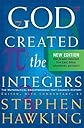
God Created The Integers: The Mathematical Breakthroughs that Changed History
Product ID: 10893761
⏳2,500 years of math history
📚25 landmark proofs
🧠15 legendary mathematicians
Desertcart purchases this item on your behalf and handles shipping, customs, and support to Panama.
📖 Unlock the timeless genius behind every number — don’t just learn math, live its history!
Stephen Hawking’s 'God Created The Integers' is a curated anthology of 25 pivotal mathematical breakthroughs spanning 2,500 years, featuring original proofs and biographies of 15 legendary mathematicians. This used book in good condition offers a rare intellectual journey through the foundations of modern science, perfect for professionals craving deep insight and historical context.
| Best Sellers Rank | #2,425,319 in Books ( See Top 100 in Books ) #217 in Mathematics History #2,058 in Algebra |
| Customer Reviews | 4.4 out of 5 stars 381 Reviews |
J**N
Forget the flaws. Enjoy it.
I just couldn't put this book down. I was so absorbed that I even missed my station and had to catch a train back. The biographies mixed with mathematical explanations and an outline of the significance of each work is brilliant. It gives one an insight into how context-dependent genius really is. I knew that the book had flaws because I read these reviews a while ago. But so what! You wouldn't use this book for reference or as a text book. It's meant to be entertainment and entertaining it is. If you can understand the maths and the significance of the selected papers you can enjoy it without worrying too much about everything being crossed and dotted. I knew the biographies of many, but not all, of these men. Of the ones I didn't know, my favorite is George Boole. The description of his unusual career and the amazingly clear and readable paper on symbolic logic are worth buying the book for. I almost choked up when I read how he died. Anyway, in our age or irrationality and ignorance we need more books like this to show us that we can rise above it all.
C**E
Book Length
It is a big book.
D**N
17 people discover 17 new continents
513 years ago this week, a group of sailors found another continent, new to them and the European world, and full of surprises. The group of mathematicians in this book also found other continents of a different nature, new to them and full of surprises. One can only imagine the excitement when both groups found these new frontiers. One can no longer be a sailor and discover a new continent of land, but one can choose to be a mathematician and discover new continents of knowledge. The good thing about mathematics is that it is limitless: there are always problems that need resolution, and there are always new frontiers to open up. How far one goes in one's travels depends on the degree of creativity and ingenuity one chooses to exhibit. And in this way, mathematics is very akin to art: the path chosen depends on the taste of the mathematician, on the particular hedonic function that he/she chooses. The mathematicians in this book exhibited a lot of ingenuity and creativity, and the author has given the reader a look at their contributions as they themselves wrote them down, thanks to the efforts of the translators. Assuming the accuracy of the translations, the reader gets a view of mathematics through a representative time-window of the thoughts and personalities of some of the major players throughout the history of mathematics. The reader learns of the arrogance of Isaac Newton and Pierre Laplace, the shyness of George Boole, the extreme creativity of Georg Riemann, the computational prowess of Carl Gauss, the politics of Jean Fourier, the self-absorption of Archimedes, the encyclopedic mind of Euclid, the arithmetic of Diophantus, the polymathic nature of the mind of Rene Descartes, and the prolific mind of Augustin-Louis Cauchy. When reading the brief life histories of these individuals with all of their variability and disparate life histories, one is tempted to believe solely in a genetic origin of mathematical talent. Their personalities were very different but their aptitude in mathematics was profound. A great deal of their personal conduct could be viewed as reprehensible from a moral or ethical point of view, and the infighting that occurred among some of them was extremely juvenile. If the biographies of these individuals were rewritten to purposely omit their contributions to mathematics, a neutral reader would probably characterize them as being highly unintelligent. This again raises the debate over the concept of `general intelligence' versus that of `specialized' or `modularized' intelligence. These individuals certainly had a talent for mathematics, but does this talent, indeed the talent possessed by all mathematicians, find its origin in specialized regions in the human brain? If so, is there a correlation between mathematical skills and other types of specialized skills? One is also struck by the difficulty that some of these individuals had in finding suitable employment. The difficulties they faced in finding employment did not discourage them from performing research in mathematics. Too often these days many aspiring and talented young mathematicians complain of not being able to find suitable employment, and even feel they have a right to a tenured position at a major research institution. A reading of this book should put their beliefs in proper perspective and dissuade them from blaming the academic establishment for their failures to obtain employment. When reading the book, one can see the growing tension between applied and pure mathematics in the nineteenth century. Most, if not all of the mathematicians in this book were also very practical people: they could build bridges and design military hardware for example Contemporary (pure) mathematicians rarely have these abilities, and frequently pride themselves on not having them. In addition, some of the mathematicians of this book did not hesitate in indulging themselves in "experimental mathematics". When reading their papers in the book, one is struck by how much they used natural language, in how "wordy" their articles are. The proofs they gave explained the mathematics and did not just expound on them. They did not hesitate to use diagrams or pictures. This is to be contrasted with the manner in which contemporary mathematics is reported in the literature: it considers pictures an anathema, and strict, formalist "Bourbaki" language is to be used (although natural language of course still appears to a large degree). One can only speculate on what would have happened if some of these mathematicians had access to modern technology. What would have happened if Gauss had a calculator? What if Fourier had a music synthesizer? One can only admire their willingness to indulge themselves in difficult and time-consuming calculations, especially in the field of celestial mechanics. The list of the mathematicians in this book does not include any female mathematicians. One cannot blame adversity for this, but one could perhaps blame the unwillingness of the academic community to accept their contributions. This rejection though should not be thought of as directed only to female mathematicians. The individuals in this book had their own subjective preferences on what constituted interesting mathematics. They rejected the ideas they did not prefer and accepted the ones that they did, and they did so independent of the sex of the individual mathematician. The mathematicians of this book definitely set the tone for most of the mathematics that was done in the twentieth century and is being done in the twenty-first. But there is also a huge body of mathematics that was not influenced by them, and these contributions are just as interesting and important. The seventeen mathematicians in this book would no doubt be astounded by some of these developments, for they are very exotic if compared with the content of their mathematical constructions. One of the most fascinating of these developments (influenced to a small degree by George Boole) is automated mathematical discovery. If a book like this is rewritten at the end of the twenty-first century, the list of seventeen mathematicians will probably include some that are not human.
J**H
Intimidating, yet rewarding comprehensive book.
This book is truly a work of art. From his detailed to general knowledge about the history of mathematics, he gives the advanced mathematician an opportunity to see through the eyes of the great. This is not for beginners though. Even around mathematics majors and extremely high level scientists, many flee from the area when I pull this book out. It's thick and intimidating, but if you can sit and read parts of it at a time, it's greatly rewarding.
D**N
math
Math, math, everywhere there is math. I have not finished this book. I will be a long time finishig this book, but it is great reading for an 11 hour flight to Europe. This is a book that can be read several times and more can be learned each time read. Not a late night book, it stirs the brain into overdrive!
O**S
I loved this book
I loved this book. It was incredibly interesting and although it did have a lot of typo's, the content is what matters and what I appreciate. As someone who LOVES maths and its history, I highly recommend this book.
A**G
Excellent Exposition of Original Works
This book is a many-in-one exposition of some of the biggest works in mathematics and it does it well. Kudos to Stephen Hawkings for carefully choosing works that lay out the progression of mathematical ideas for all of us to see. Of course, it does not include all the important works in mathematics...no single book can. What it gives is a reference guide of sorts, a road map of mathematical history with certain markers on the way; these markers are what constitute the chapters of this book. Follow up each of those chapters/works - it will give you plenty to study on if you happen to be genuinely interested in mathematics. However, this property of the book as reference guide is also its main shortcoming: you WILL need to follow up on the works unless you have prior knowledge on the subject matter. Otherwise you will find the works quite puzzling. For example, I did not get heads or tails of what Galois was trying to convey with his seminal work on permutation groups until I read a history on the origins of group theory in the work of Abel. Even more so, you will find Godel's groundbreaking work on logical incompleteness inaccessible without prior knowledge (if not academic background) on mathematical logic and non-naive set theory (Cantor's work as presented is not enough for a background in non-naive set theory. To begin with, it predates even the naive set theory of Frege which is not presented in the book, let alone non-naive set theory which came about later to fix naive set theory).
D**N
Book with the Spirit of Philosophy...
This is an excellent masterpiece in writing and perfect in logical development and gives a reader a perspective to envision the progress of the sciences through the prism of the history of mathematics. Dr.G., Naples, FL.
A**7
Excellent
Très bonne édition, la version originale est vraiment recommandée Textes passionnants Niveau en math requis: de Terminale à Spé pour la fin du livre Bon voyage dans l'histoire des maths
A**.
Great but only if you understand mathematics..not a no formula book..
Not for people who suddenly come to know about the book after reading Theory of Everything and think them to be similar reads. A compilation of great works by Mathematicians through History. You need to understand basic mathematical terms and notations before buying this..like limits and summation...series and geometry and algebra. Overall..great book...a little inconvenient font size but that is kind of obvious.
C**N
Libro muy bueno
Me parece un libro muy interesante para todos aquellos a los que nos gustan las matemáticas. Aunque considero que para poder entender más allá de las biografías hay que tener ciertos conocimientos matemáticos y estar familiarizado con las demostraciones. Libro muy recomendable.
S**R
Amazing
I have a collection of books by Stephen Hawking even though I only understand maybe 45-50% of the things he writes about. He's been a hero of mine since I can remember so ofcourse I collect his books 😅
E**A
it is pretty deep, as they are excerpts of the originals ...
This is a heavy volume of the collections of the mathematics that have propelled our science and understanding of the universe we live in, it is pretty deep, as they are excerpts of the originals theorems made by the foremost thinkers of their time periods, as it describes, over 2500 years of history of math, I have not read it yet, just looked through the book, thank you for the collection of knowledge Professor Hawking.
Trustpilot
1 month ago
2 weeks ago