Desertcart purchases this item on your behalf and handles shipping, customs, and support to Panama.
🔭 Unlock the Universe—See What Others Miss Tonight!
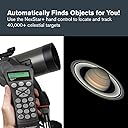
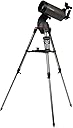
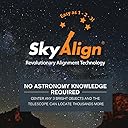
The Celestron NexStar 127SLT is a computerized Maksutov-Cassegrain telescope featuring a 127mm aperture for superior light gathering and detailed views of planets and deep-sky objects. With a database of over 40,000 celestial bodies and SkyAlign technology, it offers fast, precise object location and tracking. Its compact, portable design and included Starry Night software make it ideal for both beginners and experienced stargazers seeking effortless, immersive astronomy.


| ASIN | B0038LX8XE |
| Additional Features | SkyAlign technology, StarPointer finderscope, Computerized hand control with 40,000+ object database, High contrast/high resolution Maksutov-Cassegrain optics |
| Best Sellers Rank | #483 in Camera & Photo Products ( See Top 100 in Camera & Photo Products ) #11 in Telescope Reflectors |
| Brand | Celestron |
| Built-In Media | 20mm and 9mm eyepiece, Accessory Tray, NexStar+ Hand Control, Optical Tube, Single Fork Arm Mount and Tripod, Star Diagonal, StarPointer™ red dot finderscope |
| Coating | Fully Coated |
| Compatible Devices | Vixen Style mounts |
| Customer Reviews | 4.2 out of 5 stars 1,198 Reviews |
| Dawes Limit | 0.91 arc_sec |
| Exit Pupil Diameter | 3.53 millimeters |
| Eye Piece Lens Description | 20mm and 9mm eyepiece |
| Field Of View | 1.7 degrees |
| Finderscope | StarPointer™ red dot finderscope |
| Focal Length Description | 1500 millimeters |
| Focus Type | Manual Focus |
| Global Trade Identification Number | 00050234220972 |
| Item Dimensions D x W x H | 34"D x 30"W x 50"H |
| Item Weight | 18.1 pounds |
| Manufacturer | Celestron |
| Manufacturer Part Number | 22097 |
| Model Name | Celestron NexStar 127SLT Maksutov-Cassegrain Telescope |
| Model Number | 22097-CGL |
| Mount | Computerized Altitude-Azimuth Single Fork Arm |
| Number of Batteries | 1 Lithium Metal batteries required. (included) |
| Number of Items | 1 |
| Objective Lens Diameter | 12.7 centimeters |
| Optical Tube Length | 27 inches |
| Optical-Tube Length | 27 inches |
| Power Source | Battery Powered |
| Telescope Mount Description | Computerized Altitude-Azimuth Single Fork Arm |
| UPC | 050234220972 |
| Unit Count | 1 Count |
| Warranty Description | TWO-YEAR LIMITED WARRANTY |
| Zoom Ratio | 3 |
N**N
Fantastic Scope and Tracking for the Price!
To begin, the photos are shaky and blurry because I shot them by trying to stick my phone close to the eyepiece, they do not do this scope justice, it is fantastic! I had very limited experience with telescopes, but the 127 SLT has blown away my expectations. I have seen the Orion's Nebula, rings of Saturn, bands of Jupiter and the 4 Galilean moons clearly. Various star clusters and a couple galaxies. Once you understand the setup and the must have upgrades you'll be ready to go. Pros: The scope is easy to assemble. The red dot is perfectly fine for what it is and gets you close enough. The 5" lens is more than enough to see the usual objects (moon, Saturn, Jupiter, and other Solar System Bodies). The first time i found the Andromeda Galaxy i was a bit disappointed as it just looked like a yellowish smudge in the sky, cool nonetheless. Then I observed Orion's Nebula and couldn't believe how good this little scope does, granted the tripod leaves much to be desired (but there are cheap work arounds, I'll explain in the cons. It's portable if you buy the right case which is great to get out of the city light pollution or to take camping. The tracking and auto alignments are great. Always perform the 2 star alignment as the 3 star align fails 9 out of 10 times, but 2 star is very good. Once 2 star is aligned you can activate tracking and the scope keeps the object you're viewing within frame or very close over a period of time, and you can let the computer drive you to your next object. It's super useful on cold nights and to not have to constantly correct where you're looking. Cons: the mount/tripod is not great, but I've mitigated vibrations and instability by buying cheap anti vibration pads on Amazon $20 and by loading a sandbag with 10lb weight and placing it on the plate of the tripod and this makes it 100 times better. This will be something I upgrade eventually for my own purpose, but I have no problems now and have no need to upgrade after the pads and sandbag trick. The standard pieces you'll want to replace and buy better one's, these pieces are always cheap that come with the scope, but I still use the 32mm for initially locating the object I'm looking for. You'll want something around a 25-32mm, 15mm, and a 9mm , and a 2x Barlow, this is all you need and you will be able to push your scope to its limits and on good nights with low atmospheric interference push a little past them. Further, i cannot say much on battery longevity in the scope as I immediately bought a cheap $8 adapter and used an extension cord for power until I bought the celestron mobile power supply for when I take it on the go. Overall, i wouldn't have changed my mind, this purchase was perfect, the tube didn't need alignment, the motors haven't messed up on me and i have nothing negative to say about this purchase. Recommended: buy the power supply, it's a game changer. Also, get the anti vibration pads and some way to weigh the tripod down, this makes a world of difference. Upgrade your eye pieces, you don't need anything crazy expensive, and buy a case to store your tube, tripod, and accessories, it makes storage and moving it a breeze. There are other well written reviews, so take your time and review what you need before buying. As my first telescope as an adult I'd rate this 9/10 for price and the ease of use and accessories built into the computer of the mount. Next scope will be a 10" lens with a solid equatorial mount base as i have no place for a Dobsonian in my current living situation. Good luck and clear skies!
R**A
Nexstar 127SLT Mak is an affordable great telescope system, with proper handling
This review is specifically for the Celestron NexStar 127SLT Maksutov Computerized Telescope. There are several reasons I went with the Maksutov design, rather than the refractor or Newtonian SLT variations. The Mak gives a better image across the field of view, without the coma of a Newtonian. The folded optical path results in a long focal length for the instrument, which is ideal for Sun, Moon, and planetary viewing. However it's not as long as a refractor. The Mak can still be used for observing deeep sky objects, such as the Andromeda Galazy (M31) and Hercules Cluster (M13). Just don't expect the views of a Dobsonian 'light bucket'. It's not designed for that. The compact tube size makes it much easier to handle and transport than longer telescopes. Being a closed tube design also means it more easily keeps dust and other debris out of telescope tube. As long as one uses the tube cover on the front, and eyepiece holder plug in the back when not in use, the telescope optics will require cleaning much less often than a typical Newtonian system. The closed tube also means no thermal tube currents to distort the image. The 127 millimeter diameter aperature equates to about 5 inches in size. While this is considered small in today's era of large Dobsonian monsters, the telescope system fits in my car, and is light enough that I can take it outside easily. I get more use out of this scope than my older larger Newtonian, mainly because this instrument is just so much easier to handle. The aperature size is quite sufficient to get good views of solar system objects. It's a bit tricky to focus, as the image will easily show any motion from the focuser knob, but this is mainly a mount limitation. Once focus is acheived though, and the scope settles down, the views are great. I've used the 127 SLT with a Celestron NexImage 5 camera, and FireCapture camera software, to get great images of Jupiter's moon eclipsing the disk, Saturn's ring system, lunar craters, and solar sunspot groups (with an appropriate glass solar filter mounted on the front). Using the camera is ideal with this telescope, as it makes it a 'hands-off' system. The other great feature is the fully computerized "Goto" capability of this telescope. Once the computer system is initialized, it is able to point the telescope to any object in the sky. (Yes, one can even enter arbitrary Right Ascension/Declination coordinates to point the telescope at.) The SLT came with the NexStar+ Hand Controller, which contains the object databases, and interfaces with the user via a red backlit LCD and a red lit keypad. The hand controller I got was not the absolute latest hardware variation, which has a USB port on it, so as to allow updating the firmware in the system via a PC. Instead, I received a slightly older version (2014) that still had the RJ45 phone jack interface providing an RS232 serial connection. (Older stock in the warehouse still?) This required a USB-to-RS232 converter to connect to my laptop to update the internal flash. While the internal motor controller was at the latest firmware revision, the hand controller firmware did need updating. The Celestron Firmware Manager, available onine at their web site, did the upgrade flawlessly. The one armed fork system that connects the tripod mount to the telescope tube contains the motor control system for the alititude and azmimuth DC motors, as well as monitors their optical encoders to keep track of position. This motor controller communicates to the hand controller via a coiled cable. There is a plastic holder on one of the tripod legs made for holding the hand controller when it is not needed. The weakest link in this system has to be the 'wobbliness' of the mount. With the legs fully extended, and the tripod standing on a cement patio, every gust of wind and and hand touch is transferred to the image view. It makes it quite difficult to focus well. However a few simple tricks can be used to lessen the effect. First, don't extend the tripod legs fully. The shorter the tripod legs, the shorter the time it takes to dampen out vibrations, and the sturdier the mount becomes. Second, adding a weight to the tripod helps provide more mass, and lowers the natural vibration frequency. I've seen a picture of one user placing a small sandbag on the central tripod tray to add stability. Third, place the tripod on dirt or sand. A cement patio is not the best foundation for the tripod legs. I have gotten much less image movement by pushing the tripod legs into the dirt in the lawn. Of course, Celestron does sell vibration dampening pads to help with this issue, but they are quite pricey according to my wallet. Now if you want to get a beefier mount, go ahead and spend another grand. Celestron has bigger mounts that are better. You get what you pay for. Just be prepared to lift that heavier mount. I'll stick with this lighter variation, and save my back. I can work around its limitations. Oh, and the eyepieces that come with the telescope are probably not the ones you will want for regular use. I already have a nice set of Plossl's that I obtained years ago. I recommend doing your homework and get the eyepieces separately. My lowest power eyepiece is a 40 mm, and I like the views it gives me in the 127 Mak. One bit of information you will also find useful relates to initializing the NexStar control system. The designers did what they could to make setup as easy as possible, within the budget they had. (I've also bought the SkySync GPS accessory to help make setup easier. However their StarSense AutoAlign product is the ultimate alignment tool, and costs nearly as much as the telesope itself!) Anyway, the more care you take in initialization, the more accurate the NexStar will be in finding objects. I know this, not just from using the NexStar+ system, but from building my own telescope controllers over the years from the wire-wrapped IC sockets on up, and testing them under the night sky. Small errors in alighment will add up. So, if you want the most accurate pointing, follow these tips that are NOT in the manual: 1. Level the tripod as accurately as possible. You must do this FIRST. Every alighment option, with possibly the exception of the two-star alignments, requires a level tripod to work correctly. That's why the tripod includes its own little level, and the instructions do mention that you need to level the mount. I don't trust that little built in thing though. I use a six inch level that I place on top of the tripod, before I put the one-armed fork there. My level is placed in line with each leg in turn, and that leg adjusted until level, before moving onto the next leg. If you have some OCD like me, go around and do it again, just to be sure. Once the tripod is level, then the rest of the mount and telescope can be put together. 2. Enter in Latitude, Longitude, Date, and Time, as accurately as possible. If you have a smart phone, get a GPS app and use it. I eventually got the Celestron SkySync accessory to do this part for me. (However, you still need to double check and make sure the Time Zone and Daylight Savings settings are correct with the SkySync. The instructons don't tell you that.) 3. Use a lighted Reticle Eyepiece to center your alignment stars/planets. Don't use the Sun or Moon if you have an option, as it's very difficult to know where the exact center of those objects are in the eyepiece. A double crosshairs reticle eyepiece lit with a variably dimmed LED works great for this. 4. Keep your chosen alignment objects far apart, and at least 20 degrees above the horizon. I don't know how well the NexStar+ handles refraction corrections, but to do it right requires both temperature and pressure/elevation data. Nexstar doesn't ask for these values, and I doubt the system includes the sensors to measure the quantities directly. One final recomendation: Get an alternate power source to suppliment the eight AA batteries that need to be placed in the half fork arm mount. You still need the AA batteries, as I discovered when I attempted to get by with just a PowerTank attached. Any glitch in the power cord connection to the mount will reset the Nexstar controller, and you will find yourself staring at the intialization prompt again. So, keep the AA batteries. Just suppliment them with either an AC adapter or PowerTank gel cell battery. Otherwise the AA batteries used alone will go dead within that observing session. (I've heard they will drain in as little as 30 minutes. I didn't push it to prove that.) I recommend the PowerTank battery accessory, since you can't always guarantee that an AC power source will be reachable from where you place the telescope. For me, I'm always tripping over cords in the dark. So any long power cord to an outlet that I can get rid of, I will. I place my PowerTank directly below the tripod tray on the SLT tripod mount. That keeps the power cable to the mount away from my toes. There are cheaper telescopes out there, but for ease of use, I just can't think of a better alternative than this 127 SLT NexStar+ system. At least I'm out with it regularly, and have been for over six months now. My old Newtonian never saw this much usage.
R**N
Best bang for the buck!
Ok, I looked long and hard for a telescope and I have to say this is the most bang for the buck considering limited monetary funds. One thing I suggest getting is a lense kit when you do buy this. I got the Celestron lens kit, but Orion has a kit as well and it comes with a 40mm lens, which makes for a wider field of view. I have not tried doing the three star or two star alignment. I just used the solar alignment because I am more interested about looking at the planets, the moon and the Sun in our Solar System. If you want a scope for Nebulas and to take pictures of them, don't get this scope. The aperature is 5 inches with a long focal range; however think about this. If you go from a 5 inch aperature to a 6 inch aperature, it will cost you about 200 to 300 dollars more. I think this a good beginner scope because of the "Go To" capability. You don't need to know that much about the stary sky to find Jupiter, Saturn, Mars, Venus or Mercury. Just find out where they are in the sky, point to it, use the solar alignment and the scope follows whatever you have programmed it to follow. The scope gives clear images of whatever you have pointed at. I am think about getting a 3x barlow for the scope. I used a 2x barlow on this scope with a 32mm lens and the image is great, so I wonder how a 3x barlow would be. The scope comes with a variety of different software for use on the computer. I think you can hook the telescope up to a laptop and control it from the computer with the provided software. This telescope does not come with imaging software; however I think when you buy a camera specifically for a telescope, the camera comes with the software. Also this scope comes with a "Lite" version of SkyX software. For SkyX, you can input your location and it will give a map of the sky showing where objects are in the sky compared to your location to make planets easy to locate. If you wanna control the telescope with SkyX, you have to buy an upgrade from the website. This version does not allow for control of the telescope. The only cons are that you have to buy a lot of accessories for this scope. Two cables that go together just to hook it up to a laptop,(to update the motor and hand control software). If you want to run it on AC power you gotta buy an adapter, plus if you take this out in the middle of nowhere, you need to a get a battery pack for it and a I suggest the 12v car adapter, so that way it does not draw as much power as a 120v adapter. Note: You don't have to buy Celestron's battery pack, any generic one you get at a deparment or auto store will work as long as it has the car adapter outlet. I have not tried using it on batteries. I have heard that the batteries will only last one night, so getting rechargeable batteries would be the best best over regular batteries. All in all a very good scope for the money. The focal length is long which means a more powerful scope, but the field of view is smaller. Good buy. One thing I will add. I have not tried to look at nebulas or distance stars with this telescope. I want to see the sun(must use a solar filter, do not look at the sun with this telescope or any telescope without one) and the planets. I have not used the sky align with it, just the solar system align. Basically, align the telescope with the planet you wanna see and the press align. The scope will track, but you might have to realign every 10 minutes or so. Also if you look at the moon with this telescope or any telescope, use a moon filter; otherwise you will see spots on your eyes for a while. Oh it does shake a little when it is windy out. Also when you try to focus using a powerfull eyepiece, the image shakes a lot. The viewfinder is good. May have to make minor corrections every once and a while. The control pad takes a lot to get used too. Not user friendly but works. The only thing I don't know about this scope, and it has to do with the tripod...is if I get a bigger aperature telescope, would it fit on the mount for this one. Just ordered a solar filter for this scope. If anyone is looking for the right solar filter, go for Orion 07710 5.81 filter. It fits snuggly and you don't have to use any of the foam inserts for it, because it is already foamed lined.
R**L
The red dot finder works like a charm
After an easy assembly process, I followed the instructions to set up the red dot finder. Do it in the daytime. It is so much easier. At night alignment with 3 stars went smoothly because I lined up the red dot on each star and there they were in the eyepiece every time. Right now there are only two solar system items to see unless I'm out on the deck at 1:30am. The moon is gorgeous with this scope and depending on the power of the eyepiece used it can either fill the view or show me super close ups. Jupiter is right near the moon for several days and I was able to see bands and four moons. Strangely, the moons are brighter than the planet itself. I used a 25mm eyepiece with a 3x Barlow (<--the Barlow is purchased separately). I do wish the tripod was a bit taller (I'm 6'1") as I had to kneel on the ground and crane my neck to look through the red dot finder. Once I see the dot all I have to do is run the motors until the dot covers the target. After alignment with 3 stars, the scope went right to the moon and Jupiter. You need to realign each time you move the scope to a different location. After a little practice, this is gets easier to do. I felt the tripod was fairly strong - on par with several $100 photo tripods I've used. This will eat AA batteries if you're out for a few hours and looking at a lot of different things. I use a TigFox portable power station with a $10 AC adapter and I could run for several days. There is a tracking mode on the handheld, but I can't see that it tracks anything. I may not be setting it up correctly as there are a few options. I chose the alt-azimuth option as that is the type of mount on this scope. Now, about customer service. The 25mm eyepiece included with the scope had something smeared on the inside of the lens making it blurry. I contacted CS on the Celestron website, explained the issue and they got back to me in two days asking for a photo of the eyepiece, name, address, and Amazon order invoice. Two more days and they had shipped a replacement at no charge. They were very courteous and professional. I love this scope (not as much as my wife! Yeah, she was looking over my shoulder) and couldn't be more pleased. Now I need to cut down a bunch of pine trees around my deck. Recommended, especially since there is a $50 coupon available on Amazon at this moment.
I**A
First Light on Celstron NexStar 127SLT MAK
In my opinion, this is an excellent beginner/intermediate or advanced grab and go scope providing crisp images, ease of use and many desirable software capabilities. I recommend it. My training is in the physical sciences but not specializing in Astronomy or Astrophysics. I have always had interest in the stars from childhood and from having been a navigator in a destroyer during my naval service where I used them to navigate by. Several years ago when I retired I purchased two 1960s vintage equatorial mount 60mm refractors at garage sales and I have been using them while I did some research and reading to decide on the best next telescope to purchase. I decided on a Maksutov-Cassegrain due its reputation for crisp, clear images and on Celestron NexStar for its quality reputation and the features of its GoTo/tracking software program. The deciding factor was that it was on sale at a large discount. I did consider Meade and Orion scopes before deciding on this particular Mak. This year (2013) I took some of my tax refund dollars and purchased the Celestron NexStar 127 SLT Mak and also purchased some of what I consider to be essential accessories. The purchase price of the tube and mount are only part of the price for a complete capable system. Beyond the sock items provided in the initial package, you will need lenses, filters, adapters, etc to fully exploit the capabilities of the mount, software and optics. In other words, to see the most, coolest stuff. By the time I have purchased all of the essential accessories to do this, they will cost almost as much as the telescope itself. I have used the telescope every clear night for the last several weeks and I am very pleased. The NexStar program and alignment are easy to use and provide a better that ballpark result when going to an object. I did purchase the GPS unit, the Celestron accessory kit with additional lenses and filters, the house current and car battery power adapter chords, the USB interface cord, and the light pollution and oxygen filters. I live in the Phoenix suburb of Glendale so light pollution is a factor. The filters help. So far everything works beautifully. My only two complaints are not vital but more nuisance -that the GPS can take some time to synch -- be patient, I was not and had some self inflicted difficulties the first time I used the Mak. -the tripod can be a little wobbly. I will eventually get a heavier tripod, the GPS is what it is. I will try adding some five or ten pound weights to the tripod to see if that stabilizes it sufficiently. I am not done with accessories. Next on my list is a hard case for the tube and a canvass bag for the tripod and accessories so I can safely carry the system to the dark sky sites and star parties. I do want to try some web cam photography of solar system objects so a webcam purchase is in the future. Further down the road, I will get a digital camera adapter, a collimation lens and some higher quality viewing lenses and perhaps a dielectric diagonal. Though I want to eventually get a large GoTo Dobsonian and I always lust after a nice, large Apochromatic telescope with a solid EQ mount for astrophotography,for now I am very happy with my NexStar 127 SLT Mak. I will update as I do new things with the Mak or as I learn new things that may be of interest to buyers. May your skies be clear and dark. Iñigo de Oña Nome de plume
S**R
Eats Batteries and Tracking is Horrible...
Hopefully I can lend some comments as to this scope that really help someone before they make the purchase decision. I've also see many valid comments and may repeat a few for good measure. Overall, I'd rate this scope with 3 stars, but it does have some positive characteristics as well. If you are just beginning this awesome hobby, maybe you should look at a small refactor and a good pair of binoculars. You must learn the sky first. Yes, this scope is computer controlled, but it certainly leaves much for the human element to handle. Pros: 1) Alignment - becomes straightforward once you've done it a few times 2) Setup - Easy to setup, and fairly lightweight 3) Comments - This type of scope, the MAK, is fair for astrophotography of near earth targets (Moon, Jupiter, Venus etc.) Cons: 1) Mount - this mount is cheaply made, and becomes unstable at higher magnifications; when attempting to focus at higher powers, the image will easily move out of the field of view. Very shaky and unstable. When it's even remotely windy, good seeing conditions quickly deteriorate. 2) Collamination Required - Read up on scope types; like Newtonian's, this scope requires sometimes frequent Collamination and does not come with a Collamination eyepiece. When mine arrived, likely due to movement during shipping, I had to re-collaminate before using. 3) Power - Do NOT waste your money buying an after market "off brand" AC Adapter. The one I bought was not the expensive Celestron version and as soon as I plugged it in, the scope could not complete alignment; asked me to center Vega on the 2nd. alignment point and slewing took me to some place over 30 degrees from Vega. Alignment point one was Polaris (and yes, I know Polaris by heart). Maybe buy the Celestron adapter or buy the best batteries you can find. 1 set of 8 batteries got me 2 half-nights of observing, so it eats batteries like candy. I have also read that the tracking motors are sensitive and often fail with even simple power fluctuations. 3) The ROM memory does not have a clock function, so every time you take it out be prepared to set the date and time. It only allows GPS Coordinates accurate to 2 decimal positions. Let it sit with batteries for a day or two and any custom locations (e.g. HOME) are lost / forgotten, so I find myself entering those way too often. Setting Coordinates based upon US Cities leaves tracking in a horrible state and periodic correction cannot correct for that issue. Left it tracking for 2 hours on low power and it was at least 10 degrees off of the target. 4) Required Accessories - The price is high enough that basic accessories such as a collaminator, a 2x barlow, and a couple of filters should have been included, but Celestron needs our money. The GPS receiver would be a great addition, but the cost is high, and before long, you've spent more money on accessories than on the scope itself. GPS and Wi-Fi capabilities "should" have been included at this price and should have been builtin during engineering. 5) Tracking, which I consider imperative for photography AND general viewing is not what one would expect from a "Computerized GoTo Scope". It leaves much to be desired. Do not expect to do a lot of Deep Space photography, as tracking will likely not remain accurate and dependable. One reason other that those above is that this scope cannot track in both Alt/Az directions at the same time. First it corrects in one direction and then works the other direction. If one mounted the OTA on a "Real" GoTo Equatorial mount these issues would be resolved. 6) Eyepieces - Celestron used to make "real" eyepieces, but these are almost plastic in durability. Dropped the low power onto a concrete sidewalk and it dented the outside and offset the inner optics. Fortunately, I had a Meade 25mm that is well made, Thank-You Meade. This is a basic Novice scope with much to be desired, and I regret making the purchase.This is not a horrible visual scope for a novice, but for advanced activities, such as astrophotography, I do not recommend this scope. Lastly, being sort of an SCT derivative, it has a long focal length and is best for close to earth objects. If you wish to do deep space photography, choose another type of scope.
J**W
Impressive scope with a couple caveats
This is my first telescope as an adult, after having a cheaper Newtonian reflector as a kid. I never was able to really get that telescope working like I wanted, and eventually it ended up in a storage box and sold. I've been wanting to get another telescope for quite some time, and the choices were daunting. Do I buy a cost effective for aperture Dobsonian? Do I go whole hog and buy an 8" CST? What about a refactor so I don't have to worry so much about collimation? Eventually I settled on the 127SLT Maksutov-Cassegrain. It was small enough that I could transport it to and from the local astronomy club, which is a big plug for a beginner. An 8" Dob is great if your backyard is dark, not so much if you need to travel for some darker skies.The GoTo functionality is also a plus in my book, as my wife has never used a telescope, and showing her how to check out Jupiter in just a couple minutes was pretty incredible. I knew that buying this there would be some opportunity areas, and there are a couple. First, the tripod is described as wobbly, and it is. I've found much less vibrations in the grass/dirt than a hard surface. Second, I've put an 8lb. weight on the accessory table which certainly helped to dampen the vibrations. I've read other solutions to super glue joints, epoxy stuff etc. After tightening the bolts on here, I would say the vibrations are only a slight annoyance, and as long you don't manhandle the focuser or smack the eyepiece when you're viewing, they calm down quickly. 2nd is the alignment process. I read people having tons of issues with this. If I try to align using my starting point as a city, it fails. Almost every time. Whenever I punch in my GPS coordinates (compass app on iPhone by default) it aligns immediately on SkyAlign. To me, this seems a nonissue. Overall, very happy with my purchase. You'll need to add a few things to this telescope to really make it complete, but you aren't hamstrung up front by any means. 1. AC Adapter or Celestron Power Tank. This thing will eat your 8 AA batteries in no time, buy the AC adapter, or better yet the Power Tank, which is a pretty impressive piece of kit. 2. Dew shield - you will want to buy one, or craft one. Foam rubber sheets from your local hobby store work well. 3. Additional eye pieces. 4. If you're transporting it, some sort of case. HomeDepot sells an 18" Husky tool bag with a strap that works PERFECTLY. Using the two pieces of foam from the box, it fits snugly in there and doesn't slide around.
C**E
Not Windows PC friendly ...
Out of the box, this 127SLT telescope goes together easily. Learning to align the mount to the stars was simple The optics are clear, and it was easy to dial in a sharp focus. I purchased the SkyPortal WiFi aux for this telescope and was connected to the mount via my smartphone and the Android version of SkyPortal. After a day of getting my berings about working this telescope, we were ready to explore. The computerized mount located and tracked objects which was always a struggle for me on older manual mounts. We were not disappointed, and this is the first telescope I've owned that allowed me to see Orion's Nebula for the first time. That's not to say my experience with this has been all I expected. The bad? The telescope comes with software Starry Night 8 SE for Windows which can not connect to the WiFi dongle. The same software developer, Simulation Curriculum, makes SkyPortal which is a version of SkySafari; these only run on iOS or Android; not Windows. As a solution, I installed BlueStacks Android emulatior and Skyportal to my Windows PC to test connectivity and was able to run the mount remotely on PC rather than running the battery on my smartphone. dry In short, Celestron / Simulation Curriculum do not offer a wireless solution for Windows PC, nor can I find any planetarium software that will. As I understand, Starry Night will connect via cable (which is not included with this telescope). Luckily, I had the right cable. Unluckily, I beat my face on a brick wall for an hour trying to get it to work with no results. Given the BlueStacks/SkyPortal conectivity on PC, this is clearly not a hardware issue. For $550+ and another $120 for the WiFi dongle, there should be much better cross-platform support. Why offer Windows software to "control your computerized mount" when that software can't connect via the WiFi dongle and wont connect via a cable? Starry Night is useless, and I wont support Simulation Curiculum without a comprehensive WiFi solution for Windows PC. Further, I agree with other reviewers that the tripod is a bit flimsy. Likewise, (and I'm noting that this may be more of a personal preference) putting it lightly, the red dot scope sucks for allignment. I have no issues with the telescope itself, but the additional features that are supposed to make this a stellar deal just don't add up. If you're a Windows PC user, be prepared to make additional concessions to get PC to Mount functionality. A better finder scope is a must, and avoid the $120 upgrade until a premium item like this offers proper cross-platform support. EDIT: While I remain satisfied with the optics, the mount is is junk. After several sessions, the mount does not align properly. On a few occasions using a 12.5mm illuminated double cross-hair reticle eyepiece, it failed to align. When it does align, it's as much as 30 minutes off target. 3 star alignment and computer tracking was supposed to make my sessions easier, but this mount has only wasted valuable time. The images I've captured were not without an unnecessary waste of time fussing with the mount to find and track an object as small as THE MOON. Seriously, it's that bad.
R**N
Lazer ile istediğiniz yıldızı işaretleyin
Ay izlenimi çok iyi kusursuz gösterim yıldız haritanı varsa neredeyse tüm yıldızları görebiliorsunuz jupiter ve uydularını net görebilirsiniz zoom yapmanız gerekiyor beğendim efso bişi
P**N
Never been so easy to view the Galaxy !
This is just wonderful, heavy to get up to the room but so worth it on these moon and starlit nights when all is calm and quiet
J**.
Ottimo strumento, buona la dotazione. Da migliorare il cercatore e includere un filtro lunare.
Un telescopio con queste caratteristiche era quasi irraggiungibile sino a pochi anni fa. Desideravo da tempo uno strumento che mi permettesse di fare osservazioni in visuale, dotato di inseguimento e puntamento automatico, e che fosse facilmente trasportabile, senza spendere una fortuna. Sono stato allettato dal prezzo e dalle caratteristiche di questo Celestron e dopo circa un mese di utilizzo posso dire che ne sono ampiamente soddisfatto. L'ottica è sorprendentemente compatta: a fronte di una focale di 1500mm, il tubo è lungo solo 36cm (a diagonale smontata). Ovviamente il tubo non è leggero, siamo sui 3.5Kg, ma riesce ad entrare in una borsa fotografica di forma allungata e quindi viaggiare protetto. L'ottica mi è sembrata ben collimata, e il fuocheggiatore è fluido e preciso. Un leggerissimo, tollerabilissimo gioco c'è, però l'immagine non si sposta nell'oculare, segno che il movimento dello specchio primario è molto preciso. Il treppiede regge bene tubo e montatura, ma ho notato che con le gambe alla massima estensione le vibrazioni sono fastidiose, specialmente ad elevati ingrandimenti. La cosa migliore è tenere le gambe alla minima lunghezza, o poco più, e fare le osservazioni da seduti. La meccanica della montatura è molto solida, non vibra e ha giochi minimi. Potrebbe essere necessario regolare la frizione di sicurezza dell'asse in elevazione, sul Web si trova come fare e in che casi farlo. Il cercatore è del tipo red-dot, ed è un sistema molto comodo. Va detto però che questo in dotazione è piuttosto scadente come meccanica: le regolazioni non sono affatto fluide ed è evidente la differenza qualitativa rispetto al resto dello strumento. Fortunatamente queste regolazioni non vanno ritoccate quasi mai, e di positivo c'è una utile regolazione dell'intensita del punto luminoso che ne permette l'uso anche di giorno. Gli oculari in dotazione non sono niente male... il 25mm si comporta molto bene, pure troppo luminoso per osservare la Luna senza un filtro. Il 9mm confrontato con un 7mm della serie X-Cel LX, in condizioni di osservazioni estive "urbane", si difende bene, e sui pianeti mi dà addirittura più dettagli... Probabilmente con seeing ottimale il confronto avrebbe esito diverso, ma dovrò aspettare l'inverno. La gestione elettronica per me e' una novita, ma mi ci sono subito trovato bene ed è una cosa utilissima. Il controller è un tastierone con un display ben leggibile (selezionare i font in grassetto!) e tasti ben distanziati, alcuni dei quali fatti in modo da essere individuabili anche al tatto. L'allineamento alla volta celeste è cosa abbastanza facile, anche senza conoscere le stelle, e si fa in 5 minuti. Una seccatura è dovere reimpostare l'ora e la data ad ogni accensione, in quanto a elettronica spenta non c'è un orologio interno che continua a marcare il tempo. La cosa si potrebbe risolvere aggiungendo il modulo GPS proprietario, ma è un accessorio costoso. Il bello però viene quando, completato un accurato allineamento, si possono puntare oggetti che a occhio nudo non si vedono per niente, o che non si saprebbero riconoscere. Si seleziona l'oggetto da uno degli elenchi e dopo pochi secondi l'oggetto lo vedi nell'oculare. Con l'oculare da 9mm mi è capitato di trovarmi l'oggetto ai margini del campo, o di non vederlo affatto, mentre col 25mm non ho mai perso nulla. Ovviamente la precisione del GoTo dipende molto dalla accuratezza con cui si è fatta la procedura di allineamento, la messa in bolla del treppiedi e l'orario che viene impostato, quindi consiglio di imparare bene come eseguire questi preliminari. L'elettronica va con 8 batterie stilo, e per non consumarne tante sarebbe bene dotarsi di un alimentatore o un accumulatore esterno da 12V. A chi vuole osservare la Luna a basso ingrandimento, suggerisco di acquistare un filtro per attenuarne la luminosità che è quasi accecante (peccato non ce ne sia uno in dotazione). In conclusione, sono soddisfattissimo dell'acquisto, e la spedizione è stata puntuale, senza alcun danno allo strumento.
M**.
Excellent mais...
Comme toujours avec Amazon, rapidité de livraison rien à dire. Pour l'instrument, très bonne qualité d'optique vu le prix. Le goto nécessite quand même assez de précision à la mise en station pour du suivi photo. La monture est très sensible et les vibrations évidentes. Il faudra alourdir pour stabiliser mais en utilisation loisir et initiation cet appareil saura révéler les passions. Rapport qualité prix imbattable. Je suis très satisfait.
A**A
Nitidez espectacular
Me encantó el telescopio, ha cumplido mis expectativas totalmente. Me ofrece una nitidez increíble y eso que sólo lo he podido probar sobre Marte y no estamos en los mejores meses para observarlo, ya que está muy lejos de la tierra. Pero esperaré con ansias a septiembre cuando Júpiter y Saturno estén a buena distancia para poder ver de qué es capaz este equipo. Cuento con un CPC 1100, pero es super pesado y me cuesta mucho salir al campo, salvo que las condiciones de cielo para observación sean las óptimas, no vale la pena sacarlo, pero este Mak 127 es super portable y no cuesta casi nada salir y observar; aclimata rápido, en una media hora... así que en lo que preparas tus conexiones, tus oculares y barlow, el aparato está con la temperatura ideal para mirar el cielo. En espacio profundo se ha comportado bien, me dio imágenes geniales de Messier 3 a medio aumento y de Messier 42 a bajo. Contras: no tiene una salida a 2 pulgadas, por lo que no he podido usar accesorios pro como mi barlow 2.5X a 2". La verdad habría sido un muy buen plus el que hubiera tenido salida a 2 pulgadas, pero por lo demás el telescopio es muy bueno. La óptica de Celestron es buena, así que este Mak puedes estar seguro que te da la mejor relación calidad-precio. Y tuve suerte de agarrarlo a un precio justo, $13800, porque ya lo había visto antes en precios muy locos, ojalá que vuelva a estar disponible a precios razonables.
Trustpilot
2 weeks ago
1 month ago