🎮 Power, Cool, and Quiet — Own the Game, Not the Noise!
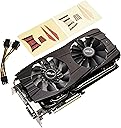
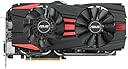
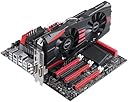
The ASUS Radeon R9 290X DirectCU II graphics card delivers a 1050 MHz engine clock and advanced DirectCU II cooling technology that reduces temperatures by 20% while running 3X quieter than reference models. Equipped with 4GB GDDR5 memory and an 8-phase DIGI+ VRM power design, it offers superior efficiency and reliability. Enhanced with GPU Tweak software for real-time performance tuning and streaming, it boosts gaming performance by 4.7% over the reference Radeon R9 290X, supporting up to 4K resolution for immersive visuals.
| ASIN | B00HSY1TBK |
| Antenna Location | Gaming |
| Brand | ASUS |
| Compatible Devices | Desktop |
| Customer Reviews | 3.9 out of 5 stars 63 Reviews |
| Display Resolution Maximum | 4096x2160 |
| Global Trade Identification Number | 00886227663446, 04716659663447 |
| Graphics Card Interface | PCI Express |
| Graphics Card Ram | 4096 MB |
| Graphics Coprocessor | R9290X |
| Graphics Processor Manufacturer | AMD |
| Graphics RAM Type | GDDR5 |
| Graphics Ram Size | 4096 MB |
| Graphics Ram Type | GDDR5 |
| Item Part Number | 90YV05C0M0NA00 |
| Item Weight | 2 Pounds |
| Manufacturer | ASUS Computer International Direct |
| Memory Clock Speed | 5400 MHz |
| Mfr Part Number | R9290X-DC2OC-4GD5 |
| Model Name | R9290X |
| Model Number | R9290X-DC2OC-4GD5 |
| UPC | 886227663446 671569660631 012304220107 |
| Video Output Interface | DisplayPort , HDMI |
| Video Processor | AMD |
R**N
Fantastic card. All pros, no cons. Silent!!! Fast. Makes my games look beautiful.
So I bought Dragon Age: Inquisition, and it was so incredibly slow it was unplayable. I turned the in-game graphics settings to their lowest levels, and everything looked horrible -- especially the hair, beards, and mustaches, which looked like ultra-glossy, hyper-reflective plastic. The cut scenes were still choppy and out of sync with lip movements. My graphics card was just the default one that came with my rather newish, slightly high-end motherboard. All my games up to this point had played on that rig just fine, including Mass Effect 3 and Civilization V. I suppose the Frostbite engine, which DA:I uses, is an unforgiving mistress. (It was my first game with this engine.) Long story short: it was time to put on my big boy pants and get a graphics card that reflected the wannabe-hardcore gamer that I think I am. I looked up the game's specs and 'minimum' and 'recommended' requirements and went to websites that scan your computer to tell you what hardware you need to run your variously installed games well. I ended up settling on this card -- which was one of the most recommended cards from all sources in the price category I was willing to enter. My biggest concern was that some people had said in comments and reviews that it was 'noisy.' I hate, Hate, HATE computer fan noise, so I actually looked up sound-proofing solutions for computers just in case the R9290X was intolerable. I went ahead and bought the thing, getting a pretty good price here on Amazon. It arrived early (woohoo!), and I tried installing it. It was then that I realized I had forgotten to buy a larger power supply -- and I KNEW I was going to have to get one. Grrr. So off to the electronics store I went, got an 850W cube of juice that could squeeze into the medium-sized case that I have, and crammed that baby in. (Shoehorn not needed.) Cue the chorus of angels. It was one of the best purchases I have ever made for my computer. Almost completely silent! I had to go back to those reviews that mentioned how 'noisy' the fan was, but then I realized they were talking about when they overclock it. So, whew! Noise issue not a problem. I then started up the software that comes with the card, downloaded the newest firmware, and had it scan my games and optimize them for the card. When I booted up Dragon Age: Inquisition, every setting was on "ultra" and every bell and whistle was turned on. The game looked incredible. The ultra-glossy, hyper-reflective plastic hair: gone. Choppy cut scenes: smoothed out as a baby's bottom. The fights: now actually playable. And fun. If you're on the fence, I highly recommend this card if you are even a semi-serious gamer. The price-point is a bit high for some people, granted, but for me, it was one of those investment things. The card is currently above most 'recommended' settings of most games out right now, so it will definitely give you years of great use as more and more graphic-intensive games come onto the market. Plus, I got to download Civilization: Beyond Earth for free, which I was literally about to buy! (Plus 3 more games I haven't chosen yet.) I cannot attest to how long this special will last. As of this writing, December 23, 2014, AMD says I have until January 31, 2014 to download my remaining 3 games from a list of AAA and Indy games. I don't know how they handle later purchases. Since Civ: BE had yet to go on sale, I was looking at spending around $50 for it, so for me, personally, the purchase of this card was an even greater value. Your mileage may vary, though.
J**.
It was worth the wait...
So I received (finally) my 290X earlier this week. I wanted to leave work early to install it, but I held out somehow. First impressions... I was upgrading from a 7970 DC2T... this is even more impressive and sleek... it manages to pack all the cooling power of my 3 slot card into 2 slots, and it's still quiet. I like the muted look without the stickers, just flat black, so that's how I left it. I installed it, booted up, installed 14.1 beta drivers directly from AMD's website to be able to play with Mantle enabled, and then I did something really dumb. I pushed the slider over on my core and memory to 1500... instant black screen after application. Reboot, blackscreen. I had to boot to safe mode and run DDU (display driver uninstaller) in order to get the desktop to show. Oops. So first lesson learned.. my card has Elpida memory and it does not OC as high as some 290X. That's okay though, I really should have just started BF4 instead of immediate messing with the clock/memory. So once I got everything working, I loaded BF4. Playing at 2560x1440, Ultra settings, 2xMSAA, 16XAF, it looks amazing, and was getting 60+ FPS every time I looked. It's quiet... it didn't even get loud after I had been playing for a while. The fan usually sits around 50% while playing. I turned it up to see how loud it gets.. at 65% plus, it's definitely audible, but it's not really noisy to me unless you put it above 85%. Your mileage may vary.. So for gaming performance, I'm very happy. It is much better than my 7970, obviously. The other thing that I do is mine scrypt coins. As far as mining performance, I have a couple of different settings I use.. when I am using the computer, watching videos, streams, or playing non GPU intensive games like League of Legends, I can leave it mining at lower settings while playing and get 510kh/s. When I'm not using my machine, I leave it mining at about 840kh/s. I think that the elpida ram holds it back a little, because most of the high #s that I see for mining are on cards able to reach 1500 for memory clocks. I will probably eventually tune it and get more out of it, but for now, I'm ok with these rates. Some miscellaneous info: idle temp is about 34-35C. In games like BF4 and while mining with about 65% fan, I see roughly 64-68C. It really does run cool and quiet. I haven't OC'd while gaming, but I see no throttling... the clocks stay solid at 1050MHz the whole time. Since Asus says the max temp is 94C, I could probably push the core clock, but I don't really need to, honestly... this card does everything that I want it to at 1440p for now. Random thought: Amazon doesn't require signature on these... they really should, in my opinion.
D**N
Decent, could have been a lot better
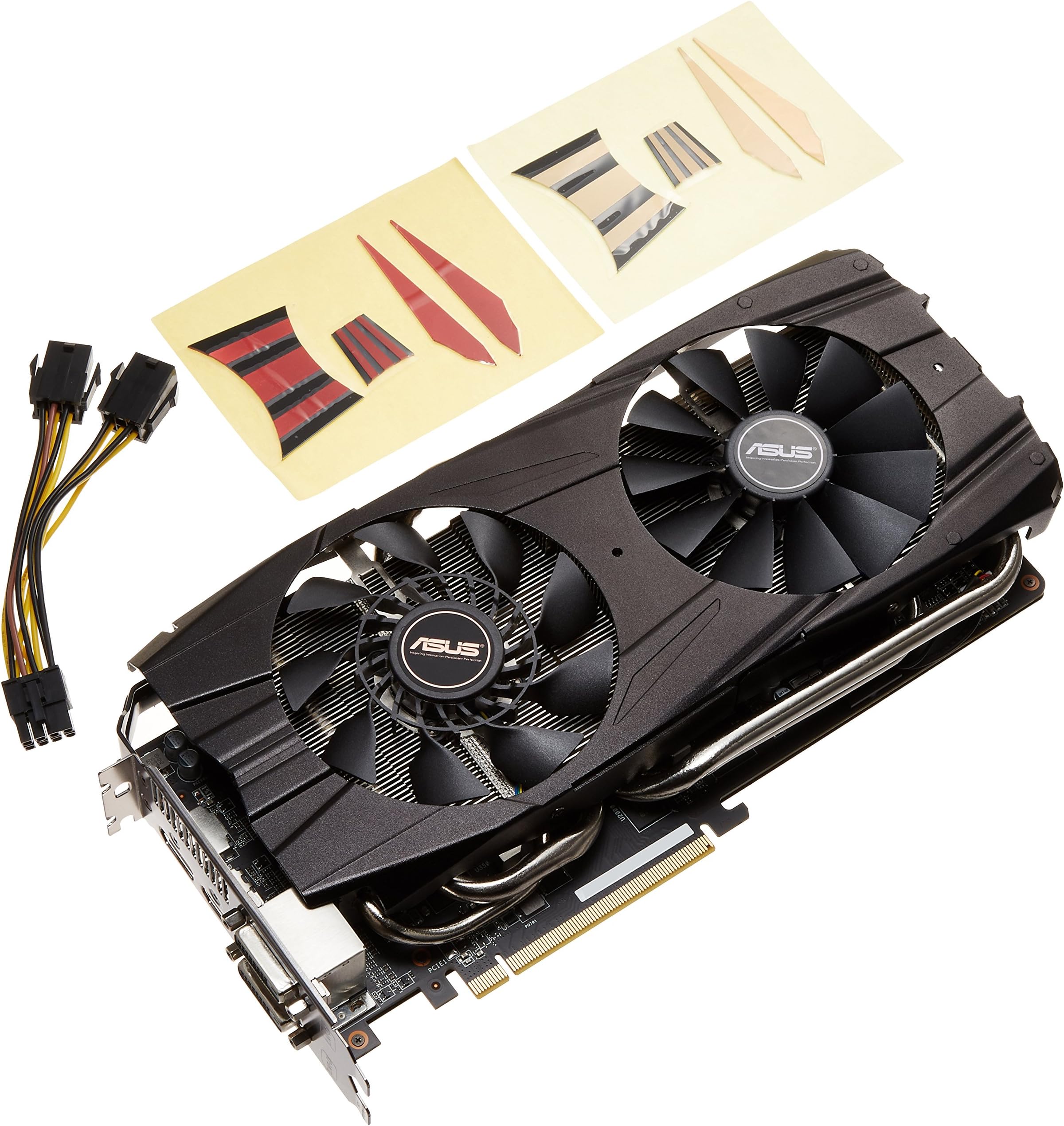
Compared to most other 290x's from other brand, it runs hotters and louder. This is because they recycled the design from GTX 780. I haven't had it throttle due to high temperatures yet, but the laziness in design makes me take a few stars off. Card has great aesthetics since you can leave it all black or put red/gold stickers for a theme. Overall, it works great but I would not have bought it if I knew Asus' approach to making this cooler.
C**.
Finally !!!
I've been checking Amazon daily for non-reference 290x cards at reasonable prices, as prices for most of these non-reference 290x cards available on Amazon and everywhere else have skyrocketed due to demand and lack of supply. Anyone that had done some homework on these cards knows they punch above their price class and compete directly with 780ti cards in performance, and if you can get them at a reasonable price (<$600), it's a no brainer choice for gamers that demand serious performance. Coming from two 5850s in Crossfire (~5970 or 7950) and with a recent acquisition of a Dell 3011, I needed a card with minimum of 3GB that can run 2560x1600 with all the eye candies turned on while gaming, and support an additional 24in monitor at 1920x1200 when I'm not. I wanted a single card solution to minimize any micro-stuttering with the possibility to Crossfire later with another 290x if AMD manages to polish their drivers. I Narrowed my choices down to Asus, Sapphire and Gigabyte card, since MSI and Powercolor (water-cooled) cards did not have many reviews. These are all great cards. Asus/Amazon price just made me pull the trigger. Pros -20% cooler than AMD reference cards, and liquid cooling can get messy -OC'ed to 1050Mhz right out of the box, max to 1200Mhz with excellent Asus bundled OC software -Asus non-reference board design. we all know what they do best. Card is 11.5in long vs. 12in + with others. -Solid construction, large metal back plate protects and supports the card, not to mention the aesthetics. -3 yr. manufacturer warranty -Comes with red or gold stickers to match your mobo, or you can simply leave it all black. -Did I mention the price ? Asus planned to have mid-late Jan 2014 release with MSRP of $569 Cons -Not the coolest of the non-reference 290x cards, VRM temperatures tend to get much higher than the Sapphire Tri-X according to online reviews, with GPU temperatures roughly the same -Runs hotter and louder than 780ti cards -Requires a decent PSU. 650w+ for single and 850w+ for Crossfire. But if you're getting a card like this, PSU shouldn't be an issue. -Never Settle Forever or BF4 Bundles don't seem to be available for R8 or R9 cards. Come on, AMD & Amazon !!! Hopefully they can do these promotions retroactively.
D**Z
Good luck.
looks great! By far the nicest paper weight I have placed on my desk to date. Unfortunately amazon wants this one back or I'd let you know if it helps with my golf swing. I'll update if the replacement works.
M**N
Came home and it had fried.
So in my new build, I opted for this card and was instantly let down. The night that I finished this build my wife went into labor. I had just finished loading windows and started on a stress test. When I got home, my computer was off and there was a faint odor of fried electronics. I hit the power button and all I heard was a "tick" from the power supply. I began my trouble shooting, starting with memory, then a new PSU, and finally removed the graphics card, ding the computer booted. I noticed when I picked the card back up that I smelled heavily of fried electronics, so I took it apart and found that the capacitors all blew out. I need to get this build done ASAP and I am stationed overseas so I couldn't quickly RMA the item, so I chalked this one up to ASUS's typical poor quality control and bought another on the economy at a $200 higher price tag after exchange rates.
W**M
Great card for $$$
Like I said great card grabbed it for $580 while it was in stock on Jan 27th finally got it yesterday Feb 26th. It is not very friendly trying to overclock further then the factory overclock of 1050MHz and 5400MHz but that is most likely due to the elpida memory used it doesn't like to OC as easy as the hynix brand memory used in other 290x but it is a mix you are not guaranteed hynix just because you buy maybe a sapphire or xfx brand, not saying elpida is a bad brand just if your interested in overclocking might be more of a setback. When I started to OC I noticed eventually how it needed a voltage increase even for a small OC I wasn't expecting that so much since usually AMD's card can be Oc'd without touching the voltage most of the time, maybe elpida just likes more voltage who knows?. So after around 6+ hours of some testing (3dmark 11, 3dmark firestrike) I found a decent OC for my card at these settings (using the Asus GPU tweak software its actually not bad) 1115MHz GPU Clock 5668MHz Memory Clock (I put in 5700MHz but it brings it down to this for me atleast) 1.35 Voltage (Need to turn on the option to adjust voltage through settings in Asus Gpu tweak) I usually use the fan speed at 70%-80% when using this OC to make sure it stays cool but you can turn it as high as you want as long as you can handle the noise. So my GPU temp never went over 80c so overall I am actually happy with that and I am sure I could actually OC it even higher but I really don't want to add more voltage and increase the fan speed because the whole point of this card is that its not um reference design which were pretty bad with reported temps of 90c+ even though AMD said they can run that hot and it be ok why would any one want that much heat? (Also my PC case is full of fans doing a push/pull setup. 2 top/2 side/2 front/1 rear/1 bottom including the 2 on my Noctua NH-D14 so please keep that in mind if you decide to try any of my settings) So overall with a AMD 8350 @ 4.7Ghz Asus direct CU II OC 290x @ 1115MHz, 5668MHz, 1.35V 70%-%80 fan speeds My firestrike score is 9068 Graphic score = 11836 Physics Score = 8440 combined score = 3433 (No tears, artifacts, crashes, or screen blacking out)
A**A
I recommend this card over any NV970!
I was considering to buy a Nvidia GTX 970, but after their 3.5GB memory scam and latest benchmarks of the R9 290x beating NV970 in games that demand more memory and it will support DirectX 12, I decided to give a try in my first AMD videocard as the price was extremely attractive (U$309) Pros: super fast, factory overclocked. It is twice as fast as the two GTX560 in SLI that I had before. All my games run at maximum settings (BF4, PCars, Asseto Corsa, Assasins Creed Unity, etc). AMD SW and Drivers have way more features than Nvidia. Drivers are more robust than NV because they don't depend on so many special optimizations for every game released. Design is great with the options to choose between red and gold. The size is a bit smaller than other cards with 3 fans. Well designed and well protected with a nice back plate. Cons: it draws a but more power than NV970 and temps are locked to go up to 94C which seems a bit too high even though AMD says that this is the normal operating temperature. Other comments: I tweaked AMD overdrive to lock the maximum temperature to 80C as I observed that the card still very quiet in this temp, just to be on the safe side as I expect to use this card for 2~3 years. Some reviews complain about the DirectCU cooler not optimized for this card, but what matters in the end is the low fan noise under temperatures that won't damage the card, I feel that the cooling solution does a very good job and I can confirm when I lowered the maximum temperature. Despite the reduced size compared to other cards, it still may not fit many compact cases, make sure to check the dimensions before buying. The card came with the latest bios, it probably saved me from a lot of trouble since it should be very stable now.
M**.
Superperformante
Se usata in coppia a prezzi bassi e superla tiva per i giochi di ultima generazione
D**L
Ersatz für GTX 970; volle 4gb, 'kein' Spulenfiepen, Leistung top
Bin von einer GTX 970 Jetstream umgestiegen (über Nvidia meckern lasse ich hier mal weg). Zum System, in dem die Karte verwendet wird: ASRock Z97 Extreme4 Intel Core i7 4790K Haswell-Refresh LGA 1150 16 GB Crucial DDR3 Ram 1600mhz (2x8gb) CPU-Kühler Aplenföhn Brocken bQuiet Netzteil 730 W LianLi ATX-Gehäuse, geschlossen Zur Karte: Allgemeines: Sie ist vorallem extrem lang. Ich hatte das zwar gelesen, hätte aber nicht gedacht, dass hinten tatsächlich nur etwa 2cm Platz bis zum Einbauschacht der 3,5zoll Laufwerke ist. Aufgrund der Mainboardarchitektur meines AsRocks musste ich auch ein paar der Festplattenanschlüsse anders verkabeln, weil der erste PCIe-Slot in Verlängerung genau über die SATA Plätze ragt - hier sollte man zumindest im Hinterkopf haben, wie das eigene Setup ist. Des weiteren die Stromanschlüsse mit einmal 8-pin und einmal 6-pin, ein Adapter von 2 mal 6-pin auf einmal 8-pin liegt aber bei. Im Allgemeinen kann man nur sagen, dass man die gewohnte Asus Qualität bekommt, die Karte wirkt extrem gut verarbeitet, nichts wackelt, die Rückseite der Platine ist extra geschützt - alles sehr fein. Temperaturen/Lautstärke/Takt: Zuerst möchte ich hier anmerken, dass die Varianz der einzelnen Karten im High-End-Segment momentan sehr hoch zu sein scheint. Ein und die gleiche Grafikkarte, egal ob Nvidia oder AMD-Chip, können z.Z. leistungstechnisch stark variieren. Meine 290X hat sich in einem 30 min FurMark-Test bei 100% Auslastung auf jeden Fall nicht über 87 Grad bringen lassen, maximal 57% Lüfterdrehzahl und ist zu keiner Zeit unter ihre 1050 Mhz gefallen, dabei ist die Lautstärke leiser, als ich es nach diversen Tests vermutet hatte, aber schon ein wenig lauter, als meine Palit GTX 970 Jetstream war. Also ein durchweg positiver Eindruck. Spielebenchs in 1920x1080: Far Cry 4 läuft auf Ultra inkl. 16x Anilaising konstant über 60 fps. ARMA III auf sehr hoch und gut 4 km Sichtweite mit 8x Anilaising zwischen 50 und 80 fps. Bei den meisten anderen Spielen wie CS:GO und co. würde ich ohnehin empfehlen, einen Framlimit auf max. 128 rein zu hauen. Solangs kein 4K Gaming werden soll, kann man mit einer einzelnen 290X also aktuell immernoch alle Regler hoch reissen. Allgemeine Benchs finden sich ja aber auch überall im Netz. Spulenfiepen habe ich ab mehreren hundert FPS leise hörbar, in der Praxis also irrelevant. Ich empfehle jedem, der diese Grafikkarte oder auch eine der gängigen Alternativen kauft, diese in den ersten Tagen entsprechend durch zu testen, da man doch sehr viel negatives über einzelne Exemplare hört und liest. Gleiches konnte ich bei meiner GTX 970 leider auch feststellen. Davon ausgehend, dass meine 290X so läuft, wie sie laufen soll, kann ich nur 5 Sterne vergeben. Die Leistung ist bestenfalls messbar schlechter als die der 970, was mich überrascht hat. In Spielen macht diese 290X auf jeden Fall richtig Laune und kostet aktuell auch weniger, als die meisten 970, und als 980 sowieso. Sollten sich wider erwarten Probleme melden, werde ich diesen Artikel entsprechend aktualisieren.
M**E
Solide Karte, leider viel zu laut
Nach gut einem Jahr mit dieser Karte denke ich eine Rezension verfassen zu können. Die AMD Radeon R9 290X ist eine gute Karte, die wenn man etwas Geld ausgeben will meiner Meinung nach eine solide Leistung leifert. Die Lüftergeschwindigkeit ist angemessen und der normale Lüftersound auch in Ordnung. Nun habe ich nach etwa drei Monaten leider bemerkt, dass die Grafikkarte sehr laut ist. Es ist das Geräusch, das ein Lüfter verursacht, wenn etwas im Weg ist. Ich habe mir beide Lüfter angeschaut und keinen optiuschen Unterschied festgestellt. Das Geräusch ist auch nich regelmäßig aufgetreten, aber immer mal wieder. Leichte Erschütterungen (Ein leichter Klaps gegen den Tower) oder auch das hochdrehen des Lüfters haben das dann meist verschwinden lassen. Jetzt, nach einem Jahr, ist das Geräusch konsistent in einer wirklich störenden Lautstärke vorhanden. Man spürt richtig, dass der Lüfter gegen einen Widerstand schlägt wenn man die Grafikkarte berührt. Da ich vor dieser Karte eine Karte von Nvidia geholt hatte (970) und diese sogar noch lauter war (Leider bin ich bei technischen DIngen sehr vom Pech verfolgt) kann ich nicht guten gewissens eine Nvidia als Ersatz empfehlen. Wen es nicht stört, dass seine Radeon sehr laut sein kann und die Angst vor einem Lüfterausfall nichts ausmacht mag bitte zugreifen, Leistungstechnisch habe ich nichts zu bemängeln. Wer keinen Rücksendemarathon riskieren will sollte sich nicht diese Karte kaufen.
F**R
Großes Teil für große Leistung
Da meine alte Nvidia Grafikkarte den Geist aufgegeben hat, habe ich mir nach langer Überlegung die Asus AMD Radeon R9 290X Grafikkarte bestellt. Mein System: AMD FX - 4300 Quad-Core Processor 16GB Ram 700 Watt Netzteil und jetzt die o.g. Graka. Um einen Eindruck zu gewinnen: GTA 5 läuft auf meinen Bildschirm in FullHD mit 60 Frames! TOP! Die Grafikkarte hält was Sie verspricht. Was ich noch anmerken möchte für Leute die nicht den absoluten Durchblick haben (Ich zähle mich dazu) Wenn ihr die Radeon kauft, stellt sicher das Ihr genug Platz in eurem Gehäuse habt. Sie ist riesig! Auch euer Netzteil sollte am Besten 700 Watt haben. Die Grafikkarte benötigt 2 PCI Express Anschlüsse (1x8,1x6) Eure Lüfter sollte auch etwas taugen. Ich habe am Anfang ziemliche Probleme gehabt. 97°C !!! Mittlerweile habe ich es im Griff und sie läuft bei Volllast auf 67°C Noch eine Kleinigkeit auf die ich nicht geachtet hatte. Die Radeon hat keinen VGA Anschluss mehr (vllt hat das keine mehr), stellt sicher das eure Bildschirm über einen HDMI oder DVI-D Anschluss verfügt. Ansonsten ist Sie der Wahnsinn und weiter empfehlbar.
S**T
schnell, heiss und laut
Ich habe diese Karte als Ersatz für meine GTX970 gekauft, welche auf Grund des Speicher BUGs retour ging. Leider dürfte ich ein Montagsmodell erwischt haben. Trotz offenem Gehäuse oder Aufbau auf dem Testbench erreicht die Karte bei mir in diversen Spielen und Benchmarks an die 93°C (Performance & Quiet Mode) Daran ändert sich auch beim einem Einbau in ein geschlossenes Gehäuse nichts. (2 * 140mm intake, 1*140mm out, Gehäuselüfter auf 12V) Hier erreicht die Karte einen Spitzenwert von 94°C. Positiv an dieser Stelle ist nur anzumerken, dass der Kühler wohl in der Lage ist die Karte so zu kühlen, dass hier kein Throtteling stattfindet und die 1050MHz konstant gehalten werden können. Dafür herrscht zu jederzeit an der Backplate massive Verbrennungsgefahr, und nach ca 20 Minuten Spielzeit muss auch der Lüfter odentlich hochdrehen um die Karte in Schach zu halten (66% Lüftergeschwindigkeit. Das entspricht einem Turbinentriebwerk und ist nicht weit weg von dem was AMD auch mit dem Referenzdesign kann, mit dem Unterschied, dass hier die Karte wenigstens den Takt hält. Wie gesagt, dieses Verhalten zeigt sich bei 21,5°C Raumtemperatur im offenen Case sowie im geschlossenen Case (Define R4, HDD Tray oben entfernt für besseren intake Airflow) und im Testbench Aufbau. Die Karte erreich IMMER ihre knapp 94° C und der Lüfter dreht am Ende immer bei 66% (manchmal auch höher). Ich vermute ja fast, dass hier die Heatpipes nicht sauber auf dem DIE aufliegen, aber da die Karte noch neu ist, verzichte ich auf Basteleien und sende diese zurück, da ich keine zusätzliche Beheizung für die CPU & Soundkarte benötige. Austauschkarte wird wohl eine GTX980 werden... kein Speicher BUG und hoffentlich nicht so hitzig.
Trustpilot
2 days ago
2 months ago