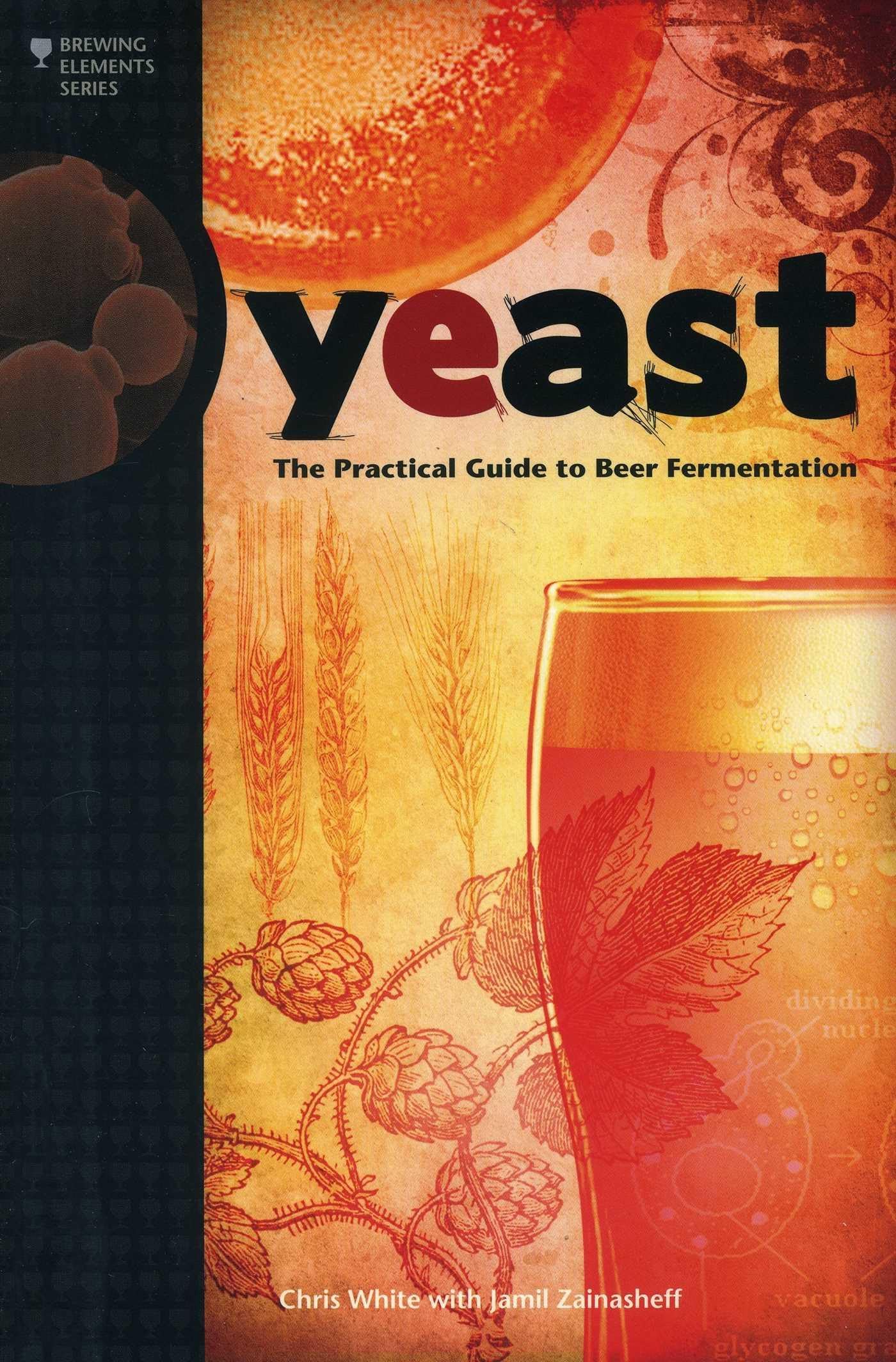
Yeast: The Practical Guide to Beer Fermentation (Brewing Elements)
Product ID: 235212
Buy anything from 5,000+ international stores. One checkout price. No surprise fees. Join 2M+ shoppers on Desertcart.
Desertcart purchases this item on your behalf and handles shipping, customs, and support to Panama.
Yeast: The Practical Guide to Beer Fermentation (Brewing Elements) [White, Chris, Zainasheff, Jamil] on desertcart.com. *FREE* shipping on qualifying offers. Yeast: The Practical Guide to Beer Fermentation (Brewing Elements) Review: Written for homebrewers - After reading the other reviews I was a little unsure if purchasing this book would apply to homebrewers. After reading this book extensively I believe that this is an excellent starting point for homebrewers who want to learn how to culture and store their own yeast. The other reviews are correct, there are a few basic introduction chapters in the beginning but the vast majority of the book is an extensive guide on yeast culturing practices from start to finish. The author(s) do an excellent job explaining concepts and procedures in a clear way giving the reader a step-by-step guide, with some photographs. The authors give examples of how commercial breweries grow up their yeast to pitchable rates, but the vast majority of this book is written for homebrewers who are working in 5 and 10 gallon batches. Everything is covered in detail, from washing and rinsing yeast harvested from a primary fermentation vessel, pitching rates, yeast starters, harvesting yeast, storing yeast, preparing slants and petri dishes and streak plating yeast cells to grow and isolate different colonies. For those homebrewers who think that yeast culturing is way too much of a headache and prefer to purchase a new vial of yeast from the store for every batch, please give this book a chance and see how easy it is to culture and isolate your own yeast. The author(s) do an excellent job of describing how complex a brewery laboratory can be, but they do an even better job of teaching the homebrewer to use the exact same techniques at home using nothing more than a pressure cooker, agar, dry malt extract and a wire inoculation loop. If you are a homebrewer who is just starting out and are using extract and partial mash recipes then perhaps yeast culturing is too large of a next step. However, for all-grain brewers who are looking to take their recipes to the next level and begin culturing their own strains and producing strains that are unique to their recipes then this book will be an excellent starting point. The author(s) teach the reader how to streak yeast onto a petri dish and isolate individual colonies as well as how to select the healthiest colonies as well as how to step up these colonies to a pitchable size for a 5 gallon fermentation. All of the other reviews for this book are fairly accurate and each has their own degree of truth, but by all means to not let the negative reviews for this book sway your decision. It does not matter if you are a homebrewer or a full size commercial brewery, if you have considered culturing your own yeast to save money or to create new and unique yeast strains, please give this book a chance. Review: Excellent Reference to "Cold Side" of Homebrewing - I was put off by some of the early reviewers of this book, who didn't find it as useful as they had hoped. And, perhaps partly because they had lowered my expectations--but mostly because of what I read in this book--I am overjoyed with what I found. This book divides brewing into two parts: the brew day, which it calls the "hot side" (which it does not really cover), and what happens after you boil your wort, which it calls the "cold side." This is what the book focuses on. It's about yeast, sure: what they are, how they work, what happens to them under various conditions. But it's really about fermentation, this cold side: the way we control those various conditions to get yeast to do something we want them to do: make great beer. And in its focus, White and Zainasheff hammer home the need for repeatability--same amount of yeast, same temperature, etc. I think they are on to something. And if you suspect that your beer could stand some time and attention spent on this cold side of brewing, there is a wealth of knowledge here. For example, if you had to brew all your beers with just one yeast, what would it be? Two? Three? etc. How many yeast varieties should you try to maintain (based on how often you brew)? This book treats the reader seriously. That means whether you are doing 5 gallons at a time with malt extract or running a microbrewery, the assumption is you want to make the best beer possible--and that fermentation control is key. I did have to smile at the chapter title "Your Own Yeast Lab Made Easy." And yet, for all the high-tech possibilities mentioned that might make your head spin and your wallet empty, there were many simple, free approaches to controlling and measuring your beer. And I think that chapter title captures the spirit of the book--first, to encourage you to think more scientifically about your beer (by which I mean "systemically," where you brew with intention)--which can be a bit off-putting if you think of yourself as a free spirit, creative type; second, that it is as "easy" as you want it to be. Take notes. Sniff. Taste. Do it again. Do you need this book to brew award-winning beer? No. You just need a way to put the right amount of yeast in your wort and hold it at the right temperature(s) for the duration of fermentation--every time. If you are convinced, put this money toward a few flasks and a stir plate, a temperature controller, a fermentation chamber, and a way to heat or cool your beer as it ferments--and hold it to within 1 degree F of your target. But if you aren't convinced, this book might give you the information and knowledge, and allow you to benefit from the experience of these gentlemen.


| Customer Reviews | 4.8 4.8 out of 5 stars (1,082) |
| Dimensions | 6.1 x 0.75 x 9.02 inches |
| Edition | 9/16/10 |
| ISBN-10 | 0937381969 |
| ISBN-13 | 978-0937381960 |
| Item Weight | 2.31 pounds |
| Language | English |
| Print length | 300 pages |
| Publication date | October 16, 2010 |
| Publisher | Brewers Publications |
A**O
Written for homebrewers
After reading the other reviews I was a little unsure if purchasing this book would apply to homebrewers. After reading this book extensively I believe that this is an excellent starting point for homebrewers who want to learn how to culture and store their own yeast. The other reviews are correct, there are a few basic introduction chapters in the beginning but the vast majority of the book is an extensive guide on yeast culturing practices from start to finish. The author(s) do an excellent job explaining concepts and procedures in a clear way giving the reader a step-by-step guide, with some photographs. The authors give examples of how commercial breweries grow up their yeast to pitchable rates, but the vast majority of this book is written for homebrewers who are working in 5 and 10 gallon batches. Everything is covered in detail, from washing and rinsing yeast harvested from a primary fermentation vessel, pitching rates, yeast starters, harvesting yeast, storing yeast, preparing slants and petri dishes and streak plating yeast cells to grow and isolate different colonies. For those homebrewers who think that yeast culturing is way too much of a headache and prefer to purchase a new vial of yeast from the store for every batch, please give this book a chance and see how easy it is to culture and isolate your own yeast. The author(s) do an excellent job of describing how complex a brewery laboratory can be, but they do an even better job of teaching the homebrewer to use the exact same techniques at home using nothing more than a pressure cooker, agar, dry malt extract and a wire inoculation loop. If you are a homebrewer who is just starting out and are using extract and partial mash recipes then perhaps yeast culturing is too large of a next step. However, for all-grain brewers who are looking to take their recipes to the next level and begin culturing their own strains and producing strains that are unique to their recipes then this book will be an excellent starting point. The author(s) teach the reader how to streak yeast onto a petri dish and isolate individual colonies as well as how to select the healthiest colonies as well as how to step up these colonies to a pitchable size for a 5 gallon fermentation. All of the other reviews for this book are fairly accurate and each has their own degree of truth, but by all means to not let the negative reviews for this book sway your decision. It does not matter if you are a homebrewer or a full size commercial brewery, if you have considered culturing your own yeast to save money or to create new and unique yeast strains, please give this book a chance.
G**K
Excellent Reference to "Cold Side" of Homebrewing
I was put off by some of the early reviewers of this book, who didn't find it as useful as they had hoped. And, perhaps partly because they had lowered my expectations--but mostly because of what I read in this book--I am overjoyed with what I found. This book divides brewing into two parts: the brew day, which it calls the "hot side" (which it does not really cover), and what happens after you boil your wort, which it calls the "cold side." This is what the book focuses on. It's about yeast, sure: what they are, how they work, what happens to them under various conditions. But it's really about fermentation, this cold side: the way we control those various conditions to get yeast to do something we want them to do: make great beer. And in its focus, White and Zainasheff hammer home the need for repeatability--same amount of yeast, same temperature, etc. I think they are on to something. And if you suspect that your beer could stand some time and attention spent on this cold side of brewing, there is a wealth of knowledge here. For example, if you had to brew all your beers with just one yeast, what would it be? Two? Three? etc. How many yeast varieties should you try to maintain (based on how often you brew)? This book treats the reader seriously. That means whether you are doing 5 gallons at a time with malt extract or running a microbrewery, the assumption is you want to make the best beer possible--and that fermentation control is key. I did have to smile at the chapter title "Your Own Yeast Lab Made Easy." And yet, for all the high-tech possibilities mentioned that might make your head spin and your wallet empty, there were many simple, free approaches to controlling and measuring your beer. And I think that chapter title captures the spirit of the book--first, to encourage you to think more scientifically about your beer (by which I mean "systemically," where you brew with intention)--which can be a bit off-putting if you think of yourself as a free spirit, creative type; second, that it is as "easy" as you want it to be. Take notes. Sniff. Taste. Do it again. Do you need this book to brew award-winning beer? No. You just need a way to put the right amount of yeast in your wort and hold it at the right temperature(s) for the duration of fermentation--every time. If you are convinced, put this money toward a few flasks and a stir plate, a temperature controller, a fermentation chamber, and a way to heat or cool your beer as it ferments--and hold it to within 1 degree F of your target. But if you aren't convinced, this book might give you the information and knowledge, and allow you to benefit from the experience of these gentlemen.
S**U
Essential Knowledge For Intermediate/Advanced Brewers
This is a fantastic booking for home brewers or smaller breweries owners looking to learn more about the contributions yeast play in the fermentation of beer, how improve your fermentation with better yeast handling and pitching, and coverage on how to setup your own lab for propagation and testing of yeast. The book is well written and easy to understand for somebody that does not have a background in microbiology. I found this book to be much more informative than the Hops book and much easier to follow then the Water book.
G**I
Prodotto conforme, nulla da segnalare, spedizione ok, descrizione ok. Il libro è davvero molto molto bello ed interessante, essendo in Inglese faccio un po' fatica, ma è un problema mio! Davvero una lettura utile per chiunque sia intenzionato a perfezionare conoscenze e tecniche in merito a questo particolare "spicchio" della produzione brassicola.
A**V
Para avanzados, profesionales y motivados por conocer bien los procesos de fermentación. Desde una bioquímica básica bien entendida y explicada aplicada a la elaboración únicamente, a procesos y materiales para uno mismo montarse su pequeño laboratorio casero, o al menos para intentarlo. Me parece básico para el homebrewer que se mete a hacer starters, cultivos y más cacharreos.
A**R
Ótimo livro. Acho que já tem versão traduzida.
D**S
Terrible référence pratique pour le travail quotidien d'un brasseur amateur ou professionnel dans une brasserie de taille moyenne. Vous trouverez ici tout depuis les bases théoriques sur la biologie de la levure, la biochimie de la fermentation, la gestion de levure, la microbio, et la mise en place d'un labo plus que correct, etc. Le tout est évidemment garni de nombreux commentaires pratiques, de schéma quand celà s'avère nécessaire, de cas concrêt, de relations aux défauts ou qualités de la bière, etc. Concrètement, ce bouquin m'a ouvert de nouvelles perspectives! Ndlr pour les personnes "freinées" par les commentaires critiques sur amazon US : oui, il y a parfois une note quant à un produit WhiteLab (environ toute les 100pages...) mais celà reste de la pub "subliminale", et OUI, ce bouquin n'est pas une référence biochimique comme le Boulton ou autre Priest, mais qui a réellement besoin de tout ce qui est dans le boulton pour brasser une bonne bière. Lisez et relisez ce bouquin, votre bière sera meilleure, garanti sur facture!
K**E
A great book that is well written. I think if you are on the slippery slope from brewing in pastic buckets and getting in to shiny brew pots whilst eying up second hand microbrewery kit on fleabay, this is a must read and it will further enhance your beer anorack credentials amongst your chums as you enthrall them with your in depth knowledge of yeast and its activities in the fermentation vessel. Excellent book, buy it. You know you want it.
Trustpilot
2 months ago
2 weeks ago