✨ Sparkle smarter, sip bolder! ✨
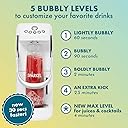
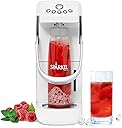
The Spärkel Beverage System is a sleek, electric soda maker that carbonates up to 750ml of liquid using innovative CO2 sachets—eliminating the need for traditional gas cylinders. With 5 carbonation levels and the ability to infuse fresh ingredients, it offers a customizable, eco-friendly way to enjoy sparkling water and soda at home. Compact and easy to use, it’s backed by a 1-year warranty and designed for the modern lifestyle.


| ASIN | B07YNV4JJJ |
| Best Sellers Rank | #253,311 in Kitchen ( See Top 100 in Kitchen ) #152 in Soda Makers |
| Brand | SPÄRKEL |
| Brand Name | SPÄRKEL |
| Capacity | 750 ml |
| Color | White |
| Colour | White |
| Customer Reviews | 4.0 out of 5 stars 2,654 Reviews |
| Global Trade Identification Number | 00628451077916 |
| Included Components | One Reusable Bottle, One System, Ten Carbonators |
| Item Dimensions D x W x H | 22.9D x 40.6W x 15.2H centimeters |
| Item Type Name | Soda Maker |
| Item Volume | 750 Milliliters |
| Item Weight | 3.63 kg |
| Item volume | 750 Milliliters |
| Item weight | 3.63 kg |
| Manufacturer | SPÄRKEL |
| Material | White |
| Model Name | White |
| Model Number | White |
| Number of Items | 3 |
| Operation Mode | Automatic |
| Part Number | BOI-03-001 |
| Power Source | AC adapter |
| Product dimensions | 22.9D x 40.6W x 15.2H centimeters |
| Size | 25.4 x 14.35 x 38.1 cm; 4.46 Kilograms |
| UPC | 628451077916 |
A**D
الكهرباء ١٢٠ مو ٢٤٠
120 Ac/V مو ٢٤٠ الكهرباء يبالها توصيله
L**.
Limited tension/frequency need
Product description does mention proper technical details and equipment does not work at 220V/50Hz (no conversion possible either)
N**Y
Very fast delivery and very nice product
The best way to get hydrated👍🏻
R**N
A nice bubbly experience...!
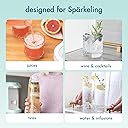
Tossing between carbonators using CO2 cylinders (and associated inconvenience of replacing and returning cylinders etc albeit at a lower cost) and the way more convenient dry starters method (dry prepackaged chemicals that produce CO2), I opted for the latter. Copious amounts of videos (manufacturers and users), printed material and a rather well stocked manuf. web site provide a lot of information. The Sparkel unit can handle plain water, juices, fresh cut fruits + water drinks, even wine if that is what you fancy. They just ask one to avoid milk, essential oils in the drinks since those contain oil/fat which sticks to plastic parts and gets messy. Using juices, water from the fridge or adding a couple of tablespoons of crushed ice to the bottle before carbonation keeps the drink cool and retain the fizz better than room temp drinks. The carbonated drink in the Sparkel bottle in the fridge also keeps everything nice and cold and retains the CO2 (fizz) longer. The bottle top has a built-in valve which must be pressed to avoid the drink from bubbling out when unscrewing the cap. The unit comes with a bottle and ten starter bundles (carbonator chemicles, two kinds per bundle). The bottles and caps are dishwasher-safe. The unit only requires filling a water reservoir (for CO2 production -- no mixing with your drink takes place) and emptying the drainage tank, roughly every 7 carbonation operations. Very simple procedures for periodic cleaning (rinsing) and a less frequent but more thorough cleaning are given. The unit requires electrical power. The cord is long enough although another foot or two would have been nice. Using a longer extension cord would perhaps not affect warranty but users must check with manufacturer to be sure. Registering the unit will provide a 1 year replacement warranty which is pretty nice. Since it is a pressurized operation, certain simple common-sense precautions are listed to be followed to avoid making a fizzy mess on the countertop. The unit has a small footprint and should fit easily on most countertops and under overhanging kitchen closets. Being made of plastic, one would naturally avoid parking the carbonator next to a source of heat (toaster, toaster oven, microwave exhaust, etc). Taste preferences might vary but the five levels allowed should be able to satisfy most. I found '2 or 3' as ideal for carbonated water and '5' a bit too fizzy for even fruit-colas etc. Some folks mentioned a slightly different taste but that is probably because of the difference in levels of carbonation provided by different carbonators. A little experimentation with the 5 levels would get you in the right ball-park for you. The manual and videos are on the whole great and pretty clear but a couple of fine points need to be elaborated. After selecting the level and pressing the start button, the start button remains lit while the level lights begin flashing. If level 4 is selected all four will flash and as the process moves ahead the lights would light up (DUH!) steadily, first the #1, then #1 and 2 and finally all four. This is normal! Think of it as a count-down visual timer. However if the start button is flashing too then you have not closed the lid properly and that has been stated in the troubleshooting articles on the Sparkel site. All this flashing might be a bit confusing at first but by the 2nd or 3rd bottle you should be an expert. Also, with thicker juices (pineapple and orange with fine pulp, I would advise that you fill a little lower than the juice line engraved on the bottle. Sometimes when using higher carbonation levels (4 or 5) when done, opening the latch can create a depressurizing noise and slight mist. One can avoid all this by adding a couple of tablespoons of crushed ice to the bottle which slows down the forceful carbonation. The manual recommends ice cubes but I use crushed ice which would be easier on the bottle. Probably being overcautious there. Some brave folks have recommended their own kitchen chemistry hacks in order to save money. It is a personal choice but perhaps not a good idea to follow right from the outset. I am not sure if doing so would affect the warranty. the drink you are carbonating does not come in contact with the two dry chemicals (baking soda and citric acid) but only the carbon dioxide produced (same as the units that utilize CO2 cylinders). With longer period of careful usage, one would obviously gain a better idea about the long-term performance quality of the unit. Perhaps that would be forthcoming down the road via a review-update by me or others. In my books the unit gets very high marks on ease of use, quality of carbonation and hassle-free dry source of carbonation as opposed to messing around with CO2 cylinders, etc.
V**N
sooo easy to operate
- comes with a free convertor changing 120 V to 220 V - easy to operate : open sachets and drop content in reservoir. - safe - no handling of CO2 bottles - not limited to just water. Easy to experiment with any syrup or tea or even pieces of fruit in the bottle. - 5 different levels of CO2. For everyone's liking. - No noise : very quite appliance. visual attractive to see bubble forming.
S**R
Great, but.... (edited after 2 weeks of use)
The first few hours of ownership, ordered last night and it was on the doorstep this morning. This is my first time dealing with a bubbler. I went this route to save on needless plastic pollution as well as the ultimate long range cost savings / price per bottle of bubbly water. The possibility of making the cost ridiculously lower still by making bubbles out of baking soda and citric acid. As I started setting this up today, I was all set to get this going in front of my daughter and she was waiting patiently. I went through the simple steps of taking the tape off the doors, cleaning the compartments, putting in cold water and adding the mixed powder tubes into the reservoir on top, pushed it closed to get the first bubbling process started but then it just made a sad, whining noise for a long time.... timed out. No circulation was happening. It was making noise but just water was not moving. I tried it again, still not work. Checked the basic opererating setup pamphlet ( just nothing really meaningful in the troubleshooting shooting section ,, basic stuff only) So i decided to then 'prime' the pump somehow by double-checking everything , caps were on tightly . water in back full and the drain catch empty . everything was dry except for a few drops of water from the bottle from opening and closing the lock lever .... the only way i could think to 'prime' it was to get some pressure started into the pummp water line somehow .. that would be by adding some water into the powed mixing chamber to get liquid in the pump circuit midddle point .. i added water and it sort of mento's fizz errupted until i could lock down the top lid and then the locking handle .. i wiped off the messy spray that was created . then, turned on the bubble process #5 and pushed start . the pump made some lound surge start up noise but then once it grabbed water and flushed the air away from the pump spinner ( i guess ) it quieted down and then pushing water through the mixing chamber and gas was then being pumped into the bottom to the water bottle . It was now working, however the first run through was messy. The water was not really bubbly as I had messed up the powders in the fizzing chamber just to get the pump wet and moving water for the first time . a complete wipe down took place . a powder insert for the second attempt . . and it worked flawlessly . please note: this review is being editted on 17 Jan 2026 . a couple weeks after first getting it ( i needed to correct all my typo's and grammer as the first review was the day after arrival and it was just a phone / voice dictation without reading the words that transcribed ) a few points I would note about the item: 1. setting it up .... after cleaning everything .. set your bottle of water in place . .but just run the machine first . . use no powder mix until you see the pump circulating properly first . that would have been the most important setup tip the manufacturers could have includede in the 'quick setup' instructions. 2. opening the release lever to take the bottle out of the machine .. there is no direction on this .. it can be messy as the pressure bottle is technically 'open' for a brief moment when the lever lifts and the seals are then pushed back into place on the bottle top and bottom ... so . . this is what I do . . Two thumbs on the release lock handle .. finger tips on top of the device . . snap the handle upward with one quick motion to do the transition as fast as possible .. there is just a split second of a 'hiss' with pressure escaping ... . if you lift it slowly like in some of the youtube videos . . it just sprays liquid out from 3 or 4 points on the device , bottle top and bottom , and the release flowing into the over flow container and the valve on the machine's side on the bottom of the bottle area... it get needlessly messy... Just snap up the handle quickly and it is then a very clean release. 3. search for youtube baking soda - citric acid sparkel co2 review . info for the powder replacements and where to get them ( amazon ... duh =) enjoy your product . . I do and am here to get poweder replacements on order as i have went through 42 packet / bottles of water already. cheers! -pawn
K**A
We use it daily
My boyfriend and I love our sparkel. It’s easy to use and does everything we need. I also like that I can infuse the water with fruits or veggies overnight before carbonating, since this machine allows flavorings and other additions in the bottle when adding the fizz. We have been using it multiple times a day since late October and haven’t had any issues. Longer review: When we both started to work from home in March 2020, my boyfriend and I noticed we were going through a lot of cans of sparkling water, and started to feel pretty bad about all of the cans we were recycling each week. I researched sparkling water machines, and was hoping to find a solution without CO2 cartridges. I’m so happy I found Sparkel. We started out with one machine and 2 bottles, and ended up upgrading to get 4 additional bottles. We keep all of the bottles filled with water chilling in the fridge (both pre and post carbonation). Sometimes we carbonate all 6 bottles and sometimes we carbonate on demand, it just depends on the day. Our tips: * Buy powders in bulk: I wasn’t a fan of throwing away the empty plastic sachets that were used to hold the powders each time I carbonated a bottle, so based on other reviews I switched to bulk bags of baking powder and citric acid. For ease of access I keep a mason jar filled with each by our machine. (See photo) * 2 tsp (10 ml) each: I measured one of each sachet that came with my initial order, and it came out to roughly 2.5 tsp of each one. However, Based on the waste water coming out after the carbonation, it looked like I might be able to reduce the amount and now use 2 tsp of each and haven’t noticed a difference. (Note: I live at 5,400 ft above sea level and use setting 4). I ended up buying a 10 ml coffee scoop from Amazon (shown in photo) which is super convenient. Now I just do a single scoop each of baking soda and citric acid. (Part of the reason I switched to 2 tsp instead of 2.5 was because I could only find a 2 tsp scoop and I only wanted to do one scoop of each powder) * funnel: I had a little metal funnel I got for refilling spice jars that fits the sparkel machine very nicely (also shown in my photo). After a few weeks I had noticed that it was hard to pour the powders exactly in the hole, and if there was any residual moisture from recent carbonation then I would get build up of crystallized powder around the opening (which is a little annoying to remove, but does dissolve with water and scrubbing). I prefer to use the funnel which greatly reduces buildup (especially since other household members are perhaps a little messy at adding powder !) I still get some buildup on the funnel but find that it’s so easy to clean by just running some hot water over it for a few seconds. * setting 4: My boyfriend and I both like pretty fizzy water, so we started out using setting 5. I don’t know how much is due to our elevation (5,400 ft above sea level) but we had to carefully release pressure from the top valve for quite awhile before opening a bottle, otherwise it would explode everywhere. We eventually realized that setting 4 was more convenient and still hits the spot. I can typically do just one quick tap of the release valve and then the bottle is ready to open. (Occasionally, depending on the mix-ins, I need to do a slightly longer release, but it’s still way better than setting 5). * If the “waste water” leftover from carbonation drips when you’re emptying the reservoir (or overflows because you forgot to check and empty it after making several bottles) my water usually has some excess baking soda or citric acid which will leave behind a white residue if you don’t wipe it up right away. Just something to be aware of when you decide where to plug-in your machine. It’s not hard to clean the residue if it does build up. Favorite mix-ins: * My go to is four slices of cucumber per bottle. If I’m feeling fancy, I might also add in ginger and or mint leaves that I crush/rub right before I put them in. It’s much better if they have a chance to sit for a few hours... if I put the slices in right before carbonation and drink it right away the taste is very faint. Overnight works well, but even a few hours is fine. * I also had great success with a jug of apple cider we got from a local farm this fall. I carbonated a few bottles over thanksgiving, and it felt like Martinellis :) On a final note, if you add fruits, veggies or herbs I think the carbonation process looks pretty cool. The backlighting makes it look almost like a lava lamp with food swirling around inside, lol.
Trustpilot
5 days ago
1 week ago