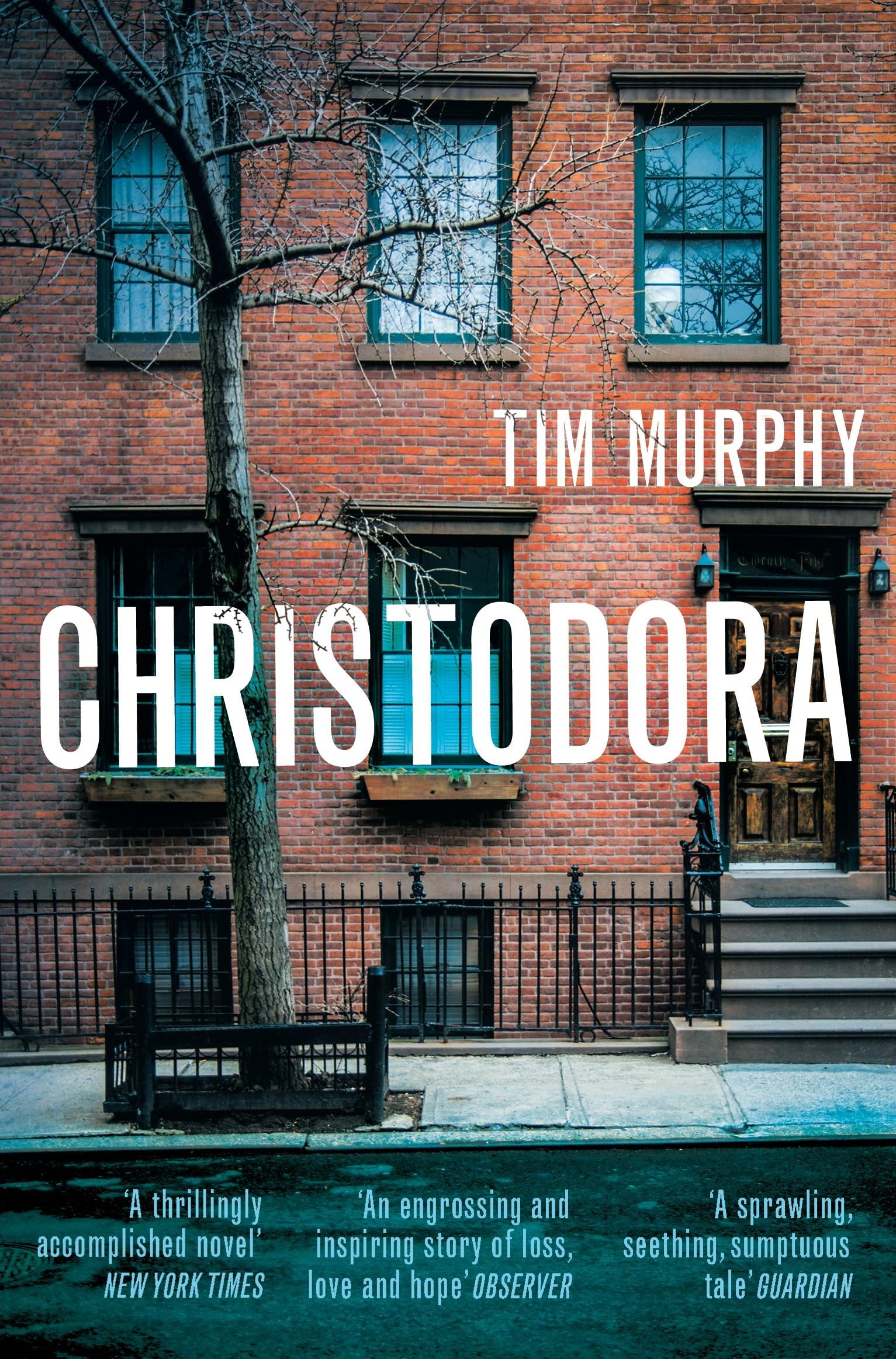

Christodora: Tim Murphy
Product ID: 57004450
Buy anything from 5,000+ international stores. One checkout price. No surprise fees. Join 2M+ shoppers on Desertcart.
Desertcart purchases this item on your behalf and handles shipping, customs, and support to Panama.
Christodora: Tim Murphy : Murphy, Tim: desertcart.co.uk: Books Review: A good book about New York and the AIDS crisis - I really enjoyed this book, although it was very sad in many ways. I thought that the author handled the different 'moments in time' very well and was able to give the reader the insight into the characters - where they were at that particular stage in their lives, why they made the choices they did - as well as using these moments to build up a picture of what was going on in a wider perspective than just these individual characters' lives. He is also very good at creating characters who are believable with their strengths and flaws. The characters had real arcs of change, sometimes more than one. They did good, they did bad. They were up, they were down. "Aint them bodies saints" - well no, they weren't - and they were fighting a government and a society that preferred to sympathize, from afar, with so-called 'innocent victims', when they were not preventing them from going to school or eating off the same plates as them. A government and a society that preferred to demonize gay men for their 'unnatural and filthy' lifestyle, rather than implement non-judgemental methods of prevention and medical investigation. A society that was so revolted by drug-users that it turned away from objective measures that would have slowed the rate of infection, such as clean needle exchange. They put drug-users in prison, where they were able to get even more drugs and had to share needles, rather than spend money on programmes that would have dealt with the reasons why these people were on drugs and helped them to break this destructive habit. I particularly liked to see the depiction of Hector's descent into his own private hell after the release of protease inhibitors, not because I enjoy reading about someone self-destructing, but because this was something that actually happened to a lot of men after the war against AIDS 'ended', whether they were HIV + or -. And it is something that wasn't known or acknowledged for a long time; the psychological fallout of all that death, anger and heartbreak. AIDS 'ghosts'. The end of the book was very poignant, it was both happy and sad. I liked the fact that it was open-ended; had Hector worked it out, and if so, would he tell Matteo or not? The only thing I'm still questioning is the character of Jared and where the author went with that. There were things that were left hanging like loose threads and there were things that had more than one truth, more than one side to the story and more than one answer. Which gave this book the authentic messiness of real life. And I really felt like I was in New York, a city I've never been to. I felt that I got to know it, and not like a tourist does, but like someone really living there would. Review: Best book I’ve read in a long time - Beautifully and cleverly written saga centring on but not exclusively about the brave and heartbreaking fight for justice by and on behalf of people affected by the AIDS crisis, spanning over 30 years in the lives of wonderful characters, so vividly and deftly portrayed that I felt I knew them personally, and miss them now that I’ve finished the book. I thoroughly recommend it
| Best Sellers Rank | 420,611 in Books ( See Top 100 in Books ) 6,636 in Literary Fiction (Books) 6,975 in Social Sciences (Books) 9,373 in Contemporary Fiction (Books) |
| Customer reviews | 4.6 4.6 out of 5 stars (1,060) |
| Dimensions | 13.1 x 2.8 x 19.7 cm |
| Edition | Main Market |
| ISBN-10 | 1509818596 |
| ISBN-13 | 978-1509818594 |
| Item weight | 1.05 kg |
| Language | English |
| Print length | 448 pages |
| Publication date | 24 Aug. 2017 |
| Publisher | Picador |
| Reading age | 18 years and up |
F**S
A good book about New York and the AIDS crisis
I really enjoyed this book, although it was very sad in many ways. I thought that the author handled the different 'moments in time' very well and was able to give the reader the insight into the characters - where they were at that particular stage in their lives, why they made the choices they did - as well as using these moments to build up a picture of what was going on in a wider perspective than just these individual characters' lives. He is also very good at creating characters who are believable with their strengths and flaws. The characters had real arcs of change, sometimes more than one. They did good, they did bad. They were up, they were down. "Aint them bodies saints" - well no, they weren't - and they were fighting a government and a society that preferred to sympathize, from afar, with so-called 'innocent victims', when they were not preventing them from going to school or eating off the same plates as them. A government and a society that preferred to demonize gay men for their 'unnatural and filthy' lifestyle, rather than implement non-judgemental methods of prevention and medical investigation. A society that was so revolted by drug-users that it turned away from objective measures that would have slowed the rate of infection, such as clean needle exchange. They put drug-users in prison, where they were able to get even more drugs and had to share needles, rather than spend money on programmes that would have dealt with the reasons why these people were on drugs and helped them to break this destructive habit. I particularly liked to see the depiction of Hector's descent into his own private hell after the release of protease inhibitors, not because I enjoy reading about someone self-destructing, but because this was something that actually happened to a lot of men after the war against AIDS 'ended', whether they were HIV + or -. And it is something that wasn't known or acknowledged for a long time; the psychological fallout of all that death, anger and heartbreak. AIDS 'ghosts'. The end of the book was very poignant, it was both happy and sad. I liked the fact that it was open-ended; had Hector worked it out, and if so, would he tell Matteo or not? The only thing I'm still questioning is the character of Jared and where the author went with that. There were things that were left hanging like loose threads and there were things that had more than one truth, more than one side to the story and more than one answer. Which gave this book the authentic messiness of real life. And I really felt like I was in New York, a city I've never been to. I felt that I got to know it, and not like a tourist does, but like someone really living there would.
J**P
Best book I’ve read in a long time
Beautifully and cleverly written saga centring on but not exclusively about the brave and heartbreaking fight for justice by and on behalf of people affected by the AIDS crisis, spanning over 30 years in the lives of wonderful characters, so vividly and deftly portrayed that I felt I knew them personally, and miss them now that I’ve finished the book. I thoroughly recommend it
R**E
This is a book that was recommended to me by a book tuber on You Tube
This is a book that was recommended to me by a book tuber on You Tube. It took me ages to get into it but it was worth it. Christodora turns out to be a home where Jarred and Milly live. I thought this fitted in well for Gay pride month. Hector next door is gay. He’s an addict and very down on his hunkers. Milly and Jarred have an adopted son, living in New York he grows to see all that it has to offer and life itself. Plus his personal realisation. Hector the neighbour and themselves become very intertwined as the story enfolds. The history around everything was a reminder of struggles in the past too. The world was troubled with the AIDS epidemic and everything that surrounded that. The fear, the unknown and the hate on gays. This book span some 40 years. It’s a chunkier of a book but it won’t feel that way once you are 1/4 of the way through.
S**3
Remarkably moving, vibrantly alive.
I have just finished this book. Literally. Put it down and walked over to the kitchen table to write this. I should have, could have, finished it some time ago. I simply didn’t want to. That would mean losing contact with characters I cared about. But, inevitably, finish it I did and I can say without a doubt it has affected me more profoundly than anything I have read for decades. As a gay man in his 50s I came of age when the AIDS crisis hit. Of course, many friends died. And some survived and lived, it seemed, startled and traumatised and lost. Christadora tells a story about those people and beyond with an open humanity that serves as both a great testament to and a beautiful gentle reminder of those who were lost and those who were left to deal with their loss. I didn’t know exactly what the book was about when I came across it. I just noted it dealt with New York in previous decades and I felt, given the ugliness and hatred and fear so increasingly on display in the US ( and around the world ) that I needed to read about an America that had gone, good and bad. This Christadora allowed me to do. But I did not expect to be as moved as I was and, on finishing it, to find it such an affirmation of the small but unrelenting triumphs of the human spirit in the face of an existence so confounding it threatens to bury us more often than not. Thank you, Mr Murphy for writing a book that, when I finally put it down, I found had made my tired, middle aged eyes, look at loved ones and the less loved, those still here and those lost, with rekindled warmth.
J**E
What a stunning, epic novel of 6 lives intertwined ...
What a stunning, epic novel of 6 lives intertwined through a building and spanning 40 years. Sometimes harrowing, always caring for the flawed characters. It was far more emotional than I expected. I didn’t want it to end!
H**W
Good book .
I could not put this book down *****
G**N
Exquisitely human but at times frustratingly aloof
There's no denying the beauty of the writing in Christodora: in its characters and its world-building, it is woven through the novel like golden thread. At times though I felt as though I was being held at arm's length by the author, which chimes with the emotional journeys of the protagonists, but isn't exactly satisfying for the reader. On a number of levels I was pleased to reach the end of the story, for which Tim Murphy reserves some of his best work. Finely and expertly wrought then, if a little aloof.
P**Y
This is certainly the best book I have read in the last year and I have read over 100. This is the captivating story of various residents of the Christodora Building in the East Village of Manhattan throughout the years. One of the character is an AIDS activist at the time where there was so much much to be done. It explores the points of view of women, gay men, drug users who were battling with this disease in a way that is compelling and authentic. Everything about it feels true because I remember going though it myself during these difficult times. You do not need to be directly involved in the AIDS movement to appreciate this book as it describes human emotions and relationship in their most poignant expressions. I cannot say enough about this book. Read it please.
P**Q
En plus, l’auteur arrive à restituer le fil des pensées de chacun des personnages. Long, certes, mais ça en vaut la peine. Et on y retrouve NY, vraiment bien évoquée, à travers les 40 dernières années.
G**L
It's only August, but I think "Christodora", by Tim Murphy, will be my favorite work of fiction for 2016. But, even while saying that, I must stress that this book is not for every reader. It's a big, brawling epic, taking place from the 1980s up til the mid-2020s. At almost 500 pages, there's scarcely a wasted scene or unsketched character. It's the story of the AIDS epidemic told by using both gay and straight characters who come together in New York City, and later in Los Angeles, to portray how lives were affected by AIDS and the use of drugs. It's also the story of how love and understanding and time helped mend some of the broken lives. The Cristodora was a building in the East Village that went through gentrification in the 1980's and 90's. The apartments were rehabbed and bought by people in the arts and social activists. One apartment was occupied by Millicent and Jared Traum and their adopted son, Mateo. The Traums, both artists from liberal families, adopted Mateo, the son of a young Hispanic woman who died of AIDS. Seeing an artistic temperament in the orphaned child, they raised him but he never seemed to totally bond to them. Of course, they didn't fully understand him and he didn't understand them. Why had they adopted him? Why hadn't they had "their own child"? Where was his "real" mother? But the Traums didn't raise young Mateo in a vacuum. Their families and friends helped with him and these characters are written with beauty and purpose by author Tim Murphy. Murphy writes brilliantly of the times, using his characters. None are caricatures and the reader should sympathise with them all, even while possibly not identifying with them. From Hector, the AIDS activist who lost his lover and descends into a hell of drug use to deal with the pain, to Drew, a young woman who is able to shed a drinking and drugging problem to live a good life, while not forgetting how bad those years were. She's able to reach out and help others, including Mateo. There's a lot of drug use and sex in "Christodora", but the sex scenes are integral and organic to the story. The passages about the drug usage are harsh and gritty. This book should not be read by someone easily offended by sex and drug scenes. But to the right reader, who can put those scenes together with the beautifully written prose, the book's a winner. EDIT: When I read and reviewed the book, I had no idea the Christodora was a real building. It is, as I just read in an article published in the New York Times on 9/1/16. The article is well-worth reading after you read the book.
C**9
Really enjoyable read, full of credible characters. Some were annoyingly spoilt and privileged, others were sad and unlucky in what life threw at them. Covered a period of American history which I knew little about. Would certainly recommend it.
E**Y
Really enjoyed this
Trustpilot
1 month ago
2 days ago