
Buy anything from 5,000+ international stores. One checkout price. No surprise fees. Join 2M+ shoppers on Desertcart.
Desertcart purchases this item on your behalf and handles shipping, customs, and support to Panama.
๐ Unlock Japanese fluency with the ultimate beginnerโs toolkit!
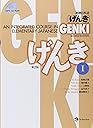
Genki 1 Textbook is a top-rated, comprehensive elementary Japanese course integrating reading, writing, listening, and cultural lessons with immersive multimedia and Kanji practice, published by the trusted Japan Times.

| Best Sellers Rank | #112,448 in Books ( See Top 100 in Books ) #1,214 in Language Learning & Teaching |
| Customer Reviews | 4.8 out of 5 stars 2,841 Reviews |
N**M
Good
Wonderful book
R**I
Good!
Helpful!
A**A
Excellent book for classroom environment
This is a great book for classroom environment , as most of the practice questions are based on interactions between students, like ask each other questions, make a list of each other likes and dislikes , present a project work in english in class and translate it to japanese, so most of questions are like based on that approach , so this is something you need to keep in mind, you can see i have posted some images of exercise that show pair work questions, many questions are based on group work etc, so all in all a great choice if you are in any university or learning school with mates .....
C**A
Great to start your learning journey!
Genki is a great textbook to start learning Japanese. Pros: 1. Lots of exercises 2. Clear grammar explanations 3. Many example sentences 4. Dropping the use of Romaji after Chapter 2 (really helpful) 5. Contains summary points and cultural references 6. Native recorded audio 7. Beginner-friendly Cons: 1. Available only in English (unlike Minna no Nihongo) 2. Exercises are suited to classroom environments 3. Not good for learning Kanji Overall, it's a great book to start learning Japanese (either self-study or school). And, there are lots of extremely useful resources that you can find on the internet for this book. I suggest you start with this book and supplement it with other materials for Kanji and vocabulary. Happy learning!
O**R
Well Thought-Out Beginners' Course for English Speakers
Japanese is a very difficult language for English speakers to learn. If you've learned some French or Spanish (as I have), forget about it! Japanese is many times more difficult. That being said, Japanese is also more interesting, in that it has a completely different structure and forces you to think differently. Genki does a good job of presenting Japanese is an orderly fashion. The authors are all native Japanese speakers, and there are a few places where they make mistakes in English, but those small errors do not take away from the text. Genki could use a few more sample Japanese sentences, though. For example, when they present a new pattern, they often provide just a couple of examples when ten or twelve would be better. I suppose they assume (correctly) that this book will mostly be used in a classroom setting, and that the teacher will provide additional material. In the end, Genki is a good textbook, but you will need more help if you are going to learn to speak Japanese. That is not the fault of the authors, it is just the way it is.
C**S
Best way to start learning Japanese
I've gone through the whole book, and the second volume. I can definitely say that this one of the best ways to get your foot in the door for learning Japanese. It teaches a good chunk of vocabulary and kanji, but more importantly, it teaches all of the basic grammar. Each lesson is formatted as a reading which you go through, followed by a vocab dump, then the lesson grammar, then practice. There is also reading and kanji that you're expected to learn at the back. Even though it's a bit pointless, it also comes with a cd that has audio for the book, which you can use for listening to the vocab. The CD is also used for listening practice. There are alternatives to this book such as Tae Kim's Grammar guide which is free, or Minna No Nihongo which is the other "Beginner Japanese Textbook" but I prefer Genki over them. It is also worth noting that many people also prefer Genki over those so guides and blogs are really common for Genki. If you do chose to buy Genki, here are my recommendations: 1.) Get Anki. It's a flashcard app. If you are learning Japanese, Anki will be shoved in your face non-stop. So get Anki and get a Genki flashcard deck. 2.) Don't just rely on Genki for Vocab or Kanji. Genki teaches the vocab it needs to teach it's grammar points, and a good chunk of N5 (JLPT, Japanese Language Proficiency Test) vocab. But, you'll need more vocab then what Genki provides to get anywhere in Japanese. I recommend downloading the Core 2K/6K deck for Anki. Same deal with Kanji. Genki gives you a good base, but it isn't enough. Get a dedicated Kanji source. Like James Heisig's Remembering the Kanji, or WaniKani. 3.) The Practice Section. Do them if you like. If you choose not to do the practice, which I did, then make absolutely sure that you have those grammar points as flashcards. Heck, even if you do the practice, still turn the grammar points and every sentence using them into flashcards. You will forget them if you don't 4.) Don't ignore listening. Any textbook will make you good at reading, and somewhat decent at speaking (In the sense that you'll know how to say what you want) but doesn't do anything for listening. Good luck having a conversation in Japanese if you can't hear what they're saying. So do the listening practice. Go further and find other sources to practice listening. Listening is Genki's biggest weakness.
A**N
Good Japanese Textbook
I like the Genki books. I grew up speaking Japanese and have gone to Japanese school and taken college level Japanese courses. I would have to say that this book compared to another one I have used is more user friendly. I liked the way that it is organized. To me, it is a pretty good introductory Japanese textbook. If you are an independent learner, it may not be the best textbook to learn from. There are a lot of group activities to do in the book. It would be great if you have someone to do it with. Also, I think it needs more examples or more exercises to practice the grammar/vocabulary introduced. A supplement might be good, not the workbook. The workbook have examples, but I can't figure out if I am right or wrong. It did not come with an answer sheet. I usually ask someone I know. There are other supplemental sources. I just want to say something about textbooks in general. Not all of them will suit a person's learning style. They are all different and they all suit each person differently. I just happened to like this one way more than Yookoso. As for the romaji issue, I personally did not care for it. If you are serious about learning Japanese, then learn Hiragana and Katakana ASAP. That is what will help you in advancing in your Japanese language learning. It opens up more doors in learning the language. Also, the textbooks are teaching basic grammar. Yes, there are several ways to say one thing, even in English. It really is up to the person to practice and eventually a particular style or way of saying things will be more familiar. I have spoken to Japanese people. I would say it one way and the other person would correct me by telling me a different way of saying it. Both ways were correct. One way was more mature. It has to do with style and familiarity and maturity level. It all comes down to continually learning the language.
M**U
TOP
รฉ quello che cerchi quando stai studiando una lingua. Un manuale chiaro, esaustivo nelle spiegazioni, semplice, con tanti esercizi, una buona integrazione audio, con un indice che ti riporta tutti gli argomenti di grammatica e i pattern (e non generiche situazioni). quindi semplice da consultare, da avere sempre a portata di mano. Forse un po' costoso...? anche considerando che per la completezza ha anche un book esercizi, e che per arrivare ad un N4 c'รจ il GENKI II, con relativo book esercizi... in sintesi: Ne vale la pena? SI.
T**M
Good book!
Great textbook to start learning japanese. The quality of this book is great. Wrapped in plastic, pristine edges.
S**T
Beginners will love it, intermediate "experts" will sneer at it...
For best results: Genki textbook 1 and Genki workbook 1. Genki vocabulary app. There's a kanji app as well. This is useful later, not right away. Get aquatinted with the website - genki.japantimes.co.jp. - There is an answer key. Personally I recommend the answer key book. Initially I did think it was a waste of time as it's completely in Japanese, however later in the book you will know enough to use it and I'm glad I did. What the course covers - very brief summary. Reading/Writing Hiragana and katakana (collectively known as kana) Reading/Writing Kanji (later in the book) Lessons appear to range progressively from new beginner to intermediate beginner by end of the book (or there abouts) Correct Vowel pronunciation Modified and extended sounds Speech patterns Sentence structure (correct and incorrect ways the structure can be modified) Vocabulary - I can't really sum it all up. There's loads, like tons and tons. The dictionary form of the words - and how they are used/modified in speech depending on situation and tense (it's explained in the book...I really can't break it all down for this little review...) Telling the time Directions Daily objects Activities Nouns Adjectives Verbs Example conversations and dialogue between colleagues, friends, strangers in different situations. Audio cd with listening tasks, volcabulary/pronunciation practice and example conversations. Also some information (generic but useful) on cultural/social behaviours or expectations. Things to expect from the course and things to be realistic about: The book expects you to learn to read and write in Japanese kana and kanji, not the English "Roman lettering" (aka romaji) English letters used to write out the Japanese words. The book has this at very early stages and it's good to see at the start, it is useful at the start, but, you must learn the kana to get anything at all out of this book. Enjoy learning it, make it fun, don't stress over it, the more you do it the easier it gets and you start to see the patterns develop in the kana. It's a beginners book, however, It needs you to understand a massive amount of information. This book will guide you through a structured learning process which is far better than randomly learning words from some free flash card app online and haphazardly googling how to actually speak/write in Japanese or from phrase books. This book and supplements can be used effectively to aid home study although it Is important you understand that this book is intended as a supplement to a language course and the assumption is that you are in a university/college/class environment with a competent native (or native level) tutor. Lessons in the book are planned and intended to be completed over 6 hour blocks each and include sections spread over sentence structure, vocabulary, listening, speaking and writing practice (kana and kanji). You can obviously work at your own pace in your own home but this is effectively a class curriculum text book so unless you are willing to put in some extra thinking then you may not get the full benefit. This is something you should be aware of prior to purchase. That and the fact that you are responsible for learning the content of the book, solely you and no-one else, if you don't try and put in effort then it doesn't matter what book you have. Good news however.... The textbook and workbook has a support site - genki.japantimes.co.jp. - This has more content that the book can be used in conjunction with. Including more reading, writing and listening tasks. There are also a couple of Genki apps for iPhone/pad (costing around ยฃ5 each or at least that's about what I paid) which break down the vocabulary as per each lesson into flash card decks so you can focus on the vocab specific to your lesson and if you want create your own flash card deck as well. Handy, but it's not necessary. There are plenty of free resources out there, personally I paid for the apps for nothing more than lazy convenience. You should be aware that the book will essentially be teaching Japanese language largely in what's considered 'formal/polite' without complicating things much with varying dialect and colloquialisms. It is essentially giving you a foundation to work with. It's your responsibility to do the tasks, then re-do them, use the audio regularly, listen over and again to the vocabulary examples, redo the tests over and again, don't be shy in going back to the start of the text book and redoing the earlier tasks to see how you are progressing or as a refresher. I recommend write the tasks out in a notebook (more practice so why not...) instead of on the page so you don't need keep rubbing everything out. Some reading and doing a task once isn't enough to actually learn effectively. It's all on you to study and put the time in if you aren't prepared to do that or think outside the box then it'll be a flop. You can find Japanese bands to listen to, order some kids Japanese books to read over (Amazon.co.uk funnily enough has a ton of actual story books in Japanese format from their own stock or third party sellers) find Japanese TV programs to watch with and without the subtitles just to get your ear tuned to different voices and accents using the language, yes, even though you don't understand any right now. As you study and re-read and re-listen to these things you will start to pick out the different words and slowly begin to understand the language a bit better each time. You will also begin to see some of the differences in formal/informal of the book and the other media and the modifications of the language. Hard to explain but when it all starts coming together you will understand. Beware the intermediate "experts"!! There are a lot of people that will study Japanese using this and similar text books, then, during later or more advanced stages of their language learning process (or even living abroad or communication directly with a Japanese person) decide that those 'foundation building text books' are rubbish because they don't cover general daily informal or colloquialisms very well and there has been what feels like another laborious or frustrating learning curve. There is no one single book out there that will do it all. To say this book isn't any good is fine when you have already studied these books, been given a foundation and then started to actively learn and immerse yourself your own way in to learning Japanese, at your own pace with a focus on your language requirements to suit your needs. Until then though, these genki books are great and shouldn't be overlooked due to not satisfying everyone at different stages in the process. This text book is not a learn all solution, it's a beginning. If I I say enthusiastically that this book is 'amazeballs' you likely know what I mean, even if you need to think about it for a second, however, an abc English speaker won't, they'd likely nod enthusiastically based on your excited tone and body language because they don't have the agility within the language to piece together wtf you are talking about....did you catch that there? made my point yet? :) Where you take the knowledge after words is up to you. Depending on your situation, once you have gone through the book, you still won't be a fluent Japanese speaker, you will however have a solid understanding of the foundation points of the language and enough to hold a good, basic conversation, ask questions and understand answers and vice versa. Likely any interaction with native Japanese speakers will still leave you feeling that you just haven't quite got a natural conversation flow (and yes it will likely feel like having to re-learn things) however, you will learn how to change some of the speech patterns or structures or learn to modify the politeness level of a statements or how to conjugate words to express more natural sounding Japanese in your situation over time or with further intermediate/advanced study. This is no different from the way people would be generally taught to speak English in school while talking differently with your friends outside of that environment, work or home life. There are certain things you would say to your friends but not your manager at work. You do these things, changing your tone or wording on the fly as a native speaker. This learning curve isn't generally noticed in great detail when your young learning your native language because it's just how things are, you learn what's appropriate for what situation, you learn to mimic and don't over think it. Example you were not taught that "was not" can be shortened to "wasn't" within the same lesson in school, that comes later. Likelihood you were able to use "wasn't" in a conversation before it was explained to you why "was not" and "wasn't" had the same meaning and how to write it on the page... There are many written elements in Japanese (and other languages) that are completely negated from verbal communication, this book explains those omissions. Remember Languages are for the most part, ever evolving and open to individual interpretation as well as influenced majority social behaviour. Just look at some of my glaring spelling mistakes and poor grammar and misuse of punctuation and I'm a native English speaker!!! :) <insert smiley face to reinforce the playful self deprecation and light humour>, won't find that in a "learn English" textbook, doesn't mean it's not a good book. The basics in this book will take you from the basic "a wa b desu" sentence structure and build up from there. It will introduce you to new vocabulary regularly (you're responsible for your own revision of the vocab provided in the book....and there's tons!) and how that vocabulary is used in different situations. The book encourages you to write out the majority of content several times with different variations on subject matter, teaching you how you can utilise the same structure and apply to different tasks or topics. The book etc are enough for self study and basics but I can't stress enough of how beneficial it is to find a class, native speaking (or non native but fluent Japanese) tutor if you want to learn to hold a conversation with someone. That said, once you have even a small foot hold with the basics of the language then everything about it becomes a less intimidating and in general bit easier. The initial jump into the language is a lot to take in, but, you need to do it. No point humming and hawing about wether you should or not, just do it, worst case scenario you wasted some hard earned cash, but at least you made a choice and got it out your system or you've found yourself a new passion. If not then just don't scribble in the books and maybe you can sell them on as "nearly new" and recoup some of your money. How useful you that feel this book has been to you will be based on the reason you want to learn Japanese and what your end goal is with the language although you need a foundation. For example, you want to read manga, light novels or play through Japanese video games. Maybe you want to be able to watch anime without the subtitles or maybe you want to eventually live or work in Japan. Either way you need to start somewhere. It's a good buy and will have you reading, writing and speaking Japanese at a very basic level at least. However!! Big however, Speaking and listening are a completely separate entity from reading and writing when it comes down to it and no amount of book study will prepare you for the first native sentence that gets spoken to you outside of a controlled or scripted environment. That is fine, and it's up to you practice listening and get confidence...likely by making an effort to find a tutor. It is likely that your reading and writing will far outrun your conversation ability, and that's fine. Use it as it is intended as a supplement. On its own, it will teach you enough so you can grasp the basics and write and speak at a very basic level. With that foundation though you can experiment with other teaching resources ideally some form of one to one or group conversation specific class. Ultimately if you if you don't put in the time and effort (possibly money) you will struggle. There's plenty out there to support learning Japanese but you need a starting point and the Genki curriculum won't put you wrong. I really hope this helps. It's hard to sum up this book up because it contains a lot, it really does. How useful it is is going to be down to your goal. For me eventually living and working in Japan, for right now I can comfortably read through a lot of lower level manga, light novels and watch anime and programs. Don't get me wrong, I'm not saying I understand it all, it's just comfortable and I'll pencil and paper to scribble notes or new words down to check on a site like jisho.org. Or bounce of my tutor. Hopefully this is a little more helpful a review than "arrived on time, great service" or something like that. Happy studying :)
Trustpilot
2 weeks ago
1 month ago