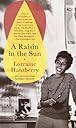

"Never before, in the entire history of the American theater, has so much of the truth of Black people's lives been seen on the stage," observed James Baldwin shortly before A Raisin in the Sun opened on Broadway in 1959. This edition presents the fully restored, uncut version of Hansberry's landmark work with an introduction by Robert Nemiroff. Lorraine Hansberry's award-winning drama about the hopes and aspirations of a struggling, working-class family living on the South Side of Chicago connected profoundly with the psyche of Black America—and changed American theater forever. The play's title comes from a line in Langston Hughes's poem "Harlem," which warns that a dream deferred might "dry up/like a raisin in the sun." "The events of every passing year add resonance to A Raisin in the Sun ," said The New York Times . "It is as if history is conspiring to make the play a classic." Review: Awesome read! - Many levels of reflection for all races. People of all ages can learn a lot about the intersections of all ascribed characteristics of the human experience at any given time in life and around the world. Review: Classic - Lorraine Hansberry's A Raisin in the Sun is a timeless masterpiece, and rereading it as an adult, especially as a Black person, brought a deeper and more personal connection to its themes. When I first read it in high school, I appreciated its powerful story and memorable characters. But now, with more life experience, the play resonates with me on a profound level, reflecting not just a universal struggle for dreams but also the unique challenges faced by Black families in America. The Younger family’s story feels like a reflection of so many real Black families striving for a better life despite systemic racism and societal barriers. Walter Lee’s frustrations and desperate yearning to be seen as a man of worth hit differently now, as I understand the weight of expectations placed on Black men. Lena (Mama) Younger’s unshakable strength and her unwavering hope for her family’s future remind me of the sacrifices and resilience of generations of Black matriarchs. And Beneatha’s search for her identity as a young, educated Black woman mirrors conversations and struggles that remain relevant today. Hansberry captures the nuances of the Black experience with poetic authenticity, from the microaggressions the family faces to the unspoken pressures of representing and uplifting the community. The scene where the Youngers refuse Karl Lindner’s offer to sell their home is an act of defiance that feels deeply personal—a powerful reminder of the dignity and courage it takes to stand firm in the face of racism. Rereading A Raisin in the Sun as an adult reminded me how much of the Black experience is rooted in love, sacrifice, and hope. It’s not just a story of struggle but a celebration of our strength and perseverance. This play remains a cornerstone of Black literature and American theater—a work that evolves with time but always stays true to the core of what it means to dream, to fight, and to rise.


| Best Sellers Rank | #55,093 in Kindle Store ( See Top 100 in Kindle Store ) #3 in Black & African American Dramas & Plays #5 in United States Drama & Plays #5 in Dramas & Plays by Women |
A**Y
Awesome read!
Many levels of reflection for all races. People of all ages can learn a lot about the intersections of all ascribed characteristics of the human experience at any given time in life and around the world.
J**Y
Classic
Lorraine Hansberry's A Raisin in the Sun is a timeless masterpiece, and rereading it as an adult, especially as a Black person, brought a deeper and more personal connection to its themes. When I first read it in high school, I appreciated its powerful story and memorable characters. But now, with more life experience, the play resonates with me on a profound level, reflecting not just a universal struggle for dreams but also the unique challenges faced by Black families in America. The Younger family’s story feels like a reflection of so many real Black families striving for a better life despite systemic racism and societal barriers. Walter Lee’s frustrations and desperate yearning to be seen as a man of worth hit differently now, as I understand the weight of expectations placed on Black men. Lena (Mama) Younger’s unshakable strength and her unwavering hope for her family’s future remind me of the sacrifices and resilience of generations of Black matriarchs. And Beneatha’s search for her identity as a young, educated Black woman mirrors conversations and struggles that remain relevant today. Hansberry captures the nuances of the Black experience with poetic authenticity, from the microaggressions the family faces to the unspoken pressures of representing and uplifting the community. The scene where the Youngers refuse Karl Lindner’s offer to sell their home is an act of defiance that feels deeply personal—a powerful reminder of the dignity and courage it takes to stand firm in the face of racism. Rereading A Raisin in the Sun as an adult reminded me how much of the Black experience is rooted in love, sacrifice, and hope. It’s not just a story of struggle but a celebration of our strength and perseverance. This play remains a cornerstone of Black literature and American theater—a work that evolves with time but always stays true to the core of what it means to dream, to fight, and to rise.
M**H
A winner
First off why am I now just reading this glorious play? I must admit within the first couple of pages I was completely sucked in. Lorraine takes a simple family and shows how sexism, racism, and classism, can shape a family for generations. In only 100 + pages I am able to connect to the characters and understand who they are. Walter Lee Jr, is a dreamer, yet very stubborn and emotional. Beneatha mirrors her brother somewhat and is an intellectual who seeks out her place in the world and is not willing to settle. Lena (Mama) the family matriarch is strong willed and tried to maintain her morals and commands respect Ruth is the realist and very pessimistic about life but continues to preserve. These characters are very relatable. One part that stood out for me was when Ruth kept telling Walter "eat your eggs" because she didn't want to hear him still selling her a dream. He responded by saying you always crushing my dreams and that black women are the only women who don't hold their men down. I was completely flabbergasted. This stereotype of black women having to be a ride or die and help build you up manifested right there. Another point of contention for me was when Mama wanted to move the family and the white neighbors said they wouldn't be welcomed there. What bothered me the most was how Mr. Linder stated the white people in that community where hardworking and just trying to have a better life. Is that not what the Younger family was trying to do? Even though we don't have Jim Crow laws today, A Raisin in the Sun hold true to it's themes today. This can be read by everyone but I know it will hit home for AA.
M**Y
AN EXCELLENT PLAY.
EXCELLENT PLAY. I REALLY LIKED READING IT.
J**E
Fantastic read
I was familiar with the 1961 film, but it It was nice to read the full play and the introduction.
G**D
Classic!
Ms. Hansberry left us with a classic story that reflects the dynamics of family life, in this case an African American family, dealing with the struggles of race, class and culture that remains relevant to this today.
C**R
Classic Play
Every website I looked up when researching about the Great Migration for my paper this past semester brought this play up. A Raisin in the Sun is about housing discrimination & was inspired by the Supreme Court Case Hansberry v. Lee (1940) in which the author’s father participated in. This is also the first Black-written play that hit Broadway in 1959 (we love Black Excellence 💃🏾✨) This was an interesting read, I’m not going to lie. The grandmother, Lena & matriarch of the family, receives at $10,000 life insurance check in the mail (worth about $89,000 in today’s currency). The family has ideas on how they want to spend it, however at the end of the day Lena has the final say. She chooses to put a downpayment on a house in a white neighborhood. Unfortunately this caused Karl Lindner, a representative of that neighborhood, to come over & strongly suggests they let him by them out so the neighbor can remain YT LOL. I understood how Walter Younger, George Murchison & Joseph Asagai represented 3 common Black men at that time HOWEVER WALTER WAS THE WORSE!!!! I won’t spoil the play for ya’ll, but towards the end he made a selfish move that, if any man did that to me, would’ve landed me a charge of 1st degree murder for said man. Whew chile. Black women were (& are) truly disrespected 🙄 This play will give you a better insight on how a majority of families that migrated from the South to the North lived in the first half of the 20th century (& truth be told how some still live to this day).
C**O
Small copy!
Very nice copy just small.
E**.
Inaccurate Transcript
The transcript itself is incorrect. Many parts that are supposed to say "ain't" say am not–for example "you just got your mother's interest at heart, AM NOT you, girl?" when it's supposed to say "you just got your mother's interest at heart, AIN'T you, girl? The same issue presents itself for "yes'm" being changed to "yes's" and there are numerous other errors. Would not reccommend.
A**K
アメリカンドリームや人種差別の本
アフリカ系アメリカ人家庭の現実をつづった、非常に重要な本だと思います。
I**H
Easy as its gets
easier and comfortable to meet your expectation.
A**A
Nice story
I like the book.
A**N
Excellent
A moving play. Though the ending seems somewhat far-fetched.
Trustpilot
1 month ago
1 month ago