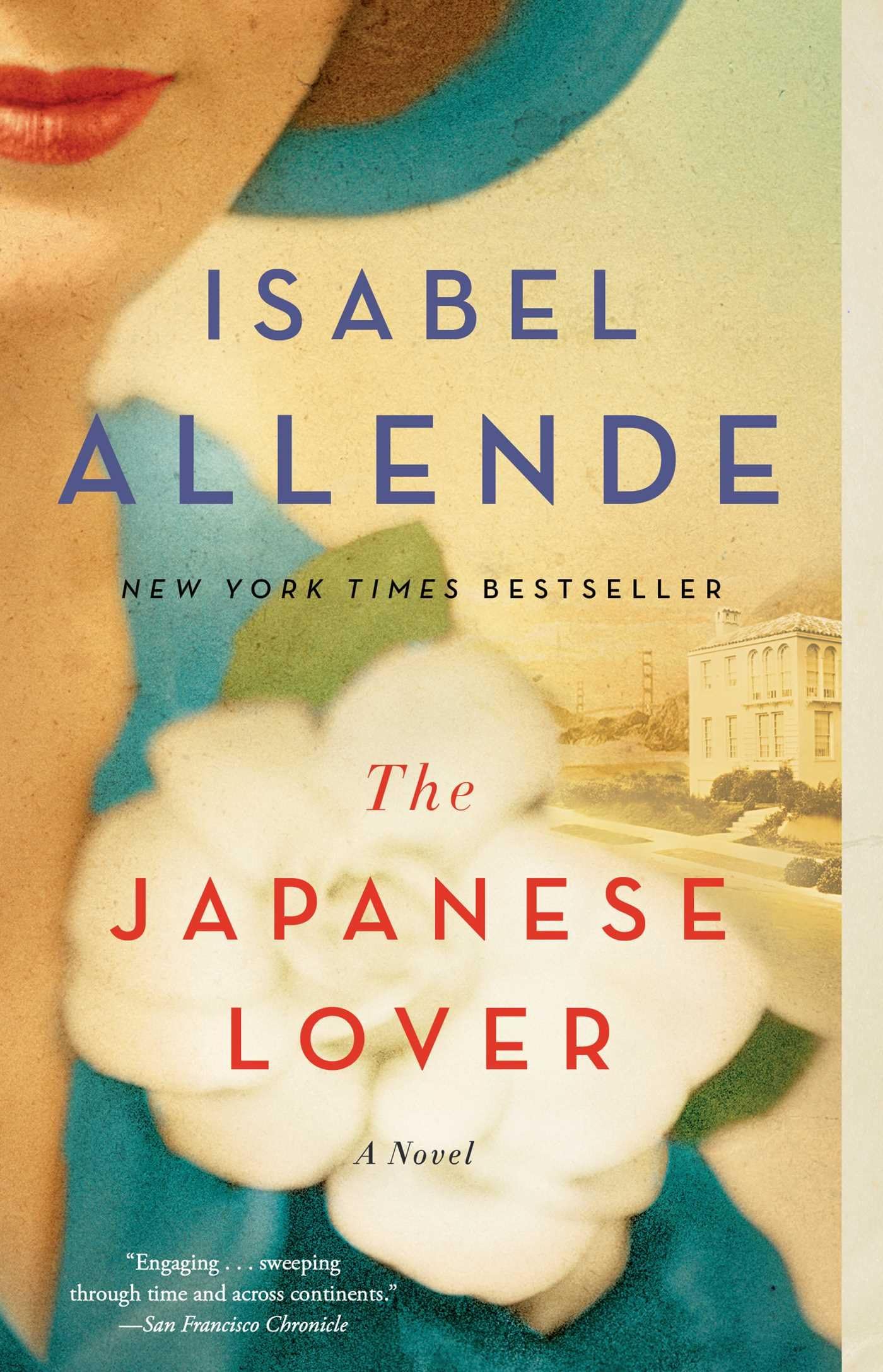
The Japanese Lover: A Novel
Product ID: 110558268
Desertcart purchases this item on your behalf and handles shipping, customs, and support to Panama.
The Japanese Lover: A Novel - Kindle edition by Allende, Isabel. Download it once and read it on your Kindle device, PC, phones or tablets. Use features like bookmarks, note taking and highlighting while reading The Japanese Lover: A Novel. Review: engaging - Each chapter is a new book inside of the book! I enjoyed the reading. I can recommend this book without doubt. Review: Beautifully Crafted and Captivating - The Japanese Lover is a beautifully crafted novel that weaves love, history, and resilience into a captivating story. Allende’s prose is poetic, and her characters feel incredibly real. A must-read for fans of emotional and richly layered historical fiction!
| ASIN | B00URY5CE8 |
| Accessibility | Learn more |
| Best Sellers Rank | #134,294 in Kindle Store ( See Top 100 in Kindle Store ) #212 in Literary Sagas #420 in Family Saga Fiction #639 in Romance Literary Fiction |
| Customer Reviews | 4.2 4.2 out of 5 stars (20,210) |
| Edition | Reprint |
| Enhanced typesetting | Enabled |
| File size | 7.9 MB |
| ISBN-10 | 9781501117008 |
| ISBN-13 | 978-1501117008 |
| Language | English |
| Page Flip | Enabled |
| Print length | 337 pages |
| Publication date | November 3, 2015 |
| Publisher | Atria Books |
| Screen Reader | Supported |
| Word Wise | Enabled |
| X-Ray | Enabled |
A**S
engaging
Each chapter is a new book inside of the book! I enjoyed the reading. I can recommend this book without doubt.
D**2
Beautifully Crafted and Captivating
The Japanese Lover is a beautifully crafted novel that weaves love, history, and resilience into a captivating story. Allende’s prose is poetic, and her characters feel incredibly real. A must-read for fans of emotional and richly layered historical fiction!
P**N
The Japanese Lover by Isabel Allende: A review
I've long been a fan of Isabel Allende's inspiring fiction. Her soul-baring stories most often feature female protagonists and are told through multigenerational family sagas. She continues that tradition with The Japanese Lover. Allende's method is to tell her story through the voice of the all-knowing third person narrator, but, although the narrator may know all, it is revealed to us very slowly, as one after another of the narrative's layers is peeled away. Her style of writing is deceptively simple and unadorned. At least, that is the feeling that I get reading the books in translation. One has to acknowledge that this may be at least in part attributable to the art of the translator, in this case two translators, Mike Caistor and Amanda Hopkinson. In The Japanese Lover, all the major characters are guarding secrets that are considered shameful at the time. In the course of the novel, all of those secrets are uncovered and proven to be not so shameful after all. The ability of the holders of the secrets to share them with others who love them eventually offers a lifting of their burdens and redemption for their spirits. As always in an Allende novel, spirits are important in the telling of the story - both the spirits of the living and those of the dead that are always present with those who loved them in life. Magical realisim rules and it is a benevolent monarch. The main characters here are Alma Belasco and Irina Bazili. Alma Mendel had begun life in Poland with her Jewish family just before the beginning of World War II. As her parents saw the shadows of the coming war lengthening, they determined to get Alma out of Poland and into a safe haven. They sent her to San Francisco to live with a wealthy aunt and uncle there, the Belascos. It was there that eight-year-old Alma met the two people who would be her best friends and more for life, her cousin Nathaniel and the son of the family's gardener, Ichimei Fukuda. They were her solace in those first bleak years. Then the unthinkable happened. After the Japanese bombed Pearl Harbor, anti-Japanese sentiment was rampant in the country and a political decision was made to send citizens who had been born in Japan or were of Japanese descent and born in this country to internment camps. The Fukuda family was swept up and sent with thousands of others to one of those camps, Topaz in Utah. Alma and Ichimei attempted to stay in touch through letters, but Ichi's were heavily censored. He was a gifted artist and he started sending drawings instead. Allende describes the internment camps and the struggle of the people imprisoned there to keep up their morale and to prove to their captors that they were loyal Americans. This part of the story has some sad parallels to the plight of refugees and immigrants to this country in 2015 and the way they are portrayed by certain politicians seeking to curry favor with their racist base. It is chilling to realize that this is exactly the way that the Japanese were portrayed in order to justify their internment. We learn Alma's story through her much older self, a woman in her eighties living in Lark House, an eccentric assisted living facility, as she nears the end of her long and eventful life. We learn that Alma and Ichimei have carried on a love affair for more than fifty years, reuniting again and again throughout their lives, in spite of their own separate marriages and the families they created. It is at Lark House that Alma meets the second woman whose haunted life rounds out this tale. Irina Bazili is a Moldavan refugee who is a care worker at the assisted living center. She has her own troubled past and secrets that she is hiding. She is assigned to help Alma and the two forge a friendship. Moreover, Alma's grandson, Seth, meets and falls in love with Irina. He steadfastly pursues her even though she does not give him the slightest encouragement. Both Seth and Irina love Alma and they are intrigued by mysterious gifts and letters that she receives. They do some investigating and come to believe that the gifts and letters are coming from Ichi and that he and Alma are continuing their passionate affair into their ninth decade. The narrative shifts from past to present and back again from the 1940s through 2013, and through it all, the notion of a spirit world hovers. That notion is finally made real in the novel's poignant denouement, and, as is Allende's trademark, she leaves us with these progressive and hopeful spirits.
D**N
Most of the novel falls totally flat. Lots of potential story development wasted
Just before WWII, a son of Japanese nursery man falls in love with an Polish Jewish girl who escapes to a luxurious home in SF without her parents who are killed by the Nazi. The story follows them into adulthood and then to the verge of death. The woman has an interesting assistant, an escapee from brutal parents. In addition one of her grandchildren is curious about her past and why she stays away from her retirement home for days. The two children will never be able to grow up to marry or meet openly because of cultural and political barriers. So much potential for a deep story. But the best I could give this one is three stars. The tale that is flatly written like a dull book report for at least half the book. It is a tale of forbidden love but the depth of the love is only shown in a series of letters that are set down between some of the chapters. The rest is an explanation of why they were written and why the love could not be. Page after page we get "and then this happened, and then this happened." It read like a ninth grade book report with lots of passages lifted from somewhere else. Very little feeling in those statements and nothing is truly developed. There are some well developed lovely scenes of love making but nothing explicit (which is a nice for a change). The second half is the real book because it does develop the characters somewhat and explains how they kept their love a secret. There are some letters written from the Japanese man to the now married woman that are lovely but there are not enough of them. There is also a side story of the Polish woman's husband realizing he is a homosexual but those passages almost seem to be an obligation to satisfy the "modern" audience.If I were able, I would rewrite the book with the letters being the focus and provide many more of them. Then I would write the back story and the on-going side story. I would have stopped reading this book half way but I read it for a book club and I wanted to see if it got better. It did finish it but I am sorry I wasted my time. I honestly do not know what the hype is about.
L**.
Isabel Allende has done it again! A marvelous tale, a wonderful 'escape'
This is a story of love, both requited and unrequited. It’s a complex novel of a young Jewish girl, sent to live with relatives in San Francisco as her native Poland falls to the Nazi’s. She’s frightened, alone, and extremely bright. She becomes the apple of her uncle’s eye. And as a child meets the son of the Japanese gardener. They become fast friends, and when sent to the concentration camps, they correspond. His letters to her are highly censored, so he uses his talent of drawing to send her pictures, which she can interpret. Allende follows the protagonist not just through her life, but also through the political times she lives through. We meet her late husband, and several of her friends both long-standing and new. This book deals with complex characters and complex forms of love and romance, and is a beautiful book with a satisfactory ending. I needed a tissue when her husband died. (Can I get involved in a good story? indeed I can!) I truly enjoy living in Allende’s universes. She has never let me down.
L**L
Great read. A love story with a twist. Insights into old age, sad but lovely. Good read for anyone. Examines the true meaning of love. Who are actually lovers? What is the price of love? What about when you can't or won't pay?
E**A
I have red all Allende's books, and as time goes by her style has getting better and better. With this book she traces a love story that lasts almost all twentieth century. Thanks Isabel for so interesting and informative history background on this book!
C**L
Les personnages sont touchants, et l'intrigue très bien construite. J'ai eu beaucoup de mal à lâcher le roman avant de l'avoir fini! Ici, Isabel Allende évoque des thèmes récurants de ces précédents romans. Cependant, puisque c'était mon premier roman de cet auteure, j'ai trouvé ça très agréable à lire. Je recommande :)
T**A
von Isabel Allende, mit einem etwas schweren Thema, das Älter werden. Anfangs ist das Buch schwierig zum Lesen. Aber beim Weiterlesen hat man den Eindruck, die Darstellern kennzulernen und sie wachsen uns ans Herz. Ich habe das Buch geliebt. Es ist eben von Isabel...
D**E
I have enjoyed most of Isabel Allende's books. This is one of her best. She examines life in USA for different age groups and ethnicity during the 20th century. The Japanese Americans who were interned during WW11, some references to the Holocaust, life among the rich and famous and the fate of older people who need care. The unwrapping of the sexual abuse of one character is described tenderly. Ms Allende gives a compassionate view of them all in her usual interesting way. The characters are well written. Her plot is cleverly unrolled. i can't wait to read it again.
Trustpilot
2 weeks ago
2 weeks ago