🔭 See more. Carry less. Capture everything.
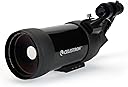
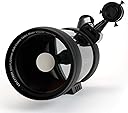
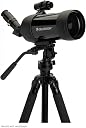
The Celestron MAK 90mm Angled Spotting Scope combines a compact Maksutov-Cassegrain optical design with 39x magnification and multi-coated optics to deliver bright, sharp views for terrestrial and astronomical use. Lightweight and portable, it includes essential accessories like a 32mm eyepiece, erect image diagonal, and finder scope, plus a nylon backpack for easy transport. Camera adaptable for digiscoping, it’s perfect for birdwatching, wildlife observation, target shooting, and casual astrophotography. Supported by a limited lifetime US warranty and expert customer service, it’s a reliable choice for professionals and enthusiasts alike.


| ASIN | B0038QYRDO |
| Best Sellers Rank | #178,688 in Sports & Outdoors ( See Top 100 in Sports & Outdoors ) #47 in Spotting Scopes |
| Customer Reviews | 4.5 4.5 out of 5 stars (367) |
| Date First Available | February 17, 2010 |
| Is Discontinued By Manufacturer | No |
| Item Weight | 4.62 pounds |
| Item model number | 52268-CGL |
| Manufacturer | Celestron |
| Product Dimensions | 15.7 x 10.2 x 10.2 inches |
L**S
Great Spotting Scope
-Excellent scope for spotting. -I specifically bought this scope as a spotting scope for Yellowstone National Park with the idea that if I needed to, it would be a great portable mediocre astronomical telescope in a pinch. - Eyepiece is sub par. I feel they should include a better widefield eyepiece. I have an Orion Stratus 24mm 68 degree, which is no longer available. However, Baader Hyperion would be great as well. I found the 24mm to be wonderful, but I would like to invest in an 18mm Baader Hyperion to further test the scope. My cheap plossl 18mm was disappointing only because the 24mm Orion Stratus was so bright and had such wide field of view. I found binoculars to be helpful for wildlife targeting and using the scope once I found my target. I was able to clearly see a grizzly and cubs 2 miles out with the included eyepiece, so I'm not docking any points. -Sight scope was sub par as well, but I don't need it to do anything but see where I'm pointing my scope, so it didn't matter to me. You can easily fit a good sighting scope, so I am not docking any points. -Digiscoping with my old K30 Pentax was okay. It's not a professional quality telephoto lens, so my expectations were not high. I did not test with a cell phone yet, but I may update in the future. If you want a professional quality telephoto lens, this is not the one for you. However, if you want to have some memories of the animals you could view or practice with astrophotography, this is a great scope for you. I think this scope is a great budget spotting scope and possibly a decent portable astronomical scope. For the price and versatility, it is a great little scope. I was able to see wolves clearly 1 mile out and some grizzlies 2 miles away. Compared to a top of the line spotting scope, no it's not the best. However, people with a budget spotting scope that couldn't see the wolves and bears were able to clearly see them in my scope. I was pleased with this purchase. If you would like added clarity, get a nicer eyepiece. Find a used eyepiece. Mine is used and worked great. Also, as with any spotting scope. Find a nice used high quality tripod. I had an old used manfrotto with a $60 head. With the combo, it was perfect for my needs.
D**3
Awesome little telescope / spotting scope.
Got is as a gift for my wife almost a year ago. She loves how portable it is and how well it works for planets, moon and some of the brighter Messier objects. She has a CPC 11 scope that I need to set up for her every time she wants to look at the night sky. This is a nice quick little scope she can set up by herself. I use it as a spotting scope for wildlife and at the range. It's a great little scope to take on camping trips. The finder is not the best as other people have commented but it works good enough.
G**G
Good Value
This fits the criteria for a light-weight, pick-up and go. The main purpose will be astronomy. I envision plenty of other use cases. I'll stick with the universe. All the components were packed neatly and individually inside the compartments of the carry bag. It took 5 minutes to put together. I had to wait patiently for a tripod (home use) and mini dobsonian stand (road use) to arrive before setting up the finder scope. I also ordered a 90° diagonal for night viewing. The 45° degree is great for birds on the lake, and uncomfortable when pointing towards the planets. The finder scope is fine. It requires a different technique to align your telescope than using a red dot. Complaints in this realm are a matter of preference. Unless you're using a Go-to system, you're never going to point at something you can't see. The views and images are very clear and crisp. My photos through the supplied 32mm eyepiece don't do this device justice. In 5° weather, I opted to point the telescope through double paned windows, a major No-No, but you get the gist. This far, I'm pleased with my purchase
H**D
Good beginner scope to learn what you don't know.
I am a neophyte with telescopes and decided that for what I want to do, this would be a good entry model for me. I was mostly interested in looking at and photographing the moon, maybe some planets, and possible use it for other celestial background photo work. It was also a shot at getting my feet wet before I plopped down thousands of dollars to find out I got the wrong stuff. Turns out this is a good choice to cut my teeth and learn lessons. The unit is fairly rugged, self-contained, and more or less sealed so you can't accidentally mess something up. It is heavy...too heavy for even the best camera tri-pod. Combine that with the Earth's habit of rotating objects out of your field of view fairly quickly, you need a specifically designed tri-pod to handle it. I got the one from Celestron with the azimuth controls so once I get the moon in the telescopes sights, I can rotate some knobs and keep it in view. That works well without having to invest in a "clock" type mount. Photography can be done a couple of ways without investing in those purpose built units which are big on price tags and low in resolution. The first way is to use an adapter to mount a digital SLR body to the unit. The second is what I did, which is another adapter from Celestron that allows you to mount a point-and-shoot type digital camera behind the eyepiece. I used an Olympus TG-2 which worked really well, once you got everything aligned. In some ways, using the rear display of the camera is easier to find and keep your subject in frame. As for the actual quality of the image, I am not an expert. It seems very crisp to me and I don't seem to see any color issues. What is important is setting the unit up correctly. You need to use some local object to "sight in" the cross-hairs in the spotter scope to match what you see in the telescope. Once that is done, it is far easier to find your astronomical targets. It is still weird getting used to the idea of getting my eyes aligned directly behind the eyepiece and about an inch away from it. I also like that the image is "right side up" like a binocular view rather than the flipped over version most telescopes have. This will allow me to use it for nature viewing as well. This unit will get me through my learning phase until I know better what I want and how much money I am willing to spend. I have attached two photos. One is of the telescope on the tripod with the digital camera adapter. The other is the first photo of the moon I took with it.
Trustpilot
1 week ago
1 month ago