

Desert Online General Trading LLC
Dubai, United Arab Emirates
Desert Online General Trading LLC
Dubai, United Arab Emirates
Full description not available
A**O
Beautiful, eye-opening, public-minded anthropology
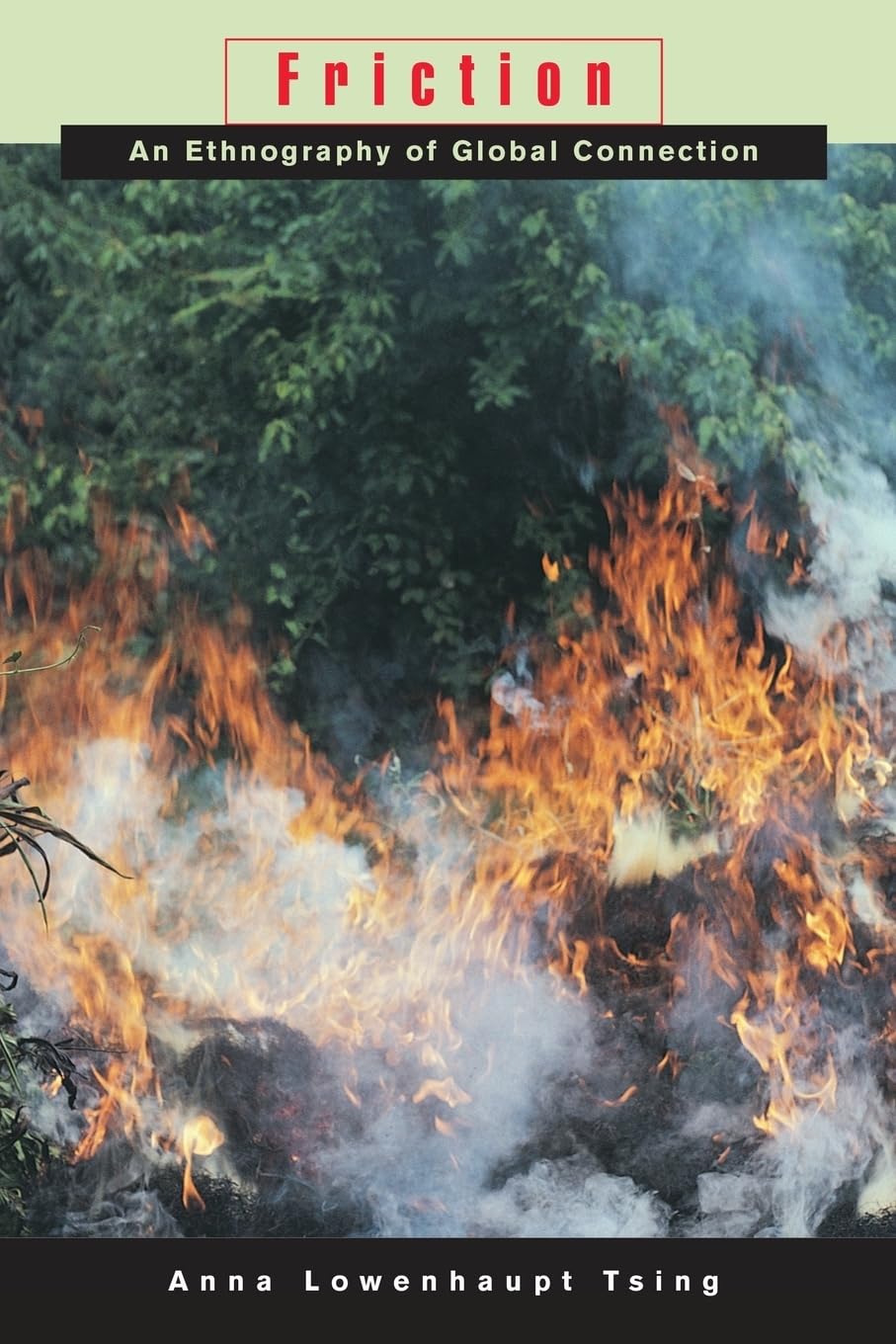
I was surprised to see no review of this book, so I had to write one. It has many interesting facets, but at its core is a vivid and sometimes heart-breaking portrayal of the true face of "globalization" - not the shining abstraction of Thomas Friedman's dreams but a capricious force that scrapes over landscapes, natural environments, and the societies that live in them and often leaves them devastated in the name of progress.I rarely use the word beautiful to describe an ethnography, but this is one such case.I really think this book deserves a wider public outside anthropology; Tsing's insightful observations on the sad fate of Kalimantan should be a lesson to all those who think unfettered free markets and the global economy are the route to salvation.
K**R
Learning journey
Thank you for sharing insightful stories. This has opened my perspective to a new research method of doing ethnography. I hope I can adopt the method for my research as well.
E**Z
I read this book over a year ago in a ...
I read this book over a year ago in a cultural anthropology class, but still remember it as one of the most interesting and fresh reads of the semester. Although it is fairly difficult to grasp the concepts and models that Tsing uses in the book, once the pieces start to connect it gets really exciting. If you start and want to stop, press on-it will be worth it!
R**E
A new view of lookng at the Global Community
Excellent author. College students in traditional age bracket found it difficult reading because it has some heady thought lines and she writes from a different perspective than many anthropologists. Suggest reading this interesting case study on Indonesia's native people on the former island of Borneo, now Kalimantan Indonesia, and their cultural, economic, and social struggles as the outside world invaded their forrest homeland to mine it for natural resources. Government corruption, abusive soldiers, student activists, and international environmental organizations all are included in the storyline.
A**R
SCHOOL
A+
O**S
Yes! This is how it's done.
I picked this up from the city library after a professor showed it to me, admitting she hadn't read it; what a good decision that was! I bought a copy a few weeks later. At this point, I've probably read 'Friction' three times, and once or twice a year I'll pull it off the shelf to graze through Tsing's accomplished prose and absolutely jam-packed observations.'Friction' deals with conflict in the rainforest of Indonesia, but that is a superficial description of a book that reads like a hero-less political thriller set in a multitudinous, global carnival of atrocity, adaptation, and survival. Tsing includes a large cast here: indigenous, rainforest communities, black market loggers, hikers, special forces units, environmentalists, multinationals, NGOs, political parties, and so on. Remarkably, none of these groups are left out as the book comes together. Rather, the reader is treated to a smooth description of the connections that are threaded between all of them, however insignificant they may have first appeared.I am not sure that Tsing's concept of friction (the cultural co-formation occurring in global economy) is really original or functional enough to merit its role as title. It's an old concept that has worn different clothes (eg, 'creative destruction'). However, this is just a quibble, as Tsing also forwards a range of theoretical propositions that succeed in elaborating both her research subjects and a tentative sense of hope. Trees are social networks, 'universals' are promiscuous jet-setters, and utopias are valid rallying cries in apocalyptic landscapes of environmental devastation.Tsing should be, and has been, praised for her restrained prose, which allows events to convey their moral impact without subjecting the reader to a sermon. Her writing is fluid, rhythmic, athletic and most of all, economical. I'm often surprised how small the book seems for the amount of writing it holds.Finally, the presentation is refreshingly light. A few intriguing images are scattered through the book, traditional ecological knowledge is given some space, and poetry, extensive citations, excerpts from advertisements all work to expand the range of 'Fricton' while freeing up the weight of the text.This is not your standard 'shock' and 'outrage' expose of corporate immorality. Instead, it is a detailed and novel look at the spectrum of actors involved in the formation of socioeconomic reality. 'Friction' would be a great choice for anyone looking for a complex analysis of the ongoing, global reticulation of capital, culture, environment, and technology. The book is accessible enough for popular consumption and detailed enough for academic and professional specialists. For those interested in the anthropology, ecology, economics, geography, or sociology of frontiers and margins, start here.
M**G
It really provides a good overview of how we are globally connected
Discovered this book while taking an Anthropology course. It really provides a good overview of how we are globally connected. It is a bit dense in understanding.
J**Y
Fascinating and Useful
This is a fascinating and useful book. It certainly changed how I think about globalization, about environmentalism, and about the usefulness of anthropology for the study of large-scale processes. The long introduction is more than worth the price of the book. I say the book is useful because I found applications all around me for Tsing's conceptual framework. The concepts she applied to her work in the forests of Indonesia applied easily to my work in the media beehive of Manhattan.
Trustpilot
3 weeks ago
3 days ago