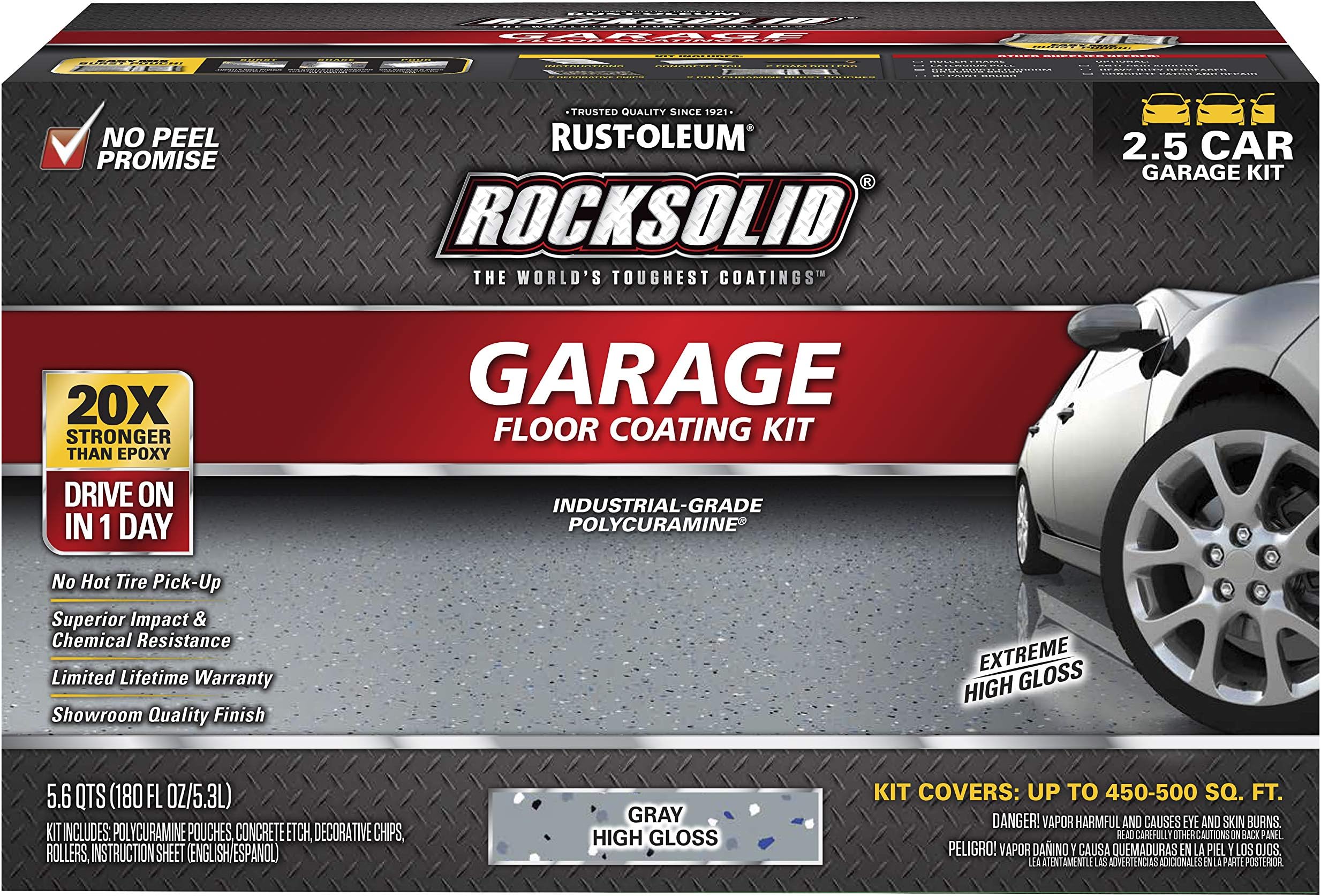
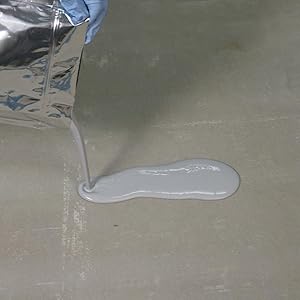
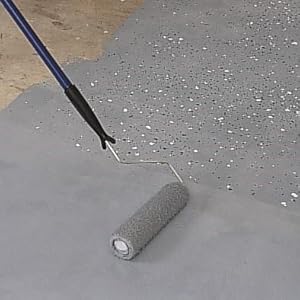
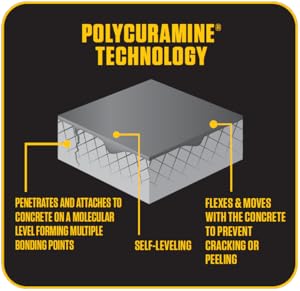
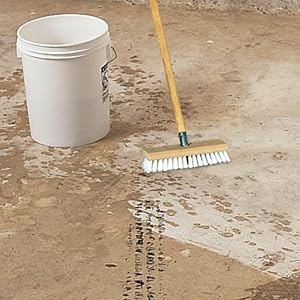
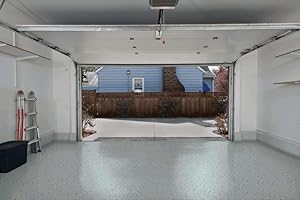
This is absolutely the most thorough review/rundown written. Part 1. I looked at the reviews on this fairly new product and still purchased it back in 2023 as I liked the advertised long-term performance, the glossy effect, and its “pot life” during applications. RockSolid Polycuramine is trademarked product. It’s a proprietary blend that is alleged to combine the best benefits of Polyurea, Polyurethane, and Epoxy. According to RockSolid documents, “Polycuramine™ combines these three chemistries and their key attributes into ONE indestructible, self-leveling, flexible, fast curing, high gloss coating system.” RockSolid states that “its Polycuramine garage floor coating is 20 times stronger than epoxy paint” (from what I found they are referring to one part epoxy paint not two part-the mixing kind). “It has a 96% solids content, a high gloss finish, and is impervious to all chemicals. The coating can be installed in one day, walked on in 8 – 10 hours, and driven on within 24 hours.” Those are the things that sold me on their product. The other big “selling point” they advertise is the low Volatile organic compounds (VOCs) emissions as compared to other products. It still smells when you apply it however. I’ve done four garage floors previously with zero imperfections – all epoxy. After using this product, I would still recommend epoxy floor coverings – as its about half the cost as compared to this product. Or, even better yet, consider the new single-part polyurea floor coating so you don’t have to mess with mixing etc. My cost for this application doubled (application rate) and with a four-car garage I couldn’t back out after one side was done. For this particular application I bought the Mocha High Gloss (P/N 293517) Rust-Oleum RockSolid garage 2.5 Car kit (advertised and printed on the box to cover 400 – 500 sq feet) on Amazon. Again, from experience figure 200 sq feet max. If you get a unique color, make sure you buy extra. Bottom Line - this stuff is not cheap and you need to realize you need about double the product for a superior result. Most reviewers will tell you there is not enough product in a box as advertised and Rust-Oleum significantly under-estimates the coverage of one box (probably due to sticker shock). The bottom line is RockSolid does not provide enough coating material for the coverage rates they list in a 2.5 garage kit. For my application of 790 sq feet (1/2 of four car garage), on a recent new build with the garage floor, less than a year old, I used five boxes (2.5 Car kits). According to Rust-Oleum five boxes should have covered 2000 Sq feet minimum. From what I can find they advertise a thickness of only 3 mils which is about half as thick as a typical coating. That’s not even comparable to high solid epoxies which are approximately 8 – 10 mils thick. Now you can clearly see their product is sold at an application rate that is half of the normal garage floor covering thickness which subsequentially effects the floor finish and uniformity. Now add in any concrete absorption of the product (which I experienced in areas) and its readily easy to understand this will not cover what its advertised. I also ordered some different color flakes on Amazon called Rust Bullet decorative flakes to make my floor look different since the box has paint flecks in it – I just didn’t like the darker flake colors included in the box. Prep is key. We degreased the new floor which had never had a vehicle on it-but was over six months old. After it was rinsed and cleaned, we used the acid crystals to “etch” the concrete. It was super clean and ready for the coating. We got all the prep work done by 1000 am. Temps were in the 80s in the afternoon so we let it dry with the help of fans. The next day everything looked great and ready to paint – not a sign of moisture or contamination. Looking back, I would wait three or four days depending on ambient heat and humidity just to make sure the floor has no residual moisture. Rust-Oleum suggests you tape a heavy clear plastic square to the floor and then 24hrs later check to see if you have moisture between the plastic and concrete floor. Paint Prep: Thoroughly massage the pouches before you open them. Pro Tip: If you are going to use more than one box and you don’t want paint imperfections of tint you need to combine and mix the paint first. This means separating the paint from the pouches and combining them and the mixing them all together. If you don’t, I guarantee you will see where you transitioned from one box to the next. Don’t trust the stamped batch numbers on the bags. They could be the exact same but there will always be a slight difference in color or tint due to heat, age, movement etc. Mix all the color up in a bucket. Don’t chance it. Next, you’ll need to do some math. And, if you have a big job requiring more than two boxes you will need more than one five-gallon bucket. I combined and mixed all the paint. Then I separated the paint evenly into the buckets based on number of boxes I bought. I put lids on them and worked only one bucket at a time. Grab the Part B from one box and add it to the first bucket and MIX 2-3 minutes with your paint mixer attached to a drill! The instructions have you squeeze the pouches together, but when you have a large area and want paint tint consistency you cannot do that. After it’s been mixed its ready to apply. Application and results: I used a 3/8 nap on an 18-inch roller—that was a mistake! Use a ¼ nap roller that’s included in the box. I wanted a thick, durable and glossy surface so I applied it heavy. Interestingly, in some places it soaked in and you can see faint concrete splotching. I’ll include a pic here but if you search for other reviews, you’ll see the same type effect. I got those because the concrete absorbed the product even though it was a full thick solid coat before we moved on. This is why I recommend a light primer coat over the entire floor first then a top coat. If you want to apply a “clear coat” after that, do it. At this price point I would not even consider a clear coat on top however. I can’t speak to the advantages of a primer coat first as I did not do that in my applications. Another thing I experienced with this new polycuramine was bubbles. An hour or so after the floor was covered, I started getting bubbles appearing above the surface. I called Rust-Oleum and they said it was an imperfection – what? They said to let the covering dry then sand the ridges of the bubble in the coating and then reapply over it. I did not do anything with them. I figure once I start sanding the floor and adding scratches from the sandpaper then repainting the area it will look even worse. I’ll include a pic of some of the imperfections. I also know there is a window for reapplication but I just didn’t want to push my luck. Review #1 from 1st application. I let it dry three days before any traffic. It came out ok. If you look at it with the light just right you can see where there were random bubbles significantly deviating from a total sheen effect. These imperfections significantly detract from a great finish in my view. 18 months after this first half of the garage was done it’s holding up well. It does not have a super glossy look but when cleaned is shiny. It scuffs and scratches easily and rubber tire marks are easily left behind but clean-up well. The bubble imperfections still show and no product has ceased adhesion from the floor. However, if I had to do it all over again, I would not select this product purely on cost (one 2.5 car kit will only cover 200 sq feet) and because it scratches and scuffs so easily. It does provide a super glossy look when new but over time it does not retain that super glossy look (sun, traffic etc). And messing with a two-part system is a pain. Part 2 second application (Finishing the other half of the four-car garage.) With those lessons learned from the completed half of the garage (2023) I set about getting the other half done in 2024. This concrete naked side had vehicles on it, areas of grease and oil, some scratches and normal wear. For this side we tried to take what we learned on the first job and mitigate the bubbles and the lighter application areas where it had absorbed into the floor. PREP. Pro Tip: Put some towels outside the perimeter or the areas you transition into the garage floor. This is so you can wipe your feet so you don’t track any grease, dirt, or contaminants onto the floor. I bought some ZEP garage floor degreaser and we scrubbed the heck out of the floor. I used the EVEAGE 16.5'' Pressure Washer Surface Cleaner, Power Washer Surface Cleaner with 2’ Extension Wand (found on Amazon) attached to my power washer to really clean and rinse the floor well. In some areas I had to apply cleaner a second time. Here’s how you know if your floor still has petroleum contamination. If the water “beads” in the area it still has contaminants. Clean it again with a more concentrated application (less dilution of floor cleaner) and scrub and scrub. Rinse it. Once the entire garage floor showed no sign of contamination after rinsing/power washing, I went to the next step of repairing the concrete. Here is where you want to use concrete patch and crack repair for any imperfections on the floor. I filled some cracks and some areas where concrete had chipped. Follow directions to repair cracks. Let it dry and cure. Next, it’s time for some acid washing. This time I bought Muriatic acid in gallon jugs. I was not all that impressed with the crystalized packets of citric acid for coverage or acidic action on the concrete on the first half of the garage (could have been some of reasons why I had the issues but don’t know). Pro Tip: Where the water runs out the garage neutralize the acid solution with baking soda. First, I wetted the entire floor down just to get it ready for the acid. I was still damp from the previous cleaning but showed no remnants of cleaner. Again, rinse and repeat to ensure its clean before the acid wash. I filled large five-gallon bucket with three gallons of water then carefully poured in and mixed the muriatic acid. I then poured it in small sections on the garage floor spreading it out evenly. I let it sit three or four minutes watching the chemical reaction (bubbling). Then we scrubbed the heck out of the floor. Muriatic acid can be used in a 3:1 or 4:1 ratio. If you are not getting the chemical reaction on the concrete go to a stronger mix (more acid less water). After it was scrubbed well, I sprayed it down with a hose and rinsed it. During the acid wash process, plugged in a fan to ensure the fumes didn’t hang around. Oh, and put on some PPE as acid is nothing you want to mess with—it’ll burn you bad from stupidity. Once we’d finished a section, we rinsed it well and moved on. We did it again until the entire floor had been acid washed. Next, we grabbed the power washer surface cleaner above and went over it again trying to ensure zero left over acid. Some folks even will test for pH. You want it neutral about 7.0-7.2 If you have to you can neutralize the concrete with baking soda if it’s too acidic. After we were absolutely confident, we’d rinsed the floor well, we let it dry, and dry and dry with zero traffic. In fact, we let the floor dry 6 days with temps in the 80s. Next, we masked the foundation areas next to the walls. We also ran tape under the garage door (so the line is covered by the closed garage door). Don’t apply this on the small outside section of the garage floor where the garage door closes. It will discolor from the sun (trust me on this one). Once all the taping was complete, we were almost ready for the floor application. But first, I took a heavy-duty floor brush and brushed the floor sweeping all sand, dust and particles out the door. Next, I grabbed my electric leaf blower (I didn’t use my gas-powered leaf blower as it likes to leak gas when rotated) and blew the floor of any contaminants. APPLICATION: Rust-oleum says the mix ratio is 2.25 of Part A to the Part B. That translates to 3.876 Quarts of A to 1.72 Quarts of Part B as the box say it contains 5.6 Quarts of product. I grabbed the four boxes of product and combined all the Part A into a five-gallon bucket (total was about 15.4 Quarts or almost 3.5 gallons) and mixed a good four minutes until I couldn’t see any lines of pigment as I mixed. Pro Tip: Be careful with the pouches as you don’t want them to mix. Grab a strong straight edge and squeegee the contents of the pouch into the bucket. Use a flat surface to help in getting as much product out of the pouch as possible. Two methods after mixing the paint. Divide up the paint into equal buckets and put lids on them. Or, you can just divide the contents by number of boxes used and pour it in equal parts. I did the latter. I took a fourth of it and then added two pouches of Part B and mixed for two minutes. It’s not as thick as paint or epoxy. It’s a less viscous materiel as it has a self-leveling attribute. Next, I poured it on a 4x4 section and worked it in with an 18-inch ¼ thick nap roller. Cut in your sides or expansion joints with a mini roller and brush. These areas typically soak up the mixture. Lay it on everywhere thick. It’s self-leveling to a point and will fill flat to a glossy sheen. After it’s been on a few minutes go back and look at it closely. Some spots will have soaked into the concrete leaving a lighter coverage. Reapply some materiel. After you are satisfied apply the flakes. Once the flakes are on you don’t want to paint over it. It’ll jack up your roller with the flakes and screw up your application. I found I could wait a good 20 minutes before putting down the flakes. That gave me time to reapply in areas where it soaked in and then I applied the flakes. Take your time. The pot life is around 45 minutes in the temperature range of 40-75F and 60 minutes if temps are 76-90F. Don’t apply if the temps are going to drop below 40F or rise above 90F. After you are done with the first application repeat. At the end I had about a qt of mixed materiel left that I discarded. I cleaned the roller mechanism, discarded the paint nap, and cleaned all the items (buckets, etc) that got the material on them with mineral spirits. In summary. I used almost four Rust-Oleum RockSolid garage 2.5 Car kits for 790 sq feet. One box is running just un $300.00 so you’ll have quite an investment in your application. I used 1.25 pounds of Rust Bullet decorative flakes paint flakes (not a super dense heavy application of chips), one 18 inch ¼ nap roller (two 12 inch ¼ nap rollers are in the kit), three 5 gallon buckets (one marketed in increments as I added the paint to mix it all together), 2.5 gallons of muriatic acid to etch the floor (you can use the stuff in the kit instead if you want); Mineral spirits for clean-up, two full rolls of blue masking tape, one 10X25 plastic sheet to cover the floor while mixing paint, a tall paint mixer attachment for the drill, a heavy duty drill to mix the paint, a small step ladder and work bench, a mini roller for the concrete walls on the garage floor, 2 paint brushes for trimming expansion joints and wall base board, PPE, Spiked Shoes to walk on painted surfaces (old golf spiked shoes may work), large towels to put on the floor where you transition into the garage, a fan to move air around, and plenty of 5mil nitrile gloves. So, how did this section match up to the other side previously painted? Pretty well honestly. Right now, it’s a little darker since the other side has had sunlight on it so it’s faded a little but overall, I think it’s fine. This side turned out much much better than the first side with only a few blemishes (where the concrete below the materiel can be barely seen due to absorption) and about five small bubbles. The ¼ nap roller worked better on this application versus the first application and I would definitely recommend nothing bigger than a ¼ nap roller. No matter what caused the bubbles on the first application in 2023 it did not repeat in excess. I think the degreaser and muriatic acid definitely had something to do with that and a longer drying time for the floor after it was etched. I do like the relatively quick drying time. 12 hours after the application it was hard, not sticky, tacky, or wet. My plan is to let it harden a good three days before I put anything on it. Rust-Oleum says its car ready in 24 hours. After four days of drying, we began to organize the garage. Be mindful of anything with rollers as it will scratch and scuff your application since it’s probably not fully cured/hardened. I had a roller on a moveable table that left a pretty nice scratch on the new paint. So, take my experience above and use it for your own application. Good luck.